Bonaire is growing faster than the hands meant to govern it
A ruling that locked in contested energy tariffs, a Dutch minister's visit about an overstretched civil service, and a temporary power-bill subsidy all landed within days. They describe one island straining at the seams of its own success.
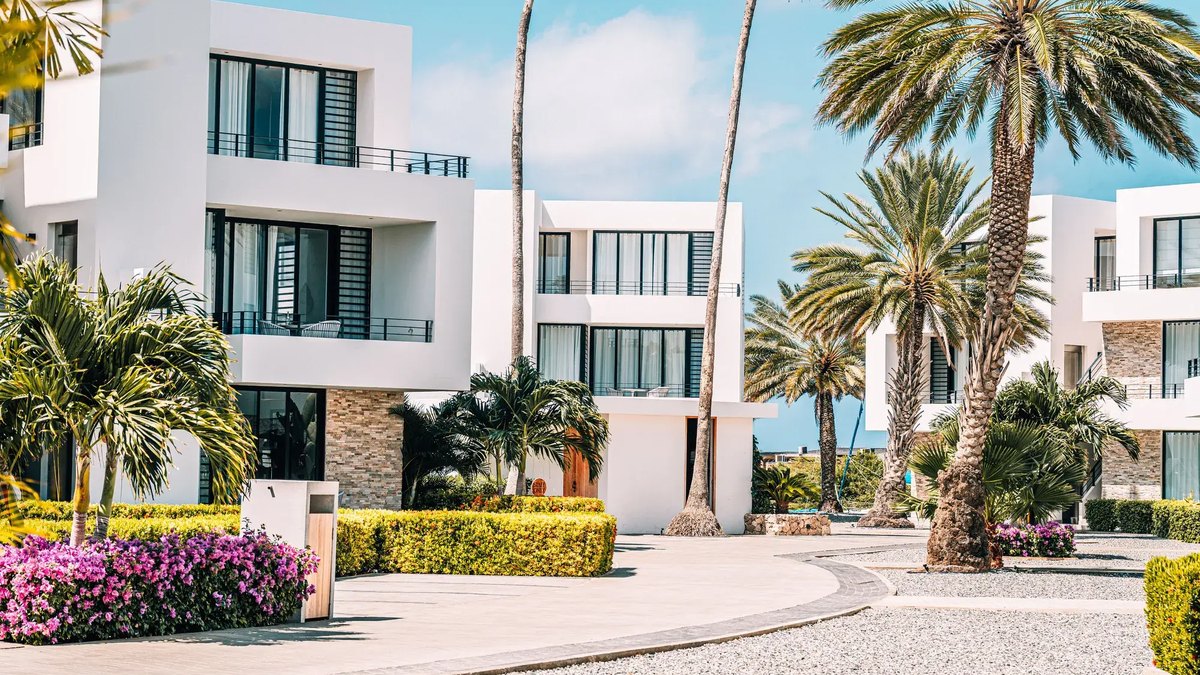
Bonaire does not often lead a Caribbean news cycle, which is part of why it is this edition's Island in Focus. The island of roughly 25,000 people, a special municipality of the Netherlands since 2010, spent the past week producing a cluster of small, dated developments that fit together into a single large question: can an island growing this quickly build the governing capacity to keep up with itself?
Start with the power bill, because on Bonaire almost everything does. The Netherlands Authority for Consumers and Markets, the regulator known as ACM, announced decisions on October 5, 2026 upholding its 2026 electricity and drinking-water tariffs for Bonaire and dismissing objections to them as unfounded, as reported by BES Reporter on October 19, 2026. The island's own utility, Water- en Energiebedrijf Bonaire, had objected to the maximum production price and distribution tariffs, and the power producer ContourGlobal Bonaire had challenged the calculation of a reasonable return. ACM called the tariffs carefully determined and sufficiently substantiated. The regulated rates stand.
A subsidy that does not fix the price
That ruling matters because electricity on Bonaire is both essential and expensive, and the island government has been reaching into its own pocket to soften the blow. The Public Entity of Bonaire allocated $6 million to temporarily lower electricity rates in the final months of 2026, according to the same BES Reporter account. The distinction the Ledger wants readers to hold is the one the regulator drew: the subsidy lowers what households pay for a while, but it does not change the underlying regulated tariff. It is a cushion, not a correction, and cushions run out.

The affordability fight has a hopeful number behind it, which makes the strain more poignant rather than less. Statistics Netherlands reported on July 15, 2026 that poverty on Bonaire fell to 21% in 2024, down from 32% in 2023, with child poverty dropping to 29% from 41%. The agency credited post-2019 increases in the minimum wage and benefits, higher child benefit, and an energy allowance. That is real progress. It is also a measure of how high the base was, and the agency noted that among Bonaireans still in poverty, incomes sat 29% below the poverty line. An island can be getting materially better off and still be one tariff decision away from household distress, and Bonaire is.
The Hague comes to call
Into that picture stepped a Dutch official with a different concern. State Secretary Eric van der Burg visited Bonaire on October 13, 2026, met Island Governor John Soliano and the Executive Council, and framed the conversation around rapid growth, according to BES Reporter on October 16, 2026. His argument was that the island's quick expansion is driving up demand for government services faster than the island's civil service can supply them, and that the administration needs to build capacity. The talks touched administrative integrity, delivery capacity, and the support The Hague is prepared to offer.
The context is a Governance Agreement for 2024 through 2027, signed in May 2024, covering livelihood security, public transport, infrastructure, permits, and enforcement. Its record so far is a useful honesty check. Public transport was supposed to begin in 2025 and did not, and as of midyear the state secretary was still asking the Council for a firm date for the first bus. When a four-year governance pact cannot produce a single bus on schedule, the problem is rarely money and usually capacity, which is exactly what Van der Burg came to talk about.
A seat Bonaire does not have

All of this unfolds against a Kingdom reform conversation from which Bonaire is, pointedly, absent. The first Kingdom Summit will be held on Sint Maarten on November 17 and 18, 2026, as announced by the Dutch government on October 1, 2026, but it brings together only the four autonomous countries, Aruba, Curacao, the Netherlands, and Sint Maarten. Bonaire, as a special municipality rather than a country, is not at that table even as the terms of intra-Kingdom cooperation are debated. The honest framing is not that Bonaire has been snubbed, but that its constitutional status leaves it governed closely from The Hague while seated outside the room where the Kingdom's biggest cooperation questions are argued.
That is the thread running through the week. A regulator in the Netherlands sets Bonaire's power price. A Dutch state secretary flies in to discuss the island's own administrative capacity. A summit about the Kingdom's future convenes without a Bonairean chair. And in the middle sits an island whose poverty is falling, whose population and economy are climbing, and whose local government is being asked to do more than its current size allows. Bonaire's challenge is not decline. It is the far more modern problem of success arriving faster than the institutions built to manage it, and this week put that problem on the record in three separate documents, each with a date.
Read more at The Caribbean Ledger ›