The Dominican Republic freezes power rates and braces the subsidy
President Luis Abinader confirmed electricity tariffs will stay at 2022 levels and fuel subsidies will continue, a roughly RD$100 billion commitment aimed at shielding households.
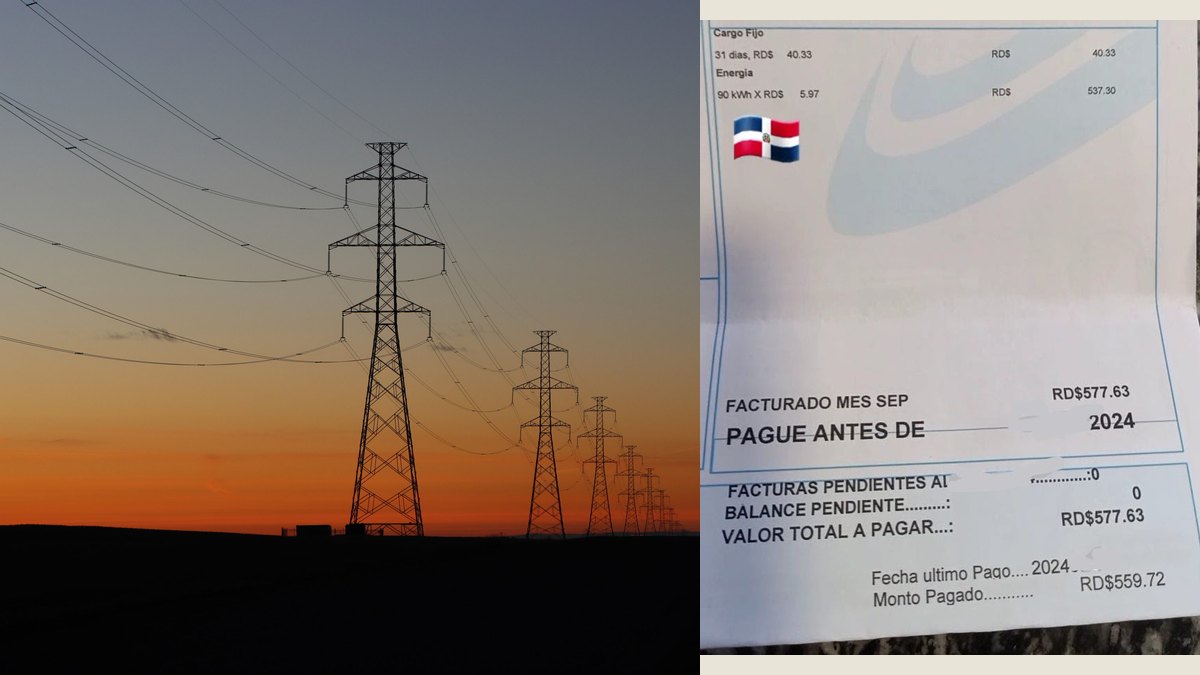
The Dominican Republic, the largest economy in the Caribbean, made a straightforward political choice this week dressed as an energy decision. President Luis Abinader and Energy and Mines Minister Joel Santos said on the weekly program La Agenda Semanal, on October 20, 2026, that electricity rates have held at 2022 levels and will remain frozen, according to Dominican Today. A companion report the same day said the government will also maintain targeted fuel subsidies.
The structure is explicit. Electricity is sold across four consumption tiers, all subsidized, ranging from RD$6.09 per kilowatt-hour for the lowest band, up to 200 kilowatt-hours, to RD$13.09 per kilowatt-hour for the highest, above 700 kilowatt-hours, against a market reference price of about RD$15.50, Dominican Today reported. Projected electricity subsidies for 2026 run to roughly RD$100 billion. That is the price of the freeze, and the government has decided it is worth paying.
Why demand keeps climbing
Abinader tied rising electricity demand to prosperity and heat in equal measure. Air-conditioning ownership rose from 7.4% to 20% of households between 2017 and 2024, and flat-screen television ownership doubled from 30% to 60%, he said, per Dominican Today. Those are the appliances of a growing middle class, and they draw power in a warming climate. A country that has lifted millions toward that middle class now has to keep the current flowing to them affordably, which is the political bargain the freeze represents.

The energy mix has shifted sharply underneath the subsidy. Oil-based generation has fallen from 88% of the total in 2000 to about 9% today, Abinader said, a transition toward gas and renewables that has made Dominican power both cleaner and, in principle, cheaper to supply. That shift is also why the freeze is fiscally survivable: an electricity system no longer chained to imported oil is less exposed to exactly the kind of crude spike that hit markets this week.
A busy agenda around it
The power decision came amid an active week for the Abinader government, whose other moves the Ledger notes from dated Dominican Today headlines without treating them as fully reported here. The rice sector voiced support on October 19, 2026 for the president's push to renegotiate terms of the DR-CAFTA trade agreement with the United States. Tourism kept its momentum, with 11 cruise ships bringing 45,627 passengers reported on October 19. And the administration issued regulations for the 2026-2027 sugar harvest on October 20.
The through-line is a government using a strong fiscal position to hold down the cost of living while it reshapes the economy around it. Freezing power rates is expensive and, over time, distorting, the kind of subsidy that economists warn can outlive its purpose and crowd out investment in the grid itself. But it is also a direct answer to the pressure squeezing households across the region this autumn, from Guadeloupe's streets to Jamaica's inflation print. The Dominican Republic has chosen to spend roughly RD$100 billion to keep that pressure off the meter. Whether that is prudence or deferral is the question the next budget will have to answer. For now, Abinader has told Dominican households the number on their electricity bill is not going to move, and in a year of rising prices that is a powerful thing for a president to be able to promise.
Read more at The Caribbean Ledger ›