In the rural cup, the next generation is already on the pitch
Old Harbour High School is our team in focus this week, Spanish Town Primary School is our primary feature, and the Global Institute of Sports asks a question worth taking seriously.
Jamaican schoolboy football runs on more than trophies. Across the island, rural schools field teams with fewer resources, smaller crowds and less attention than the big urban programs, and they keep playing anyway. The daCosta Cup, the competition for rural schools, is where many of those players first learn to compete for a place on a team.
This week the Ledger turns its attention to two schools and to one question about where the country's next footballers will come from.
Team in focus: Old Harbour High School
Old Harbour High School is our team in focus this week. Its players, lined up in green and yellow kits, several of them wearing medals, show what a school team looks like when the season has produced something to celebrate.
The rural game asks a lot of a team. There are long trips, uneven pitches and the discipline to keep playing when the scoreboard turns against you. A squad that stands together for a photograph is a squad that has been through that work together.

Primary feature of the week: Spanish Town Primary School
Spanish Town Primary School is this week's primary feature. Its team, photographed with a trophy and surrounded by teammates, shows what a young squad can build when it gets the chance to compete early.
Primary school football matters for a reason that goes beyond any single season. It is often the first place a child learns that football is a team game, a school matter and a source of pride. The programs that reach those children early widen the pool of players who eventually reach the senior ranks.

Global Institute of Sports and the bigger question
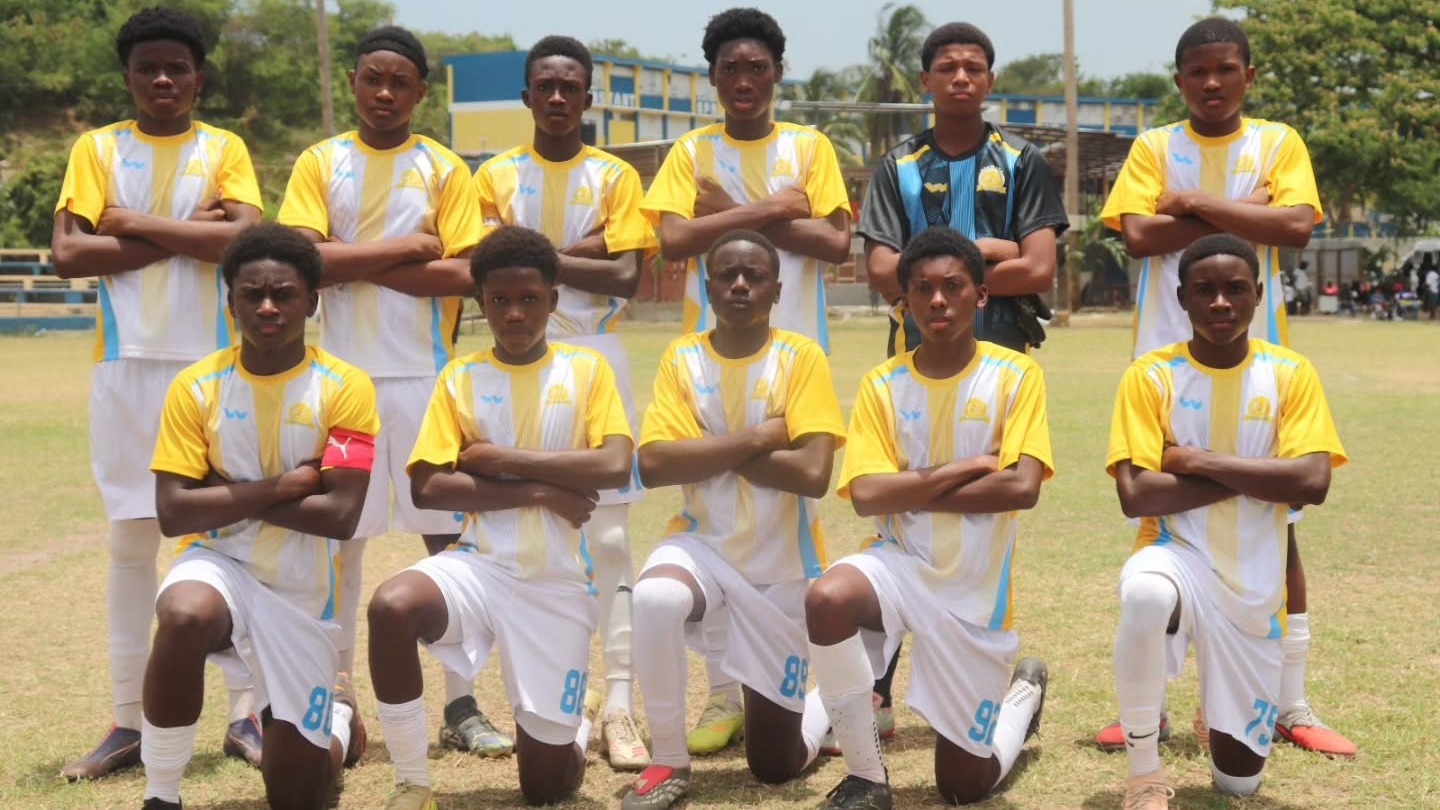
Global Institute of Sports (GIS), Jamaica, works with young players in the same pipeline the Ledger is following. The team photograph below, provided by GIS, shows the kind of group that the academy setting is built to develop.

That raises the question the region should be asking. If Jamaica rural schools and academies keep producing players at this rate, could this pipeline produce the next World Cup group? No single season answers that. The answer depends on the work shown in these photographs: steady teams, coaches who show up, and young players who keep turning out on rough pitches.
The Ledger will keep following these teams. The pipeline that produces Caribbean footballers, sprinters and cricketers starts in competitions like this one, where a school team season is the first chapter of a career.
Read more at The Caribbean Ledger ›