Martinique's cost-of-living fight reignites, and the night turns violent
The RPPRAC movement made good on an ultimatum, and the first night of renewed action brought more than 20 roadblocks, six arrests, and armed robberies across the island.
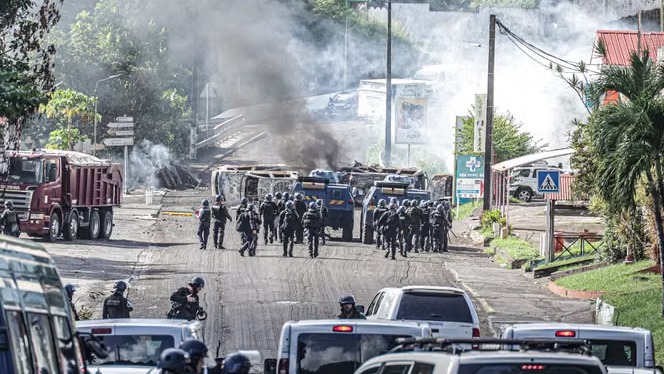
Martinique's long argument over the cost of living returned to the streets this week on a schedule its leaders had set in advance, and the first night of it was violent. The RPPRAC movement, whose name stands for the Rassemblement pour la Protection des Peuples et Ressources Afro-Caribeens, had warned in a communique dated September 3, 2026 and reported by zayactu.org that authorities had until October 19 to show concrete, verifiable, and visible results on prices, or the fight would resume. The results did not come, and the fight resumed.
On the night of October 18 into 19, 2026, more than 20 roadblocks went up across 18 communes, some set on fire, before roads were cleared by 9:00 in the morning, according to RCI Martinique on October 19, 2026. Six people were arrested. The night also brought five armed robberies in Le Lamentin and Fort-de-France, and the prefecture said at least one heavily armed group, overheard speaking Saint Lucian Creole, may have exploited the unrest. A shop in Saint-Pierre and a pharmaceutical wholesaler in Le Robert were ransacked, and several vehicles were burned.
An old protocol that did not deliver
The grievance is nearly two years old and specific. The RPPRAC led the mass vie chere protests of 2024 that produced a protocol intended to bring Martinique's prices closer to mainland France's, and the movement argues that the commitments were only partly applied and that prices remain too high. Its demands this time, as laid out in the September communique, include real cuts to the frais d'approche, the shipping and handling costs that inflate the price of imported goods, an export tariff, transparency on retail margins, stronger price controls, development of regional supply, and structural reform of an economic model built on importing nearly everything.

That model is the heart of it. Martinique, like Guadeloupe, buys most of what it consumes from thousands of miles away, and every link in that chain adds a margin that lands on a shelf price higher than a shopper in Paris would pay for the same item. The 2024 protocol was supposed to compress those margins. The RPPRAC's return to the barricades is its verdict that the compression did not happen, or did not hold.
The response hardens
The state's answer appeared to escalate quickly. Local broadcaster Martinique La 1ere reported, in items the Ledger has seen at headline level but could not open to confirm in full because the outlet blocks our fetcher, that a curfew from 10:00 at night to 5:00 in the morning was imposed on six communes, that the GIGN tactical gendarmerie was deployed, and that the night of October 19 into 20 brought a tally of eight shops damaged and six motorists carjacked, along with an attempted arson in the Kerlys zone of Ducos. The Ledger carries these as reported leads rather than confirmed facts, consistent with our rule against quoting what we cannot open and date.

One detail that is confirmed, and telling, is economic. The first of roughly 300 planned cruise calls for the 2026-2027 season was cancelled amid the unrest, a reminder that the protest's cost is not only measured in arrests and burned cars but in the tourism revenue the island can least afford to lose. The movement's addressees are the Collectivite Territoriale de Martinique, led by Serge Letchimy, and the island's parliamentarians, and the question now is whether the renewed pressure produces the price movement that the 2024 protocol did not. Overseas Minister Naima Moutchou has appealed for calm across both Guadeloupe and Martinique. On the evidence of this week, calm is not what either island is offering, and the grievance that drives the unrest, the simple, grinding fact that life in the French Antilles costs too much, is exactly where it was two years ago.
Read more at The Caribbean Ledger ›