Gold slips from its record, and the region feels it both ways
Bullion pulled back to about $4,120 an ounce this week after a run to record territory. For the Caribbean's gold producers and its gold buyers, the retreat lands on opposite sides of the ledger.
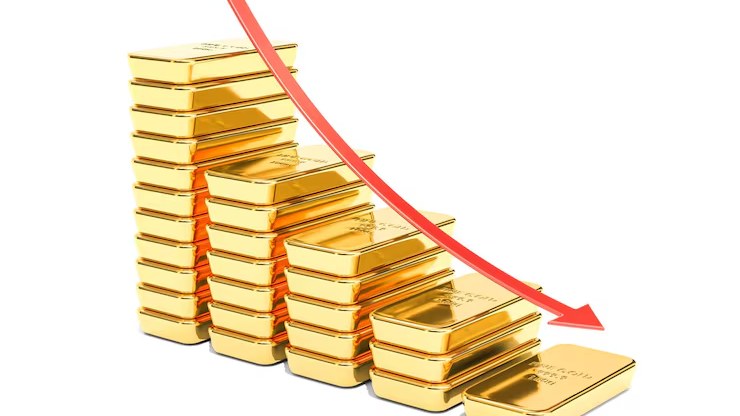
Gold spent the first part of October climbing toward records and the middle of it pulling back, a round trip that matters more to this region than its distance from the Caribbean Sea would suggest. On Monday, October 20, 2026, the metal traded at $4,120 an ounce at 9:00 a.m. Eastern time, down $44, or 1.06%, on the day, according to Fortune's daily gold report published that morning. Fortune put the one-month decline at 5.50%, from about $4,360, and the year-on-year change at negative 4.54%.
Other dated readings that morning agreed on the direction. Kitco's spot bid was quoted at $4,123.60 an ounce shortly before 8:00 a.m. Eastern time, down $16.30, in a market summary carried by Depor on October 20, 2026, which also cited a Reuters spot figure of $4,120.87 at 11:03 GMT. A separate daily table published by 150currency.com listed gold at $4,132.23 for October 20, against $4,149.38 the day before. The precise cents differ by venue and timestamp, as they always do, but the week's story is clear enough: a record near the top of the month, then a step back of roughly 6% to the low $4,100s by October 20.
Why a far-off price is a local one
For most of the Caribbean, gold is something you read about. For a growing part of it, gold is something you dig up. Guyana and Suriname both count gold among their principal exports, alongside the oil that now dominates the headlines, and the metal remains a meaningful earner for small and medium miners across both countries' interiors. When bullion sets records, those export receipts swell and the informal economy of the goldfields loosens. When it retreats 6% in a fortnight, the same channels tighten, and the pullback this week is a reminder that the commodity windfall underwriting so much regional optimism is not a straight line up.

The Ledger could not obtain an in-window production or receipts figure from Guyana's or Suriname's mining authorities to localize this week's move precisely, and we will not reach for one we cannot source. What we can say is that Suriname has been treating gold governance as unfinished business even as it waits for first oil in 2028. President Jennifer Geerlings-Simons told a mining audience, in remarks reported by Dagblad Suriname on October 4, 2026, that pollution from gold mining could no longer be tolerated, and local coverage through mid-October described a push toward what Dagblad Suriname on October 9 called a more sustainable small-scale gold sector. A higher gold price makes that reform harder and more necessary at the same time, because it pulls more hands into the pits just as the state is trying to formalize them.
The buyers, and the central banks
The other side of the regional ledger is the buyer. Gold is a store of value for households and a reserve asset for central banks, and across the Caribbean both have been accumulating it. A retreat from records is, for a would-be buyer, a window rather than a wound, and for reserve managers who added to holdings at higher prices it is a paper setback they are generally positioned to ride out.
A word of caution on the central-bank story, because it is where stale figures do the most damage. The widely circulated numbers showing central banks buying roughly 220 tonnes in a quarter, led by Kazakhstan, Brazil, and Turkey, come from World Gold Council data for the third quarter of 2025, not 2026, and should not be read as current. The Council's most recent 2026 reading, around its late-July update, described central-bank buying as having picked up while revising first-half figures lower. Its third-quarter 2026 Gold Demand Trends report had not been published as of this writing, and the Ledger will carry those figures only once they are out and dated. What is not in dispute is the direction of travel over several years: official-sector demand has been a steady bid under the gold price, which is part of why a 6% pullback looks, in context, like a pause rather than a turn.
The backdrop that moves it
The immediate driver of this week's softness was the familiar push and pull of the dollar and interest-rate expectations in the United States, the gravitational field in which gold trades. A firmer dollar makes dollar-priced bullion dearer for everyone else and tends to cap the price, and the metal's slip on October 20 came in that kind of tape. For a region whose currencies are overwhelmingly pegged or managed against the dollar, that same backdrop is not an abstraction. It sets the cost of the debt Caribbean governments carry in dollars and the spending power of the North American tourists who fill the hotels, which is why the Ledger watches the dollar as closely as it watches the metal priced in it.
None of this changes the longer arc. Gold near $4,100 an ounce is still extraordinarily expensive by any historical measure, still a windfall for the earth that Guyana and Suriname are turning over, and still a comfort asset in a region that has learned to distrust calm. This week simply put a number on the risk that comes attached to every commodity boom. The price that can run to a record can give some of it back in a fortnight, and the economies learning to live on what they pull from the ground would do well to budget for both.
Read more at The Caribbean Ledger ›