A two-speed Caribbean, with the cruise ships full and the forecasts cooling
The IMF trimmed Jamaica's outlook, the World Bank warned of an uneven recovery, and tourism data showed demand leveling off even as cruise arrivals set records. One economy, Guyana, is still pulling away from the rest.
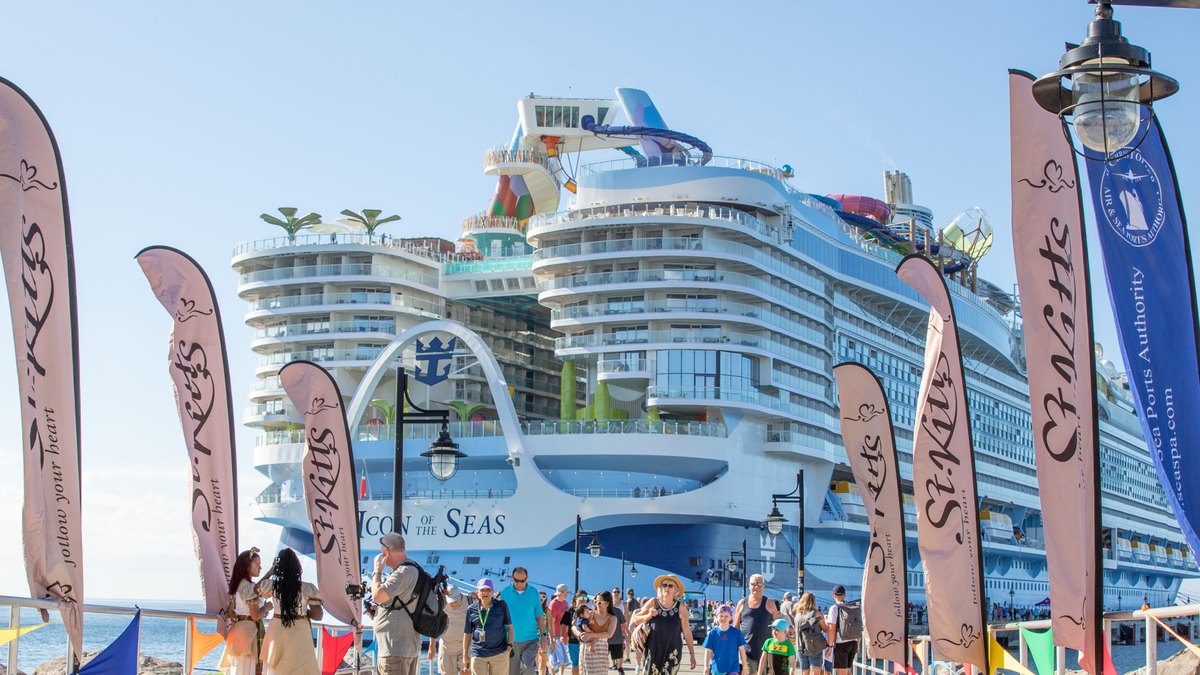
The recent run of economic data on the Caribbean reads like two reports stapled together. In one, the cruise ships are fuller than they have ever been and a handful of economies are accelerating. In the other, the growth forecasts are being quietly marked down and the arithmetic of debt and climate keeps getting harder. The institutions that lend to and watch over the region spent the past two weeks describing both halves, and the gap between them is the story.
The International Monetary Fund, in its October 2026 World Economic Outlook, trimmed Jamaica's 2027 growth outlook to 2.4%, down from the 3.1% it had projected in April, while raising its 2026 figure for the island to 0% from a previously forecast contraction of 1.2%, according to the Jamaica Gleaner on October 16, 2026. The same Gleaner report put the Fund's 2027 projections for the wider region at 2.5% for Latin America and the Caribbean, 1.9% for The Bahamas, 2.0% for Belize, and 2.2% each for Barbados and Trinidad and Tobago, with global growth for 2027 nudged up to 3.4%.
Uneven by design
The World Bank framed the same picture in starker language. The Caribbean faces what Nation News, reporting on October 8, 2026, summarized as a two-speed recovery, with the oil producers and a few tourism standouts advancing while others lag. The phrase is a useful one because it names something the headline regional averages hide. There is no single Caribbean economy. There is Guyana, and there is everyone else, and even among everyone else the distance between a Barbados running a disciplined fiscal program and an island still rebuilding from a storm is wide.

Guyana is the accelerator. Its first-half export earnings reached $16.2 billion, up 76.4%, with crude oil earnings of $15.05 billion, up 82.1%, according to the country's 2026 Mid-Year Report as reported by Caribbean National Weekly on September 16, 2026. Oil output averaged roughly 902,000 barrels a day in the first half, and the Natural Resource Fund held $4.2942 billion at the end of June. Those are not Caribbean numbers in any historical sense. They are the numbers of a petro-state in formation, and they are the single largest reason the regional growth average looks healthier than most of its members feel.
The paradox at the pier
Tourism, the industry that most of the region actually lives on, delivered the clearest version of the two-speed story. The Caribbean Tourism Organization, presenting at its State of the Industry Conference in Guyana as reported by the Jamaica Gleaner on October 13, 2026, said stayover arrivals reached about 18.9 million in the first half of 2026, up 1.9%, but with the momentum fading inside the half: first-quarter arrivals rose 4.1% while second-quarter arrivals slipped 0.4%, which the organization described as a moderation in demand.
At the same time, cruise passenger visits reached about 21.7 million, up 11%, a record, with 19 of 24 destinations reporting gains. That is the paradox of the pier in a single data set. More ships than ever are calling, and the people sleeping in the hotels, who spend far more per head, are arriving in slightly smaller numbers than a year ago. Hotel economics held up, with occupancy at 73.1% and average daily rate up 9.2% to $414.52, according to the same CTO data, so the industry is earning more per room even as the top of the funnel narrows. The organization's full-year outlook was for stayover growth of 2% to 3% and cruise growth of 5% to 7%.
The money question underneath
Beneath the growth figures sits the financing question that the Ledger has followed through the autumn's IMF and World Bank meetings. The region's case has not changed: middle-income status prices many Caribbean states out of the cheapest concessional money, climate exposure keeps raising the cost of everything, and debt built up through successive shocks has to be serviced before a dollar reaches a classroom or a clinic. Belize has been carrying that argument into international rooms, and Barbados has built a global brand around it through its resilience and climate-finance agenda. What the past fortnight added was not a breakthrough but a backdrop: softer growth forecasts make the same debt loads heavier, which is precisely when concessional finance matters most and is hardest to secure.
Jamaica is the instructive case. Its central bank raised its policy rate by 50 basis points to 6.0% on September 29, 2026, with inflation at 7.9% in August, above the 4% to 6% target, as reported by the Jamaica Observer at the time and referenced in the Gleaner's October 16 coverage. An economy being asked to grow at 2.4% while its central bank holds rates high to tame 7.9% inflation is an economy walking a narrow path, and it is a more representative Caribbean picture than Guyana's gusher.
The useful way to read the two-speed label is not as a ranking but as a warning against a single story. The cruise record is real. The forecast downgrades are real. Guyana's surge is real, and so is the fact that it flatters an average most of the region does not live inside. A desk that watches the Caribbean as one market will keep being surprised. The economies here are moving at different speeds, in different directions, and the only forecast that holds for all of them is that the distance between the fastest and the slowest is still widening.
Read more at The Caribbean Ledger ›