Suriname's president tells the country to get ready before the oil arrives
In back-to-back forums on investment and finance, President Jennifer Geerlings-Simons pushed diversification and a stronger banking sector, framing 2027 as a year to prepare for first oil in 2028.
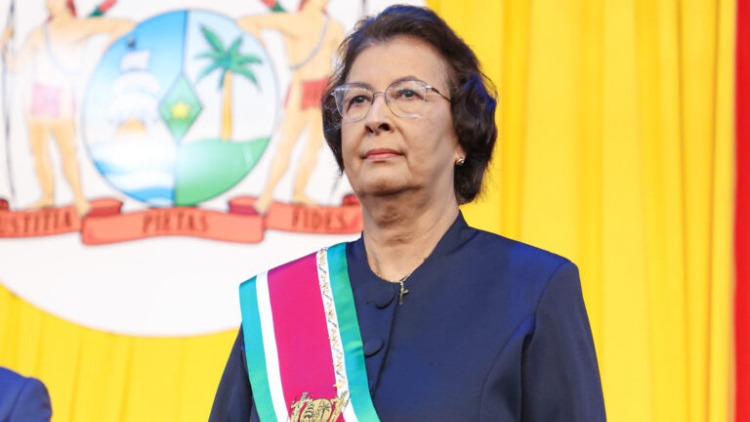
Suriname is doing something unusual for a country on the edge of an oil boom, which is talking constantly about everything other than the oil. In two forums within days of each other, President Jennifer Geerlings-Simons pressed the argument that extraction alone will not make the country prosperous, and that the years before first oil have to be spent building the economy and the institutions that will have to manage the windfall.
At the opening of the fourth International Business Conference on October 13, 2026, under the theme From Energy to Industry, President Simons called economic diversification a strategic necessity, according to Suriname Herald on October 14, 2026. Extraction alone is not success, she said, in remarks the paper reported in Dutch. Success means productive industries and stronger local enterprises. She named agriculture and agro-processing, food security, sustainable tourism, logistics, and technology as priority sectors, and pushed regional ties with Guyana, Brazil, and French Guiana ahead of Suriname's upcoming turn chairing CARICOM. An Investment Act and a related competitiveness law are in their final stage, with completion expected in 2027, and a new Local Content Board is meant to help Surinamese firms join the large projects coming.
Trust as currency
Days later, at the first Suriname Banking and Finance Summit on October 17, 2026, Simons turned to the financial system, urging banks to invest more in the productive economy and to help build a broader domestic capital market, per Suriname Herald. Trust is our strongest currency, she said, and opportunities alone do not build a country. She invited the national bankers' association into consultations with the Ministry of Finance and Planning, the Central Bank of Suriname, and development institutions, and noted that a savings and stabilization fund is being set up to hold future oil revenue, with a Financial Action Task Force assessment due in 2027.

The repeated word in both speeches was preparation. Simons is framing 2027 as a year to get the financial house in order before the money starts to flow, a discipline that oil economies the world over have more often preached than practiced. The temptation when a windfall is coming is to spend against it early. Her message is the opposite, and for a country with Suriname's recent history of debt distress it is the responsible one.
The barrel on the horizon
The oil itself is advancing on schedule. The GranMorgu project, operated by TotalEnergies in the offshore Block 58, had reached about 50% completion ahead of its 2027 offshore work, according to Ocean Energy Resources on October 4, 2026, with first oil targeted for 2028 and no oil revenue expected in the meantime. That timing is the whole reason for the president's urgency. Suriname has to run its existing economy, and close its existing gaps, with the revenue it has now, which does not yet include a drop of Block 58 crude.

Those existing gaps are real. Public debt stood above 100% of gross domestic product by the president's own August figure, well over the 60% legal ceiling, under a law amended in 2025 to allow a temporary excess through the end of 2027, and the 2027 budget presented on September 30, 2026 carries a sizeable deficit that the government says it intends to cover without new borrowing. The Ledger notes that the detailed budget figures circulating this month trace largely to an automated aggregator citing Starnieuws and Suriname Herald, and we will carry the specific numbers only once we can confirm them against the primary Surinamese sources directly. What is clear, and sourced, is the strategy: a president telling an oil country, before the oil arrives, to behave as though it might not. It is the least glamorous message available to a leader in her position, and very possibly the wisest.
Read more at The Caribbean Ledger ›