A new judge, and a $129 million reckoning, for Turks and Caicos' old corruption case
An ad hoc judge from St. Vincent has been sworn in to hear confiscation proceedings against three men convicted in the long-running SIPT probe, with hearings set to begin October 26.
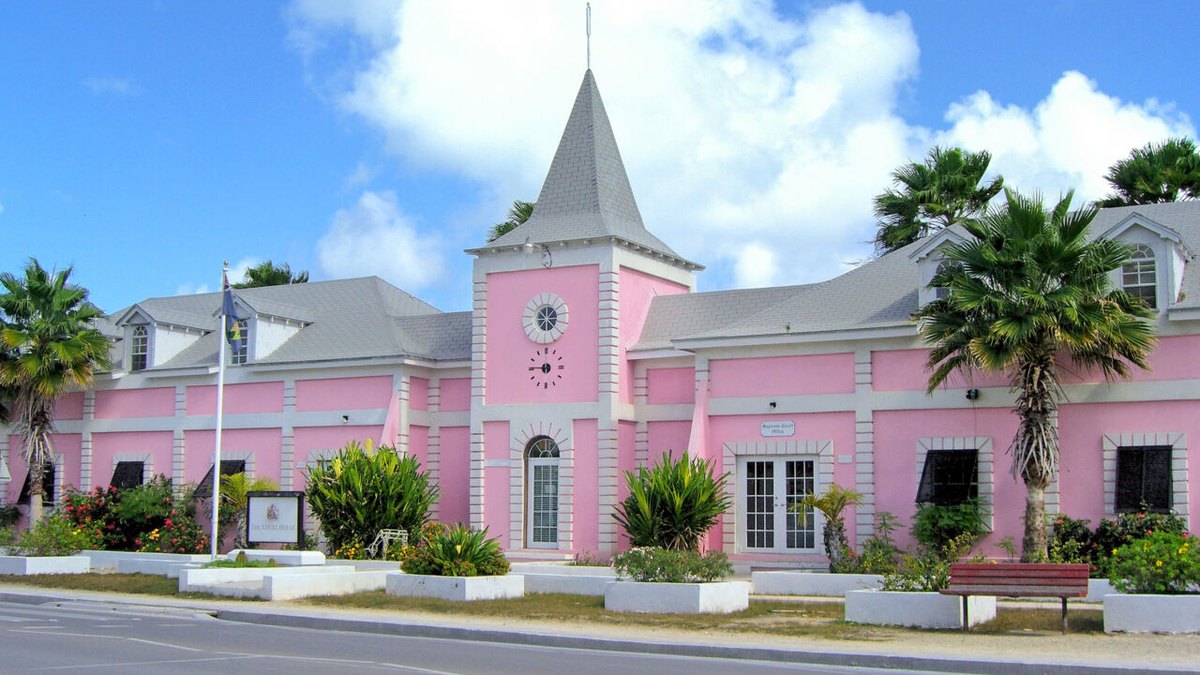
The Turks and Caicos Islands moved this week into the final financial chapter of a corruption saga that has shadowed its politics for more than a decade. Mr. Justice Raymond Colin Williams, a former director of public prosecutions in St. Vincent and the Grenadines, was sworn in as an ad hoc judge in the territory on October 15, 2026 to hear confiscation proceedings in the long-running Special Investigation and Prosecution Team case, according to the St. Vincent Times on October 19, 2026 and NBC SVG on October 16.
Governor Dileeni Daniel-Selvaratnam administered the oath on the advice of the Judicial Service Commission, the reports said. Williams, who served 15 years as St. Vincent's DPP before appointments to Belize's Supreme Court in 2018 and the Eastern Caribbean Supreme Court from March 2021, takes the confiscation proceedings because the trial judge, Justice Rajendra Narine, will not hear them.
What the case was about
The Special Investigation and Prosecution Team, known as SIPT, grew out of a United Kingdom commission of inquiry into corruption in the territory and has pursued former officials for years. Three men convicted in the probe sit at the center of the confiscation phase: former Premier Michael Misick, former Cabinet minister McAllister Hanchell, known as Piper, and the attorney Thomas Chalmers Misick, known as Chal. They were convicted on February 4, 2026 and sentenced on May 29, 2026, with Michael Misick receiving four years and 26 days, Hanchell three years, and Chal Misick four years, per the St. Vincent Times account.

The confiscation hearings, which begin on October 26, 2026, are where the state tries to recover money. The claims are large: roughly $40 million against Michael Misick, about $6 million against Hanchell, and more than $83 million against Chal Misick, for a combined total exceeding $129 million. For a territory of some 50,000 people, those are enormous sums, and the proceedings will test both the reach of the SIPT process and the practical question of how much of the claimed money actually still exists to be recovered.
A territory straining at its growth
The corruption reckoning lands as Turks and Caicos manages the pressures of a tourism boom. The territory has been wrestling with border security and migration, with roughly 1,075 migrants intercepted at sea across eight vessels in 2026 according to the Royal Turks and Caicos Islands Police Force, and two new police boats, Sea Guardian II and Sea Enforcer II, commissioned on October 1, 2026 at a combined cost of about $3.5 million, as reported by NewslineTCI on October 7. Governor Daniel-Selvaratnam has tied Haiti's instability to the migration pressure and warned that the same networks move guns and narcotics.
Growth has also sharpened a housing squeeze. At a World Habitat Day roundtable reported on October 9, 2026, Premier Charles Washington Misick acknowledged the gap between housing costs and local incomes, and the governor framed the problem of informal settlements as not a choice between humanity and enforcement, linking it to rapid growth and immigration. A dedicated Informal Settlements Unit is led by Justice Carlos W. Simons. Taken together, the week's news describes a territory doing two things at once: closing the books on an old scandal through the courts, and trying to manage the strains of a prosperity that has outpaced its housing, its borders, and, the SIPT case would suggest, at one time its governance. The $129 million question now goes to a judge borrowed from St. Vincent, and the answer begins on October 26.
Read more at The Caribbean Ledger ›