Bonaire's crowded blue paradise
Bonaire is a small island, yet its population grew about 4% in 2025, and Saba grew faster, at 5%. The pressure is measured in people and in the distance to The Hague and Brussels.
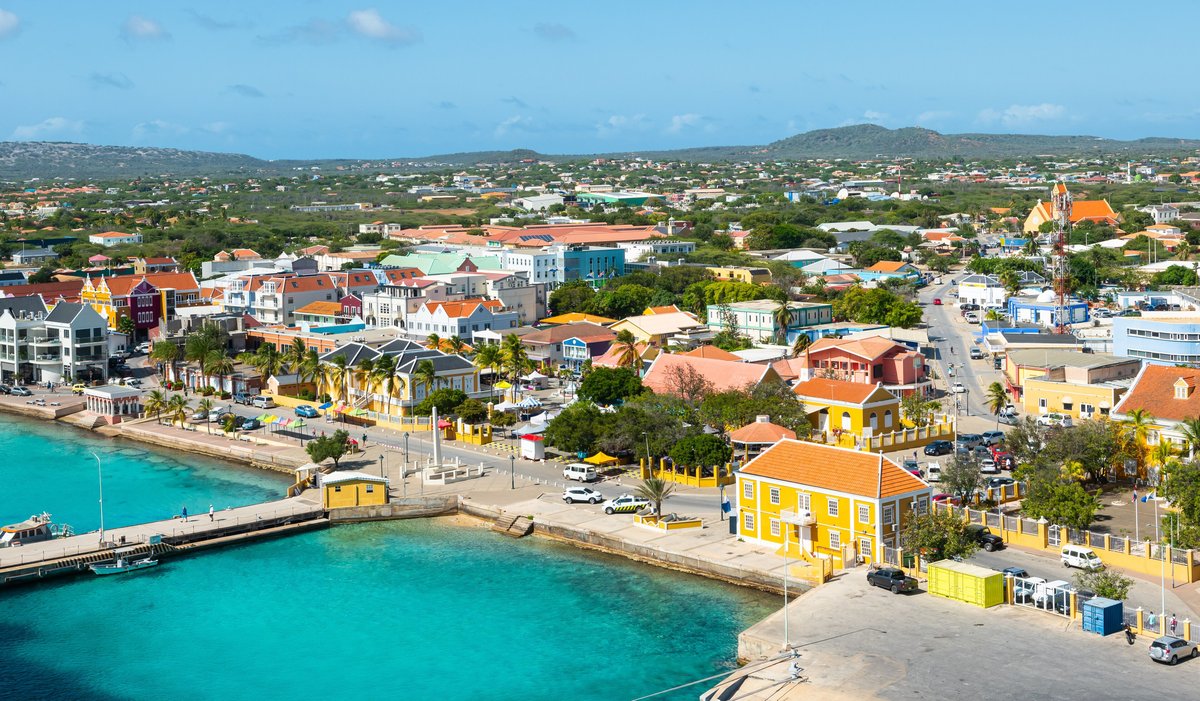
KRALENDIJK. Bonaire is a diving island of coral, flamingos, and salt pans, and it is filling up fast. Statistics Netherlands, the Dutch national statistics agency, CBS, reported that Bonaire counted 27,611 residents on January 1, 2026, an increase of 1,059 people, or 4%, in a single year. Nearly all of that came from migration: net migration added about 1,171 people, against natural growth of only 82. The components do not sum to the 1,059 total because the CBS table's change also includes other corrections. The number of residents born outside the Caribbean Netherlands rose by 924, led by people born in Colombia, the Dominican Republic, the European Netherlands, Curaçao, and Venezuela.
Put in regional terms, the three islands that make up the Caribbean Netherlands, Bonaire, St. Eustatius, and Saba, together passed 33,000 people, and Bonaire accounted for roughly 85% of that growth. For an island this small, an influx of more than a thousand new residents in a year is not a statistic; it is pressure on housing, water and schools, and on the tourism economy that draws people in the first place.
A tourism engine that is changing shape
The visitors are changing too. Preliminary figures from Tourism Corporation Bonaire, reported on October 9, 2026, showed 12,758 stayover tourists in September 2026, up 4.6% from a year earlier, a modest recovery after a soft stretch that included a 4% decline in July. The mix tells the deeper story. In September, visitors from the Netherlands made up 48.9% of arrivals, Americans 20.5%, and Curaçao 12.5%. Nearly half of the American visitors came to dive. Bonaire is, increasingly, a Dutch island that Americans visit for its water, and a swing in either market moves the whole economy.
That dependence is the island's strength and its exposure. A reef-and-dive brand commands loyal, high-value visitors, but it concentrates risk in a single natural asset and in two source markets. Every new resident is a claim on the same finite coastline, and the island's planners are increasingly asked to reconcile growth with the environment that is the product.
Money is the other pressure. Bonaire has used the US dollar as its currency since 2011, and BES attributes the island's price rise to that change. The result is a familiar island squeeze: the people arriving to work in tourism and construction are competing for housing with the very growth they service.
The long distance to The Hague and Brussels
Bonaire's biggest decisions are not all taken in Kralendijk. As a special municipality of the Netherlands since 2010, the island's fiscal and legal frame runs through The Hague. On October 1 and 2, 2026, representatives of Bonaire, Saba, and St. Eustatius met on Curaçao, alongside Aruba, Curaçao, Sint Maarten, and the Netherlands, to discuss building a joint platform for dealing with the European Union, as the regional outlet BES-Reporter reported. The islands hold Overseas Countries and Territories status with the EU. The aim of the talks was to track funding opportunities together and share the contacts and expertise that a 27,000-person island cannot easily maintain alone.
Those two threads, a population growing by migration and a search for European money, are really the same question asked twice. Bonaire is being pulled into the orbit of a wealthy kingdom and a wealthy union, which brings residents, investment, and standards faster than a small island administration can absorb them. The coming months will test whether Bonaire can convert that pull into housing and infrastructure for the people already arriving, and whether it can do so without spending down the reef that makes the island worth arriving for. It is a small place carrying a large version of the Caribbean's central dilemma: how to grow without being consumed by the growth.
Sources: Statistics Netherlands (CBS), population release of May 27, 2026; Tourism Corporation Bonaire, September visitor figures, as reported by Caribjournal (October 9, 2026); BES-Reporter, "Bonaire grows by more than a thousand residents"; BES-Reporter, on the joint EU platform talks (October 1 and 2, 2026); European Commission, Overseas Countries and Territories: Bonaire.
Read more at The Caribbean Ledger ›