Washington warms to Caracas, and the Caribbean counts the cost of energy
A year after the strikes, the American turn toward Venezuela is now mostly about oil and gas. For gas-short Trinidad and fuel-hungry importers, that shift is the biggest number on the horizon.
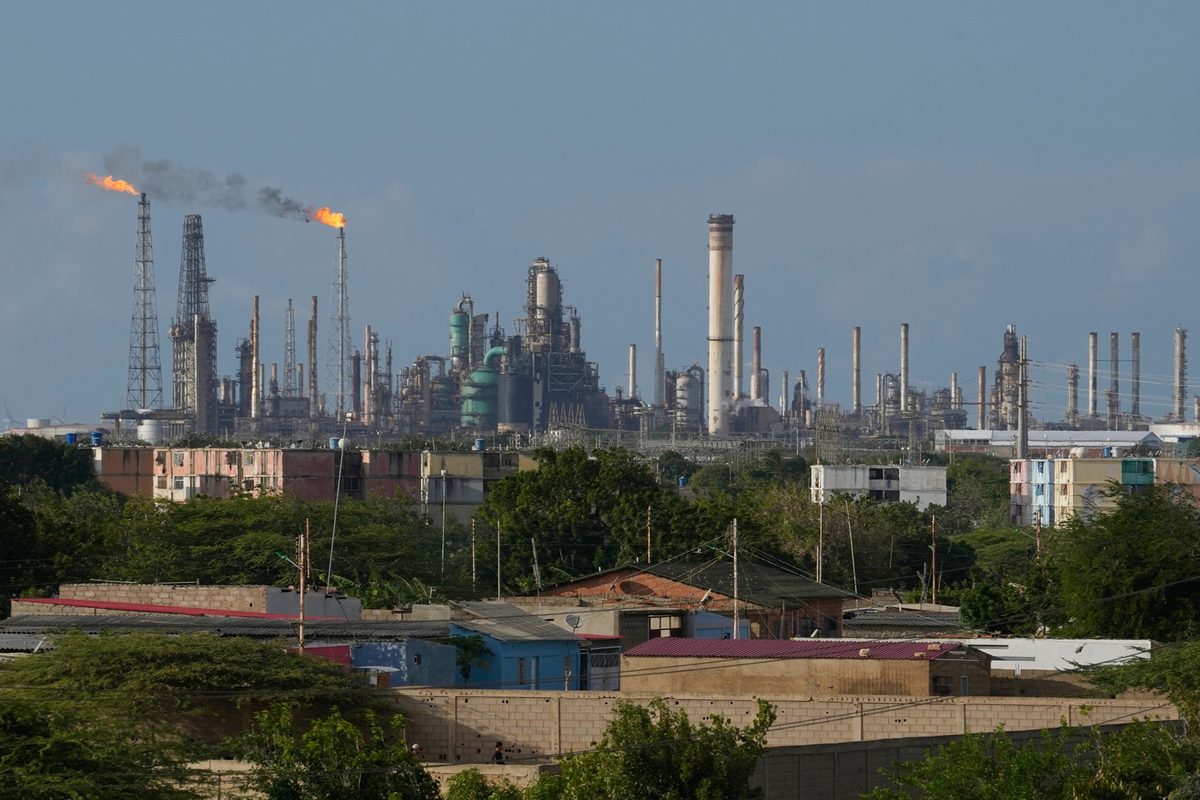
The loudest Caribbean story of a year ago, the American military campaign in the southern Caribbean, has quietly become an energy story. The strikes and the buildup that defined late 2025 have given way, through 2026, to sanctions relief, restored diplomacy, and a scramble by oil majors to pump Venezuelan crude and gas again. For the islands, the consequence of that pivot is not abstract. It is the price of fuel, the fate of Trinidad's half-empty gas plants, and the question of how closely the region wants to tie its energy future to Caracas.
The machinery of the thaw is visible in the licenses. On February 13, 2026, the United States Treasury's Office of Foreign Assets Control issued General License 49, covering contingent investment contracts, and General License 50, covering oil or gas sector operations, permitting American firms to support oil and gas work in Venezuela, a reversal with immediate commercial effect. On September 2, 2026, World Oil reported that Chevron plans to invest more than 7 billion dollars over five years, with output targeted at about 600,000 barrels a day, which the report describes as more than doubling output. On October 14, 2026, Al Jazeera reported that Washington lifted sanctions on Jorge Rodríguez, National Assembly president and brother of interim president Delcy Rodríguez, a step that reads less like a concession than a settlement.
Why Trinidad is the island with the most at stake
No Caribbean economy is more exposed to this than Trinidad and Tobago, and for once the exposure is an opportunity. Trinidad's export economy runs on natural gas it no longer produces in sufficient volume. Shell, which holds 45% of the Atlantic LNG plant alongside BP's 45%, has been working to bring Venezuelan gas across the maritime border to feed it. The Dragon field, estimated at 4.5 trillion cubic feet, is meant to be liquefied through Atlantic LNG, a plant that Reuters reported exported only about 9 million tons last year against a capacity of 12 million for want of gas. The shared Loran-Manatee field, with 7.3 trillion cubic feet on the Venezuelan side and 2.7 trillion on Trinidad's, is the larger prize behind it.

That is the subtext of this week's budget debate in Port of Spain. A government defending a TT$63.3 billion budget for fiscal 2027, with the IMF forecasting 0.8% growth for 2026, has an obvious interest in anything that refills its gas plants. Cross-border gas is not a line in the 2027 budget yet, because first gas has slipped before and licenses can be withdrawn. But it is the single development most likely to change Trinidad's revenue arithmetic, and therefore the region's largest energy producer's capacity to spend.
The importers do the same math in reverse
For the islands that buy fuel rather than sell it, the calculation runs the other way. President Luis Abinader and Venezuela's interim president Delcy Rodríguez met in Rome, according to the Dominican presidency. For the Dominican Republic, which imports nearly all its fuel, a nearby, cheaper supplier is a standing temptation, and the echoes of the old PetroCaribe arrangement are impossible to miss.
The region has been here before, and the memory should temper the enthusiasm. PetroCaribe's cheap financing left several Caribbean states carrying debt to Caracas long after the discounted oil stopped flowing. Hitching fuel security to a supplier whose politics and production have both proven volatile is a bet, not a bargain, and the sanctions that were lifted this year can be reimposed by the next decision in Washington. Guyana, meanwhile, watches all of this as the neighbor whose own oil boom and unresolved border dispute with Venezuela make the détente a complicated thing to cheer.
There is a moral ledger here too, not only a financial one. The government in Caracas that the region is now trading with is the same one whose conduct drew sanctions and a military campaign a year ago, and normalization rewards it. Reasonable Caribbean leaders disagree on whether cheaper energy is worth that, and the Ledger does not pretend the trade is cost-free. It simply insists that the cost be named alongside the savings.
The honest frame is that a geopolitical story has turned into a balance-sheet story, and the balance sheets are Caribbean. Cheaper gas for Trinidad and cheaper fuel for importers would ease real pressure on real budgets. The cost is a deeper dependence on a partner the region does not control, mediated by a Washington that can change its mind. The Ledger will track the licenses, the cargoes, and the contracts, and will treat each as a claim until a named party and a date confirm it has actually happened.
Sources: U.S. Treasury OFAC, General Licenses 49 and 50 (February 13, 2026); World Oil (September 2, 2026), on Chevron's plan; Al Jazeera (October 14, 2026), on the sanctions delisting; Caribbean National Weekly (May 2026), on the IMF's 0.8% forecast; Caribbean National Weekly, on Trinidad and Tobago's TT$63.3 billion FY2027 budget; Dominican Republic presidency, account of the Rome meeting (October 12, 2026).
Read more at The Caribbean Ledger ›