Pension reform is about more than regulation, Senator says
Ramon Small-Ferguson tells the Senate that Jamaica's retirement gap is about who saves at all, not only how pension funds invest.
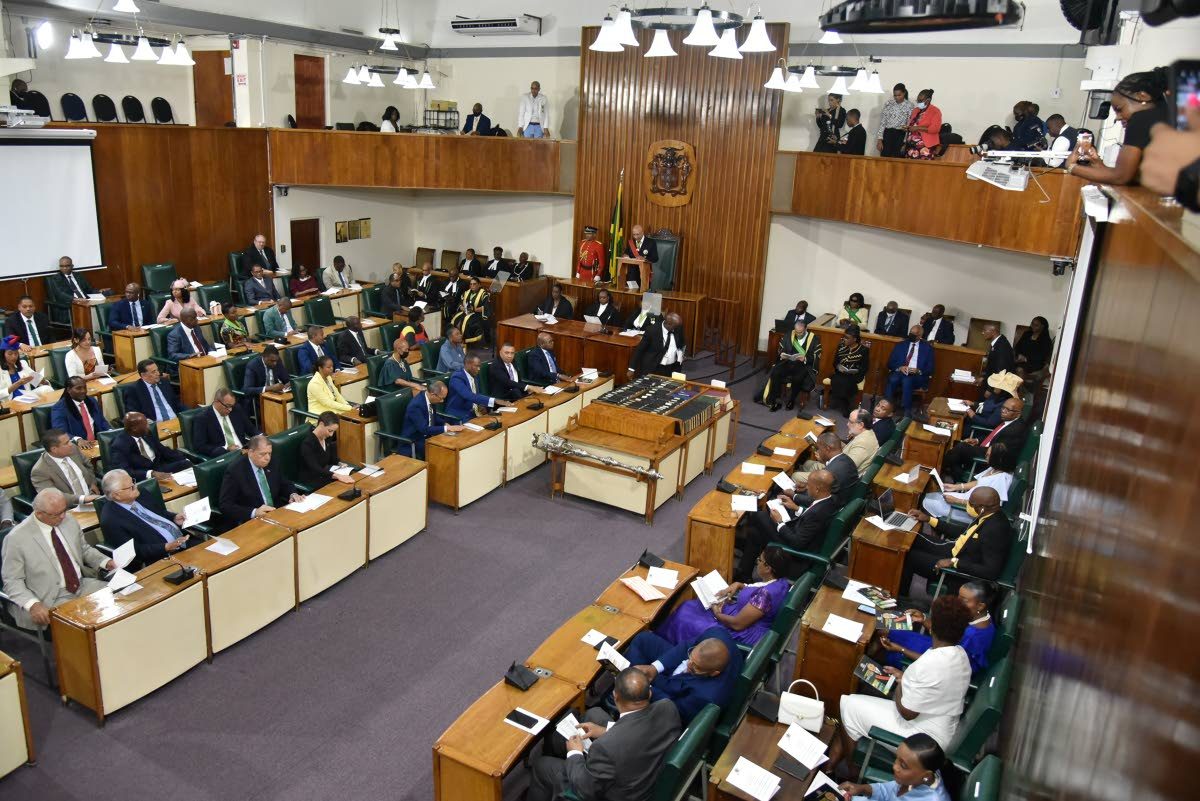
On Friday, October 16, 2026, Ramon Small-Ferguson, an opposition senator and chief executive of Barita Investments Limited, rose in the Senate to debate the Pensions (Superannuation Funds and Retirement Schemes) (Investment) (Amendment) Regulations, 2026. The regulations widen the room pension funds have to invest in private assets. He welcomed that change. Much of his contribution, however, turned to a larger question.
The same argument ran through the rest of his contribution: pension reform, he said, is about more than regulation.
The rules that changed
The October debate was not the first on this subject this year. The Senate approved earlier changes in July. The new limits rise in stages. Government Senator Dr Dana Morris Dixon, who piloted the regulations, set out the path: the ceiling moved from 5 percent of a fund's asset fair value, the level set in 2019, to an interim 7.5 percent until March 31, 2027, and then to 10 percent from April 1, 2027 (Jamaica Gleaner, October 17, 2026).
The argument for the change is about returns and balance. In July, when the Senate first approved the revised limits, Small-Ferguson told the Jamaica Observer that the largest asset class is Government of Jamaica debt, and that the move will allow for greater diversification over time. He also pointed to the potential for stronger returns (Jamaica Observer, July 12, 2026). The debate crossed party lines, and the new room the regulations create will depend on how funds use it. A government senator piloted the regulations, and an opposition senator welcomed them while pressing for a wider agenda.
The scale of the change was put in numbers during that July debate. Finance Minister Fayval Williams put the figure at more than $21 billion, based on about $847 billion in industry assets as of September 2025, when the change was first proposed in March 2026 (Jamaica Gleaner, March 10, 2026). Senator Kavan Gayle cited the estimate again in July (Jamaica Observer, July 12, 2026). The Ledger has not independently verified that estimate.

A coverage gap, not an investment problem
The speech's central argument is that Jamaica's problem is who saves. Citing a Financial Services Commission consultation paper from March 2026, Small-Ferguson said that under 20 percent of the employed labour force contributed to a public or private pension arrangement at the end of 2025 (Jamaica Observer, October 18, 2026).
Participation also varies widely by sector. Private pension participation was about 49.5 percent in commerce and finance in 2024, against 4 percent in manufacturing, 1.75 percent in mining and construction, and 0.58 percent in agriculture, according to Financial Services Commission data cited in the debate (Jamaica Gleaner, October 17, 2026; Jamaica Observer, October 18, 2026).
He set Jamaica against its peers as well. He cited 56 percent of U.S. civilian workers in employer-sponsored retirement arrangements in March 2026, 82 percent of UK employees in workplace pension schemes in 2024, and 91.2 percent of Costa Rica's working-age population in mandatory-funded arrangements in 2024. These figures are as cited in the speech (Jamaica Observer, October 18, 2026). The Ledger has not checked them against the original releases from the U.S. Bureau of Labor Statistics, the UK Office for National Statistics or the OECD.
Farmers are the clearest case

The sharpest example was agriculture. Small-Ferguson said that fewer than one in every 100 agricultural workers is in a pension scheme. He also cited more than 240,000 registered farmers in Jamaica, a figure the Gleaner reported without a named source (Jamaica Gleaner, October 17, 2026).
"Someone who has spent a lifetime feeding this country should have a fair opportunity," he told the Senate, according to the Observer's account of the speech (Jamaica Observer, October 18, 2026).
His remedy was a targeted approach rather than a single national plan. The Gleaner reported that he called for a pilot with the Rural Agricultural Development Authority and suggested that farmers could set money aside between planting and harvest cycles (Jamaica Gleaner, October 17, 2026). He also acknowledged the basic difficulty of setting money aside for retirement.

Indexation and the cost of living
The cost-of-living argument is the one most households will feel first. Inflation reached 8.6 percent in September 2026, up from 7.9 percent in August, according to the Statistical Institute of Jamaica as cited in the speech. The Bank of Jamaica's target range is 4 to 6 percent (Jamaica Observer, October 18, 2026).
Small-Ferguson urged the government to pursue "properly designed indexation reform." He was careful about cost. According to the Observer, he called for attention to sustainability and argued against a presumed formula or a guaranteed increase.

The reason is simple. "When a pension remains fixed while food, medication, utilities and transport become more expensive," he said, the retiree absorbs every price rise on their own (Jamaica Observer, October 18, 2026).
Ideas beyond the regulations
Beyond investment limits, the speech moved to coverage. The Financial Services Commission's March 2026 consultation paper sets out the next stage, Phase II of pension reform, and the Senator's focus on participation tracks that agenda.
He also asked government to examine a modest matching contribution for lower-income workers, with costing needed first, and raised the recognition of unpaid care. He pointed to people such as "the woman who has spent 30 years caring for other people's homes," whose years of work rarely build a pension (Jamaica Observer, October 18, 2026). His answer to that gap is early preparation, while people are still earning.

What to watch
The regulations give pension funds a wider set of options, and that matters for returns. Small-Ferguson speaks from the investment side of the market as chief executive of Barita Investments Limited, which gives his argument weight. The coverage did not address risk in detail, however. Pension funds that hold more private assets will need clear valuation and disclosure rules to protect members, and members should ask how those values will be reported. The speech's point is that returns alone will not decide whether Jamaicans can retire with security. Coverage will.
The tests are concrete. The first is whether the participation figures move after Phase II, auto-enrolment and a farmers' plan are put in place. The second is whether indexation reform can be designed so that the government can afford it. The third is whether the 10 percent investment limit, due from April 2027, is used in a way that improves the returns members actually receive.

The test the speech sets is a practical one. Pension reform is about more than regulation. It is about giving more Jamaicans the opportunity to build greater financial security in retirement. The Ledger will follow whether the coverage numbers move with it.
Sources
Jamaica Gleaner, "Senator calls for targeted pension plan for farmers," Edmond Campbell, October 17, 2026. Jamaica Observer, "Small-Ferguson urges Gov't to pursue indexation reform to protect purchasing power of pensioners," October 18, 2026. Jamaica Observer, "Senate approves pension rule changes, unblocks billions in private equity," July 12, 2026. Jamaica Gleaner, March 10, 2026, on the $21 billion estimate. Financial Services Commission, consultation paper "Deepening Pension Adequacy and Coverage," March 2026, as cited in the speech. Financial Services Commission industry participation data, 2024, as cited in the speech. U.S. Bureau of Labor Statistics, March 2026; UK Office for National Statistics, 2024; OECD, Pensions at a Glance 2025; all as cited in the speech.
Read more at The Caribbean Ledger ›