Progression, not recession: Persad-Bissessar's budget defense
In the 2027 budget debate, opposition leaders argued the economy is in recession, while the forecasts disagree. The debt the country must refinance tells the harder story.
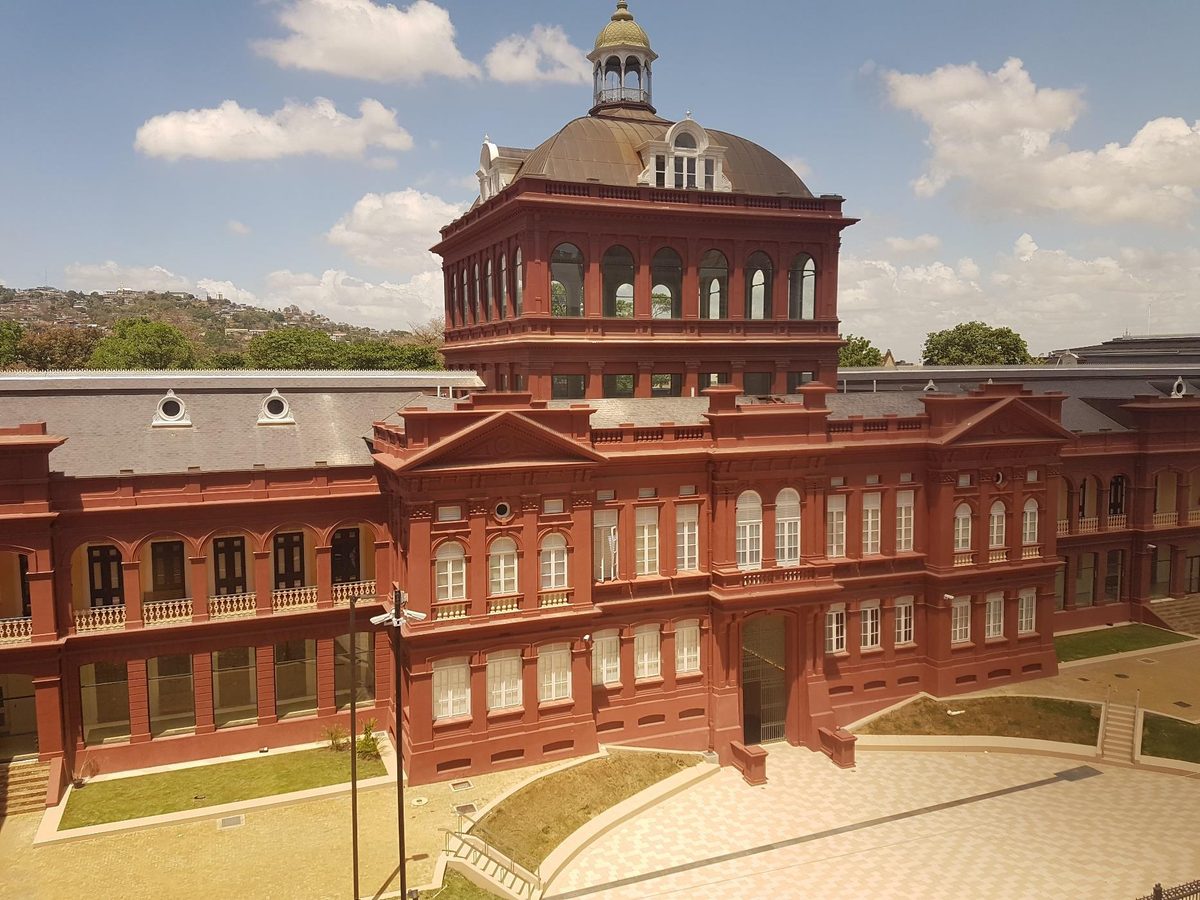
PORT OF SPAIN. Prime Minister Kamla Persad-Bissessar used the 2027 budget debate in the House of Representatives this week to reject the opposition's central charge, that Trinidad and Tobago has slipped into recession, and to argue the opposite. According to the Guardian Media Newsroom, reported by CNC3 on October 19, 2026, she argued that Trinidad and Tobago is not standing still but is in progression.
Her evidence was the International Monetary Fund's own projections. The prime minister cited the Fund's May 2026 Article IV projection of 0.8% growth for 2026, a figure she said contradicts the opposition People's National Movement's narrative of decline. The framing matters for a twin-island economy whose fortunes still track the price of gas and the volume it can actually produce.
The recession argument turns on how one reads a soft present against a firmer forecast. The IMF's May 2026 projection of 0.8% for 2026 is not a contraction, and its October outlook of 0.2% is flatter still. Both are close enough to flat that a reasonable critic can call it stagnation and a reasonable minister can call it a floor before recovery. The Ministry of Finance, as reported by The Rio Times, projects a 2.2% contraction for 2026, so the forecasts disagree. The government's case is that the turn is already scheduled; the opposition's case is that forecasts are not deposits. Both can be true until the outturn is known, and the Ledger will weigh the 2026 result against the IMF figure when it lands rather than before.
The number that does not flatter anyone
The harder figure in the debate was debt. Adjusted government debt rose from near 114 billion dollars in September 2015 to 140.58 billion dollars in September 2024, an increase of about 23%. The 2024 figure is from the Central Bank of Trinidad and Tobago's Annual Economic Survey 2024. The 2015 baseline is from a Guardian Media analysis updated April 6, 2025, which put adjusted debt at 142.1 billion dollars in December 2024, a slightly different measure. Finance Minister Davendranath Tancoo told the House that the government has borrowed more than 21 billion dollars to refinance debt it inherited, with roughly 70 billion dollars falling due over the next five years. Those are Trinidad and Tobago dollars, and they describe a refinancing wall that will shape budgets no matter who is in office.
Read plainly, the debt remarks were an argument about inheritance rather than a celebration. A government that must roll over 70 billion dollars within five years is a government whose room for maneuver is set largely by the terms it can get in the market, and by whether the energy sector delivers the revenue to service what it owes. That is why the gas question, and the slow thaw in relations between Washington and Caracas that could refill Trinidad's gas plants, sits underneath every line of this budget.

That dependence cuts both ways in the recession debate. If cross-border gas from Venezuela begins to flow, it could change the energy outlook. If it does not, the outlook stays as uncertain as it is now. The honest position is that Trinidad's growth path is tied to a molecule it does not fully control, which is precisely why the government treats every signal from Washington and Caracas as budget news.
Divestment, and the word the government would not accept
Persad-Bissessar also addressed the state's divestment plans in the debate. The sale of the Magdalena Grand Beach and Golf Resort was announced in a September 30 budget by then-Finance Minister Colm Imbert. She argued that state assets are being reviewed on their merits rather than sold in a hurry.
Whether that claim holds will be judged by the terms of any sale, not by the language used to describe it. The test, as always, is price and process: who buys, at what valuation, and whether the public can see the deal.
There is a politics to all of this that the numbers understate. The administration is governing against an opposition that smells vulnerability in a soft year, and a budget debate is as much theater as accounting. Calling the economy in progression is a claim about momentum that voters will test against their own bills long before the IMF publishes an outturn. The Ledger's interest is narrower and simpler: the growth number, the debt rolled over, and the price any state asset actually fetches, each reported when it is real.
For now the picture is of a government defending a soft year with a firmer forecast, carrying a heavy refinancing load, and trimming a portfolio of state assets it would rather not fund. That is not a recession on the IMF's numbers. It is also not comfort. The 2027 budget will pass on the government's majority; the argument over whether progression is real will be settled, as it should be, by the data the Central Bank of Trinidad and Tobago and the Central Statistical Office publish in the months ahead.
Sources: Hansard, House of Representatives of Trinidad and Tobago (October 12, 2026), Finance Minister Davendranath Tancoo; Central Bank of Trinidad and Tobago, Annual Economic Survey 2024; Guardian Media, adjusted debt analysis (updated April 6, 2025); IMF Article IV, May 2026, as reported by Caribbean National Weekly; The Rio Times (October 19, 2026), on the Ministry of Finance and IMF October projections.
Read more at The Caribbean Ledger ›