A $127 million question lands in the Bahamian House
The government is celebrating its first post-independence surplus. The opposition wants to know why a windfall in dividends and interest is three times larger than the surplus itself.
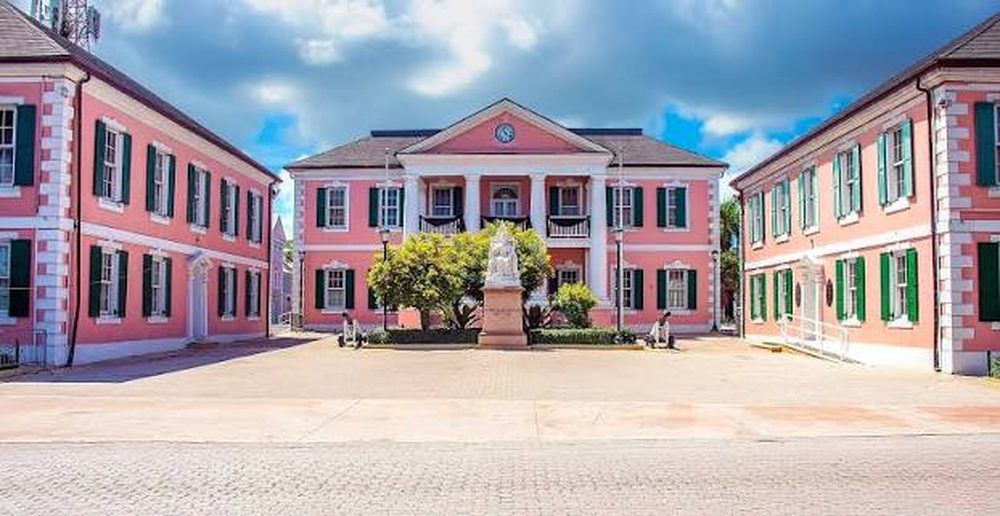
NASSAU. The Bahamas has a surplus to celebrate and an argument to settle, and the two are tangled together. The government has reported a rise of 126.8 million United States dollars in interest and dividend income, a figure the opposition finance spokesman, Kwasi Thompson, raised in Parliament on October 21, 2026 and described as almost 127 million dollars, more than three times the reported surplus.
The Nassau Guardian reported his remarks on October 22. He wants a breakdown, which public entities paid the money, and from what source.
The backdrop is a milestone the governing party has been happy to repeat. Prime Minister Philip Davis announced earlier in October a surplus of close to 40 million dollars for the 2025 to 2026 fiscal year, framing it as the first since the country became independent. That the surplus came in below the original projection of 75 million dollars has not dimmed the government's message. A surplus is a surplus, and for a country that has run deficits through hurricanes, a pandemic and a tourism collapse, the symbolism is real.

Where the money came from
Thompson's point is narrower and sharper. If a single line, income from interest and dividends, jumped by almost 127 million dollars, then the composition of that jump matters more than the surplus headline. Dividends from public corporations are not the same as tax revenue from a growing economy.
One reflects a recurring, broad-based improvement. The other can reflect a one-time transfer from a state-owned entity's balance sheet into the central government's accounts, which flatters a single year and leaves the entity weaker.
"Public money is not the government's money," Thompson told Parliament, according to the Guardian. He pointed to a 10.9 million dollar loan to the Public Parks and Beaches Authority, which he said had used its 29 million dollar annual subsidy within nine months, and to further loans extended to the National Sports Authority, the Broadcasting Corporation and the Public Hospitals Authority. Where those entities cannot repay, he argued, the transaction is something other than a loan. "It is financial assistance," he said.
An accounting question that is really a governance question
The government was not quoted in the Guardian's account, and the surplus framing belongs to the prime minister's earlier announcement rather than to a rebuttal of Thompson's specific numbers. That gap is itself part of the story. The questions he is asking are answerable with a table. Which corporation paid the dividend.
Whether it was declared from current profit or from reserves. Whether the loans to the parks authority, the sports authority, the broadcaster and the hospitals will be repaid, and on what schedule. None of that requires a political argument. It requires a schedule of payments, and the absence of one invites the suspicion that the surplus leans on a windfall that will not repeat.

This is the unglamorous heart of public finance, and it matters well beyond Nassau. Across the region, governments under pressure to show balanced books have every incentive to reach for the dividends of the entities they own. Done transparently, with the numbers published, it is a legitimate use of public assets.
Done quietly, it converts a company's long-term health into a government's short-term headline. The Bahamian surplus may turn out to be exactly what the government says it is, the first of several. Or it may turn out to rest on a transfer that cannot be made twice.
The difference is 127 million dollars, and the only way to know is to see the breakdown Thompson is asking for. A surplus is a number. Accountability is the work of showing how it was built.
The parks authority example is the one to watch, because it is the most specific. An entity that received a 29 million dollar annual subsidy and, by Thompson's account, used it within nine months, before being extended a further 10.9 million dollar loan, is not obviously a source of surplus dividends. It looks closer to the opposite, a body that consumes public money rather than generating it.
If entities in that condition are nonetheless appearing on the revenue side of the national accounts through loans and transfers, then the composition question is not academic. It goes to whether the surplus is a measure of the government's finances or a measure of its accounting.
For Bahamian households, the practical stake is straightforward. State corporations that are drained to flatter a central-government account are the same corporations that run the parks, the hospitals and the national broadcaster. The question of where the 127 million dollars came from is, in the end, a question about whether those services are being funded or quietly mortgaged. Parliament is the right room to ask it, and October 21 was a reasonable day to start.
Read more at The Caribbean Ledger ›