Montserrat buys back its lifelines, one flight and one drone at a time
Three decades after the volcano, the island's survival strategy is unglamorous and specific: a locked-in air route, a port under construction again, and a navy drone learning to fly over the dead zone.
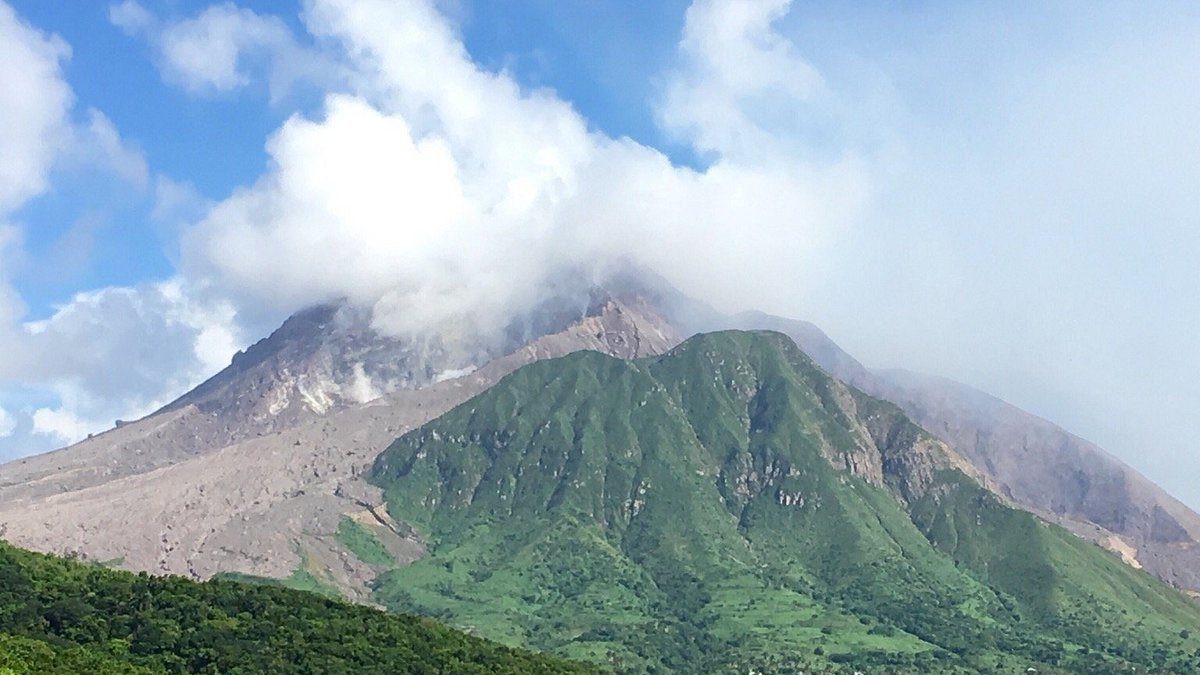
BRADES. Montserrat does not get to take access for granted. The volcano that buried its capital, Plymouth, in the 1990s left a small island with a small population, an exclusion zone across its southern half, and a permanent problem of connection.
So the news out of Montserrat this month is the news that matters most to a place like it, which is the news about getting on and off, and about surviving the next disaster. It is not dramatic. It is a three-year flight deal, a port under construction, and a drone over the dead zone.
On October 16, 2026, Montserrat and the regional carrier WINAIR signed a three-year agreement for at least three flights a week to Sint Maarten, running through September 30, 2029 on Twin Otter aircraft, with annual operational reviews, Discover Montserrat reported on October 17. The route is part of what the government calls its three-year Access Strategy, and it builds on a service WINAIR began in May 2025. The language around it was the language of a utility, not a luxury. "Reliable air access is vital to Montserrat and to the wider Caribbean region," the airline's chief executive, Hans van de Velde, said, a line corroborated by the aviation tracker CentreForAviation on October 20.

A drone learns the dead zone
The most striking item was military, and it was about the next emergency rather than the last one. During a visit by the Royal Navy patrol vessel HMS Trent from October 6 to 8, the ship tested two drones over the island, Discover Montserrat reported on October 12, citing a Government House release of the same day. On the last day of the visit, one drone flew over the volcanic exclusion zone to simulate a rapid aerial damage assessment, the kind a government would need in the first hours after a hurricane or an eruption.
A second drone flew to Rendezvous Beach and landed, testing whether aircraft of that type could one day deliver medical equipment, medicine and water. The beach was chosen because it is unpopulated, reducing the risk of a first-time capability test. The release described it as one of the Royal Navy's first exercises of its kind.
For an island whose geography can cut off a community in an afternoon, a drone that can survey the exclusion zone and ferry supplies is not a gadget. It is the difference between waiting for a ship and reaching a stranded settlement the same day. The exercise was a trial, not a deployment, and should be read as such. But it points at the kind of resilience a volcano-shadowed island actually needs, which is the ability to see and to supply its own hard-to-reach places without waiting on help from elsewhere.
The port, again
The third lifeline is the one Montserrat has been trying to build for years. The redevelopment of the port at Little Bay, funded through the United Kingdom Caribbean Infrastructure Fund by way of the Caribbean Development Bank, restarted in September 2025 under a new agreement with Meridian Construction Company, after a halt in 2024 over design and financing disputes, the BES Reporter reported at the time. The minister responsible, Veronica Dorsette-Hector, said the arrangement "restores confidence and provides a clear path to delivery." A deep-water port is what would let Montserrat receive cargo, and cruise visitors, at the scale a modern economy needs, and its long and stop-start history is a fair measure of how hard infrastructure is to deliver on a small island dependent on external funding.
Those visitors are part of the plan. The Montserrat Tourism Authority has set a 2026 to 2027 cruise schedule, with ships calling between October and April and excursions to the buried former capital and to St George's Hill, the vantage point over the ruins, the authority announced in August. "Every cruise call provides an opportunity for us to showcase what makes Montserrat different," the authority's chief executive, Rosetta West-Gerald, said. What makes it different is, partly, the catastrophe it survived, which is now also an attraction.

The ordinary business of government continued alongside the lifelines. The Ministry of Health issued an advisory in early October as respiratory illnesses increased, and invited residents to help shape the island's health services through a public consultation. None of it is the kind of story that travels beyond the Leeward Islands.
All of it is the kind that decides whether a few thousand people can keep living on a volcano's flank with a future in front of them. Montserrat's strategy this month was to lock down a flight, push a port forward, and teach a drone to fly over the part of the island people cannot. For an island in focus, that is the whole game.
Read more at The Caribbean Ledger ›