A declaration in Hamilton, and the slow work of giving the high seas a guardian
Bermuda and the United Kingdom have signed the Hamilton II Declaration, with the Bahamas, Cayman, and Turks and Caicos joining, opening a path to the first legally binding protections for the Sargasso Sea. The Caribbean's overseas territories are claiming a seat at an ocean-governance table.
HAMILTON. At Government House in Bermuda on October 20, 2026, officials signed a document with an unglamorous name and a genuinely novel ambition. The Hamilton II Declaration, signed by Bermuda's Minister of Public Works and Environment Jaché Adams and the United Kingdom's Minister for the Overseas Territories Uma Kumaran, with Premier David Burt in attendance, begins a process to adopt legally binding protections for the Sargasso Sea, an effort the signatories describe as providing "a global framework for legal protections that did not previously exist." The reporting ran in Bermuda's Royal Gazette and Bernews, and Caribbean National Weekly reported on October 21 that the Bahamas, the Cayman Islands, and the Turks and Caicos Islands had joined, alongside the Azores, Monaco, and more than twenty non-governmental organizations.
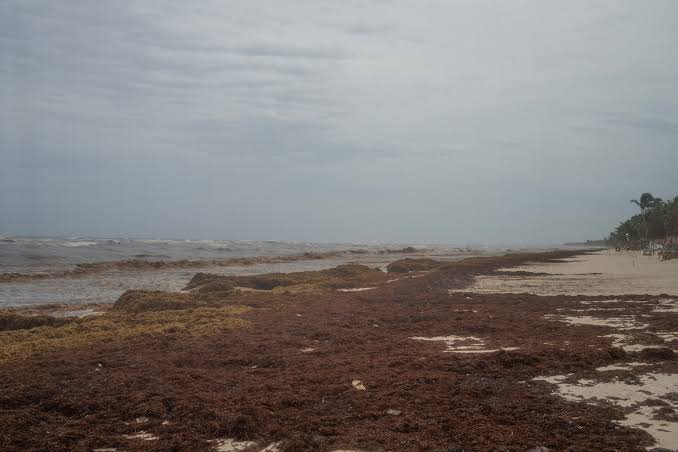
A word of precision is owed to the reader, because two very different things share a similar name. The Sargasso Sea is a vast, calm region of the North Atlantic, bounded not by land but by currents, named for the floating sargassum seaweed that carpets its surface and shelters eels, turtles, and juvenile fish through their most vulnerable years. It is not the same as the sargassum inundation that fouls Caribbean beaches each summer, and none of the documents signed this month claims to address that coastal problem. The Hamilton II Declaration is about the open ocean, the two-thirds of the sea that lies beyond any nation's jurisdiction and that, until very recently, almost no law could protect.
Why a declaration, and why now
The timing is not accidental. The declaration builds on an earlier 2014 Hamilton Declaration and is designed to feed into the United Nations agreement on Biodiversity Beyond National Jurisdiction, the high-seas treaty known as the BBNJ Agreement, which has now entered into force. For the first time, the international community has a mechanism through which parties can agree binding, enforceable protections for a named stretch of the open ocean. The Sargasso Sea, long championed by the Sargasso Sea Commission, is the obvious first candidate, and the signatories plan a further signing at the first BBNJ Conference of the Parties, scheduled for January 2027 in New York, where the European Union is expected to add its name.
The quotations from the signing were less about law than about inheritance. "In Bermuda, you grow up knowing the ocean," Adams said. "One day our children will judge our stewardship of the ocean they inherit." Kumaran, for her part, called the Sargasso Sea "one of the most vital parts in the marine ecosystem," and promised, "I will be back." The rhetoric matters less than the architecture. Declarations of ocean stewardship are cheap and common.
A declaration tied to a treaty that has entered into force, with a date certain for binding measures, is something rarer: a path from sentiment to enforcement.
The Caribbean seat
The reason this belongs on a Caribbean climate page is the identity of the signatories. The Bahamas, the Cayman Islands, and the Turks and Caicos Islands are small jurisdictions, three of them British Overseas Territories, taking part in the governance of the global commons alongside sovereign states and European powers. The Dominican Republic signed the original Hamilton Declaration in 2018 and the Bahamas in 2016, so the regional thread is not new, but the step toward binding protection is. For states and territories whose economies and very survival depend on a healthy ocean, a seat at the table where high-seas rules are written is worth more than its symbolism.
These are places with little weight in most international forums. Ocean governance is one arena where their stake is existential and their voice, pooled with others, can carry. Bermuda, which hosted the signing and lends the declaration its name, has positioned itself as a convening point for this work, a role that gives a small Atlantic territory outsized relevance in a negotiation that will shape the ocean its economy and identity depend on.
The honest caveat is that a declaration is a beginning, not an achievement. Binding measures still have to be negotiated, adopted at the January conference and beyond, and then enforced on a stretch of ocean no coast guard patrols. The gap between a signing ceremony and a protected sea is measured in years and in the willingness of distant fishing fleets and shipping lines to comply with rules made far from their decks. The Caribbean's experience of climate diplomacy, from loss-and-damage funds to resilience financing, is a long education in the distance between a communique and a disbursement.
Still, the region has learned that it must be in the room when the rules are drafted, because it is never in the room when they are broken. This month, in Hamilton, three Caribbean jurisdictions took their seats. The work of making the words bind is the next decade's. It has, at least, begun.
Read more at The Caribbean Ledger ›