Curacao bargains over Dutch money and reaches for a CARICOM seat
Three weeks before the Kingdom Summit, Willemstad is pushing back on the terms of an extended reform deal with The Hague, even as it secures a long-sought place, without a vote, at the Caribbean's own table.
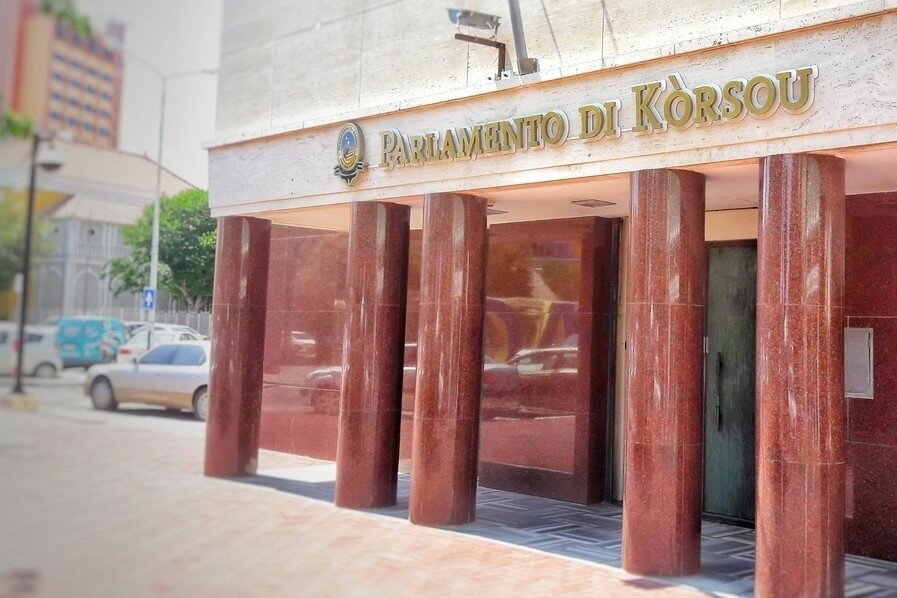
WILLEMSTAD. Curacao is doing two things at once this month, and together they describe the narrow room a small autonomous country has to maneuver between two regional orbits. On one side sits The Hague, which pays for much of the island's reform program and wants a say in how the money is spent. On the other sits CARICOM, the Caribbean grouping Curacao has now joined as an associate member, gaining a voice in regional affairs if not a vote.
The island's week was spent negotiating the price of the first and the meaning of the second.
The money question is the sharper one. According to the Curacao Chronicle, the Netherlands has offered Curacao, Aruba, and Sint Maarten a two-year extension of the Mutual Arrangement on Cooperation in Reforms, the Landspakket, which would run the program to April 2029. The current arrangement expires in April 2027. Each country's parliament must approve, and Curacao's has reservations.

The dispute is not over whether to reform but over who chooses the reforms and how Dutch funding is allocated. The Dutch Ministry of the Interior and Kingdom Relations said its funding "must be spent efficiently and effectively," and that it would support only reforms "with a realistic chance of completion by April 2029" and "a clear commitment from the responsible authorities." Willemstad wants to set its own priorities rather than accept a list drawn up in The Hague. The deadline to respond is November 30, 2026.
The disagreement is less dramatic than a rupture and more revealing for it. Aruba's and Sint Maarten's prime ministers have signaled willingness to continue the arrangement, leaving Curacao as the reluctant partner at the table. The Landspakket dates from the pandemic, when the three Dutch Caribbean countries accepted Dutch liquidity support in exchange for a program of governance, financial, and economic reforms overseen from The Hague. Supporters credit it with steadying public finances; critics on the islands have long chafed at conditions they see as paternalistic, a reform agenda written by the creditor rather than the country.
Prime Minister Gilmar Pisas and the Reform Commission's president, Caryl Monte, have spent recent days briefing parliamentarians on how the program has been implemented and evaluated, the groundwork for a decision that must be made by month's end.

A seat, and its limits
The CARICOM move is more symbolic, and the island's government is careful to say so plainly. Associate membership, multiple regional outlets confirmed this month, lets Curacao take part in discussions across most CARICOM institutions, including the Conference of Heads of Government and the Council of Ministers, and to propose programs and benefit from regional initiatives, mainly in its areas of autonomy such as economic development, public health, and education. What it does not grant is a vote. Quorum in CARICOM is calculated on full member states alone, so Curacao's participation changes none of the bloc's decision rules, and the island is barred from the Council for Foreign and Community Relations, which the Revised Treaty of Chaguaramas reserves for full members.
Full membership is open only to independent states, and Curacao is a constituent country of the Kingdom of the Netherlands.
Prime Minister Gilmar Pisas has emphasized the practical benefits: access to official CARICOM communications, to the Secretariat's technical services, and to the forums where regional standards on trade, health, and education are set. For an island whose economy leans on tourism, logistics, and financial services, a seat in those rooms, even a silent one, is a way to shape rules it will have to live by regardless. Pisas has been blunt about the calculation, emphasizing the financial and technical benefits a seat confers even without a vote: access to regional markets, standards, and cooperation that a small open economy cannot replicate on its own. It is membership as leverage, not as belonging.
The summit backdrop
Both threads run toward the same date. The Kingdom Summit, the first of its kind, convenes in Sint Maarten on November 17 and 18, 2026, and the four Dutch Caribbean partners are arriving with grievances as much as agendas. Curacao has carried the region's poverty numbers to that table, as this paper reported this month. Sint Maarten is hosting while wrestling with its own 2027 budget.
Aruba, having closed its refinery for good, is counting the jobs and the cleanup bill. The Landspakket fight is, at bottom, an argument about whether autonomy inside the Kingdom means setting your own course or administering someone else's, and it will not be settled by November 30. What Curacao's week shows is a small state working every lever it has: pressing The Hague for terms it can own, and reaching across the water for a Caribbean identity that the Kingdom relationship has never quite allowed it to claim. Neither orbit offers escape.
Between them, there is room to bargain.
Read more at The Caribbean Ledger ›