A Pentagon signature, and the Caribbean's deepening place in Washington's campaign
Guyana has formalized an enhanced defense partnership with the United States even as a year-long American strike campaign in regional waters passes 220 dead. The Zone of Peace is being tested one agreement at a time.
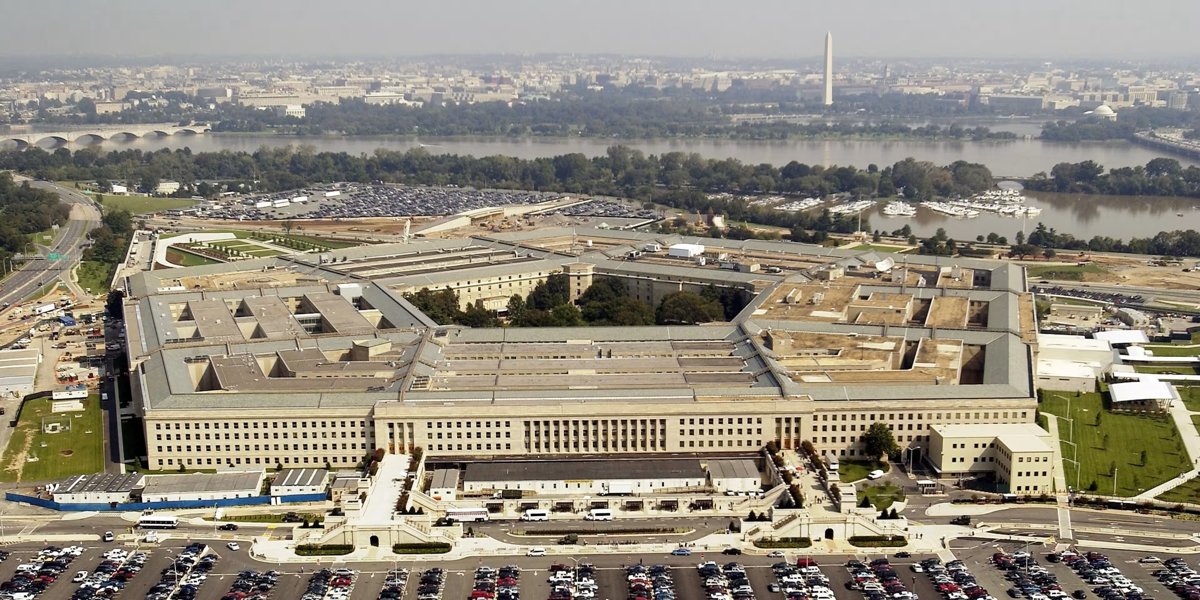
WASHINGTON. On October 21, 2026, at the Pentagon, Guyanese President Mohamed Irfaan Ali and United States Secretary of Defense Pete Hegseth signed a joint declaration establishing what both governments called an enhanced defense partnership, expanding joint training that includes air and maritime interdiction, according to Anadolu Agency, citing a Pentagon statement. The language was warm. Ali called it "the era of action" and said Guyana looked forward to working with Washington "in a stronger way." Hegseth praised Ali's regional leadership as "indispensable" and, in remarks reported by the Grenada Chronicle, framed the agreement as an extension of "President Trump's Corollary of the Monroe Doctrine." That phrase, more than the signatures, is the story.
The signing did not happen in a vacuum. It happened in the thirteenth month of a United States campaign of strikes on vessels Washington says are trafficking drugs, a campaign that has killed, by the most widely supported counts, more than 220 people across dozens of boats in Caribbean and Pacific waters since September 2025. The Grenada Chronicle put the toll at 238; human-rights monitors and United Nations tallies cited earlier in the autumn gave figures in the 220s, depending on the cutoff. Whatever the exact number, it describes a sustained use of lethal force in the hemisphere's waters on a scale the region has not seen in a generation, and Guyana has now tied its own military more closely to the power conducting it.
Why Georgetown signs
For Guyana, the logic is not hard to follow. It is a young oil producer sharing a long, contested border with Venezuela, whose claim to the Essequibo region remains before the International Court of Justice. A formal defense relationship with the United States, complete with combined exercises and air-domain awareness, is insurance against a far larger neighbor, bought at a price Georgetown evidently considers acceptable. The counter-narcotics framing gives both sides a shared mission to point to, and the critical-minerals and defense-industrial threads that have run alongside the security talks give the relationship an economic spine.

The Essequibo dimension is never far from the surface. The disputed region makes up roughly two-thirds of Guyana's territory and sits atop much of its onshore and near-shore promise, and Caracas has periodically escalated both its rhetoric and its official maps. A defense relationship with the United States does not resolve the case now before the court, but it changes the risk calculus around it, signaling to Caracas that an incursion would not be a bilateral matter. The critical-minerals thread running alongside the security talks ties Guyana into a United States effort to secure supply chains outside Chinese control, giving Washington an economic reason to care about Guyanese sovereignty that outlasts any single administration's enthusiasm for boat strikes.
The regional cost is subtler and slower to show. CARICOM declared the Caribbean a Zone of Peace in 2014, a doctrine that treats the region as a space where disputes are settled without external military force. A strike campaign run by an outside power, and a member state formalizing a defense alliance with that power, both press on that doctrine from different directions. Trinidad and Tobago, nearest to Venezuela and most exposed to any escalation, has had to calibrate its own posture carefully.
Other capitals have voiced unease. Several have pointed out that a doctrine declared to keep the region free of external military force sits awkwardly beside both a foreign strike campaign in its waters and a member state's new alliance with the power conducting it. The Zone of Peace has never been a treaty with teeth; it is a shared understanding, and shared understandings erode not with a single breach but with a series of individually defensible choices.
The precedent
What makes the Guyana declaration consequential beyond Georgetown is that it is a template. If a counter-narcotics and defense partnership with Washington buys a small state security and standing, other small states will be asked, implicitly or explicitly, why they have not signed one too. The Monroe Doctrine language Hegseth reached for is not neutral. It frames the hemisphere as a United States sphere of responsibility, a framing most Caribbean governments have spent the postcolonial era resisting in favor of nonalignment and regional solidarity.
A single signature does not overturn that. A pattern of them might.
For readers in the region, the concrete consequence is this. The security architecture of the Caribbean is being rewritten in real time, not by a grand regional decision but by bilateral deals struck in foreign capitals, each one rational on its own terms. The money, the minerals, and the missiles are all moving in the same direction. Whether the Zone of Peace survives as more than a phrase will depend less on what any outside power does than on whether the region's own governments decide, together, what they are willing to sign.
This week, one of them signed. The others are watching, and calculating.
Read more at The Caribbean Ledger ›