Bukele launches a rescue mission as gangs hold four of Haiti's foreign enforcers
El Salvador says four of its personnel serving with the UN-backed Gang Suppression Force are being held after an ambush near Port-au-Prince. President Nayib Bukele has ordered a military operation to get them back.
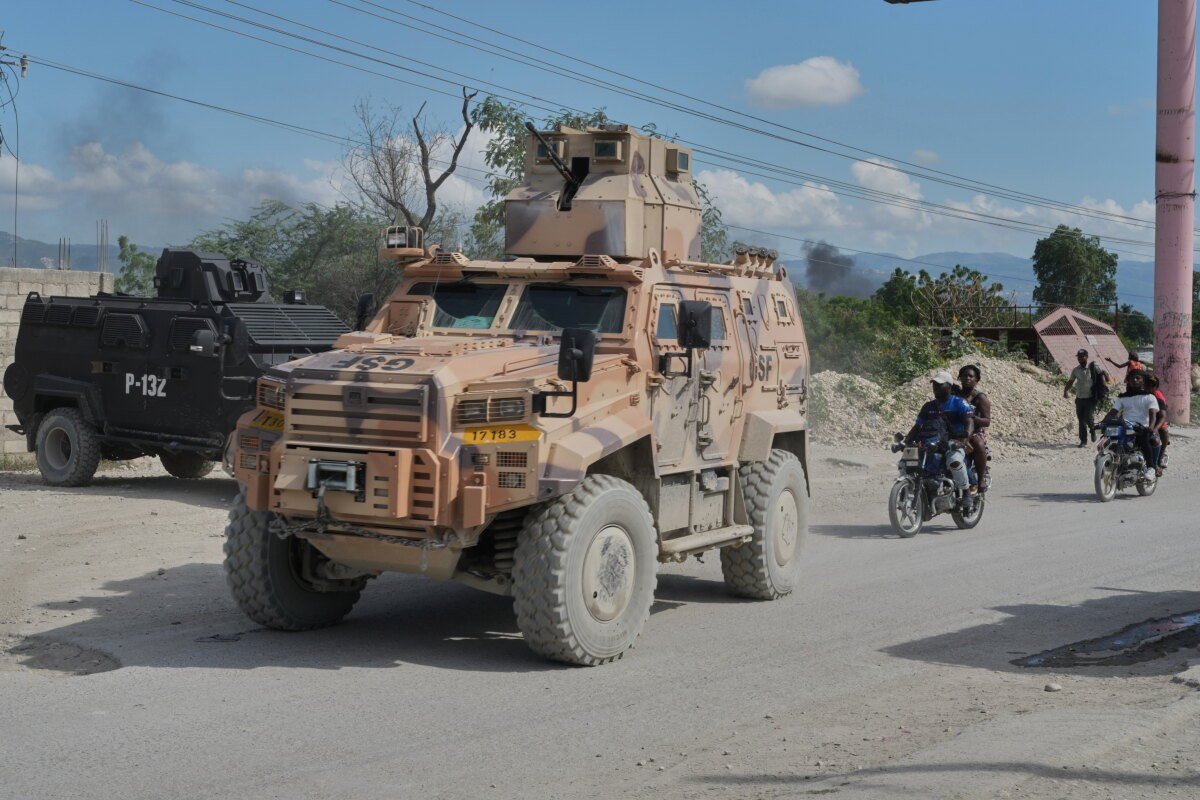
PORT-AU-PRINCE. El Salvador's President Nayib Bukele announced on Wednesday, October 21, 2026, that his government had launched a military operation to recover four Salvadoran members of the United Nations-backed Gang Suppression Force believed to be held by Haitian gangs. "Today, we have launched a military operation to rescue them," Bukele said, in remarks carried by Reuters. On X, he stressed that the mission "consists only of pilots and technical personnel," non-combatants whose main task is medical evacuation.
The four men, aviation technicians attached to a unit El Salvador calls Task Force Liberty II, went missing on Sunday, October 18, after gangs ambushed and set fire to their armored vehicle in Santo, on the eastern outskirts of Port-au-Prince, as it returned to base from a market run, according to an account published by Rio Times. The men jumped from the burning vehicle. Salvadoran helicopters pushed back the attackers but were themselves hit, and both land and air attempts to reach the men were blocked by heavy fighting. The Gang Suppression Force said on Tuesday, October 20, that the search was continuing, that several gang members had been killed, and that four of its personnel had been injured.
A mission still short of its promise
The episode lands at the rawest point of Haiti's long emergency. The Gang Suppression Force, assembled from contributing countries including El Salvador, Chad, and Sri Lanka to succeed the earlier Kenyan-led mission, has reached only about a third of the strength envisaged when the United Nations Security Council authorized it. On the ground that shortfall is measured not in spreadsheets but in neighborhoods the force cannot yet hold. Carlos Ruiz Massieu, the senior United Nations official in Haiti, told the Security Council that gangs have killed more than 4,000 people in the country this year, and warned of "the ability of gangs to adapt their tactics as security operations intensify." He called the situation "very dire."

The United States, which has pressed for the force to grow, struck a harder public note. Ambassador Mike Waltz told the Security Council on October 19 that there was reason to believe all four Salvadorans had survived, though their whereabouts were unknown, and that the American embassy had told United States citizens to avoid Santo. In earlier remarks quoted by WLRN, Waltz addressed the gang leadership directly: "Your days of operating with impunity are numbered. The Gang Suppression Force is coming for you."
The force the four men serve in is the second international attempt to break the gangs' grip on the Haitian capital. It succeeded a Kenyan-led Multinational Security Support mission that struggled for money, personnel, and a clear mandate, and it carries the same structural weakness: it depends on contributions from countries with their own constraints, assembled piecemeal, and deployed into a city where armed coalitions already control much of the ground. El Salvador's participation is itself a projection of Bukele's domestic brand, a president who built his popularity on a mass crackdown on gangs at home and who now exports that reputation abroad. The hostage crisis puts that brand on the line, which is part of why the response has been a publicly announced military operation rather than a quiet negotiation.
What is not yet known
Several facts in this story are still open, and the Ledger will not print as settled what has not been confirmed. The identity of the captors is disputed: EFE cited local sources pointing to the Viv Ansanm coalition, while Le Nouvelliste reported that the Chen Mechan gang had seized the men. More consequentially, the outcome of Bukele's operation was, as of this edition, unconfirmed. There was no verified report that the four had been freed, located, or harmed.

The status that can be stated is the one the sources support: an operation launched on October 21, four men still held, their location unknown.
For Haiti, the hostage drama is a window onto a wider stall. The vote once planned for December has been shelved indefinitely, with fewer than 800,000 of some 6.5 million eligible Haitians registered, and the country has not held an election since 2016. The foreign force meant to create the security under which a vote might happen is itself now fighting to recover its own. Each depends on the other, and this week both were on the back foot.
The region, which has argued for years over how much foreign enforcement Haiti should host and on whose terms, is watching an answer being written in the streets of Santo rather than in any communique. CARICOM, which helped broker Haiti's transitional governance arrangement, has repeatedly insisted that any security response be matched by a political one, and the week's events underline why. Force without a credible path to elections buys time but not legitimacy, and time, in Haiti, has a way of running out.
