In Basseterre, a schools essay prize turns African history into a civic argument
St. Kitts and Nevis honored the winners of the 2025 UNESCO Routes of Enslaved Peoples Essay Competition, and the people who judged and hosted it placed the exercise squarely inside the region's case for reparations and remembrance.
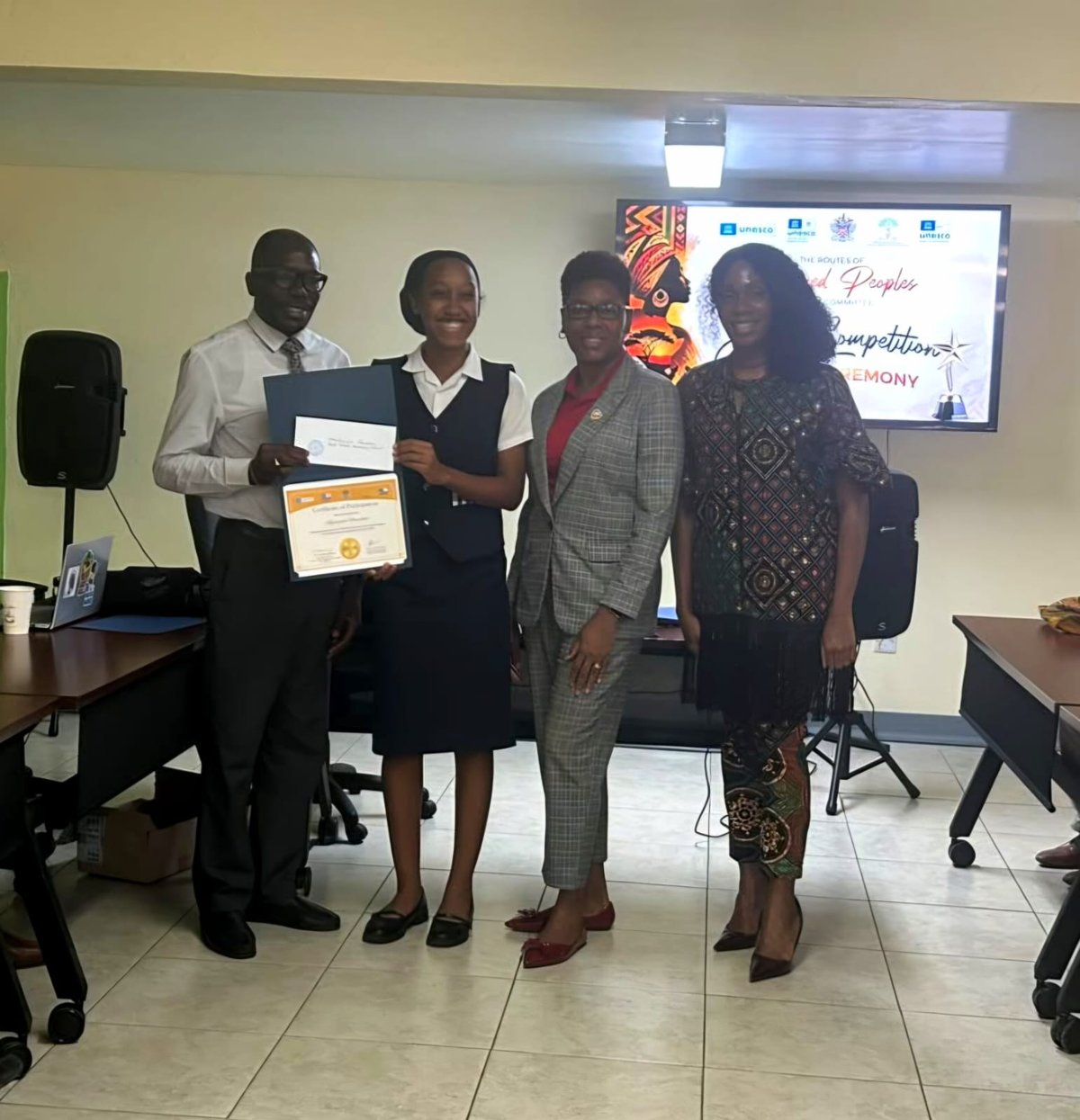
BASSETERRE. The St. Kitts and Nevis National Commission for UNESCO and the Ministry of Education honored the winners of the 2025 UNESCO Routes of Enslaved Peoples Essay Competition at a prize-giving ceremony in the Early Childhood Conference Room in Basseterre, the St. Kitts and Nevis Information Service reported on October 23, 2026, a day after the event.
The competition ran under the theme "The Importance and Value of our Students Being Taught Their African Ancestral History," and it drew entries from six secondary schools: Cayon High, Saddlers Secondary, Charlestown Secondary, Basseterre High, Washington Archibald High, and Charles E. Mills Secondary.
The top prize went to Markhailer Handley of Cayon High School. Khalaylah Maccabbee placed second and Devine James of Charlestown Secondary School placed third, according to SKNIS. The ceremony was held under the patronage of Governor-General Dame Marcella Liburd and Prime Minister Terrance Drew, and drew teachers, parents, and students alongside the officials who run the federation's education and heritage portfolios.

The judging panel is what gives the event its weight. The essays were assessed by Carla Astaphan, chair of the National Reparations Commission; Sheila Morris, an educator and historian; and Nerys Dockery, Secretary-General of the St. Kitts and Nevis National Commission for UNESCO and co-chair of the country's UNESCO Routes of Enslaved Peoples Committee. Lisa Pistana, Permanent Secretary in the Ministry of Education, and Francil Morris, Chief Education Officer, were among those in attendance.
The presence of the reparations commission's chair on an essay panel is not incidental. It signals that the federation treats the teaching of ancestral history as continuous with the political project of reparatory justice that CARICOM has pressed on the international stage.
Dockery made that link explicit. "You cannot fight for a future you do not understand, and you cannot repair a past you do not remember," she said, in remarks reported by SKNIS. "Now, more than ever, knowing who we are is not just cultural. It is political, it is economic, and it is justice." The phrasing folds memory, economics, and law into a single argument, the same argument CARICOM makes when it asks former colonial powers to account for slavery, and it places a schoolchildren's essay contest at the near end of a very long campaign.

The UNESCO Routes of Enslaved Peoples project, the successor to what was once called the Slave Route Project, exists to break what it describes as the silence around slavery and its consequences, and competitions like this one are how a small state turns that mandate into classroom practice. The Ledger notes that SKNIS gave no figures for the number of entrants, the prize amounts, or the age range of the competitors, details that would let the public measure the contest's reach. What the release did make plain is the intent: in St. Kitts and Nevis, teaching children where they came from is being framed not as an elective in the curriculum but as a foundation of citizenship, and the people handing out the prizes want that understood.
St. Kitts and Nevis is among the CARICOM states behind the region's Ten-Point Plan for Reparatory Justice, which counts education and the teaching of history among its demands, so a national essay prize on African ancestral history is, in effect, that plan rendered at the scale of a child.
Read more at The Caribbean Ledger ›