Back from Washington, St. Lucia's Pierre asks the opposition to help him on fuel
Fresh from a US-Caribbean dialogue at the State Department, Prime Minister Philip J. Pierre invited his parliamentary opponents to join the search for lower fuel prices, on one condition: leave the vitriol out.
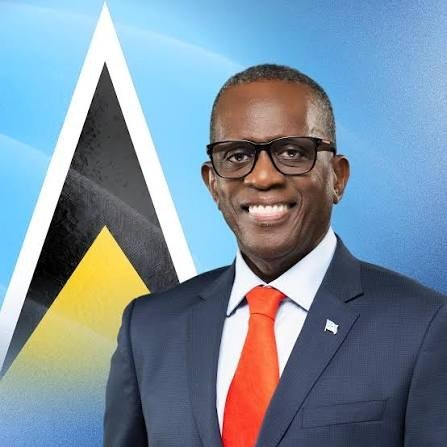
CASTRIES. Prime Minister Philip J. Pierre returned from Washington this week with a regional headline number and a domestic problem he cannot solve alone. Briefing the media on Monday after a top-level meeting with United States State Department representatives, Pierre said the gathering, billed as the US-Caribbean Dialogue, had covered energy affordability, investment and employment, security, health care, and disaster preparedness, and that Washington had announced regional financial commitments of US$340.8 million.
He called the talks "potential opportunities for deeper cooperation and development across the Caribbean," according to The Voice St. Lucia, which reported his remarks on October 21, 2026.
The more striking move was at home. With international oil prices climbing and the opposition pressing him on the cost of fuel, Pierre invited the parliamentary opposition to join the conversation on how to bring local fuel prices down. He asked anyone with workable suggestions to come forward and said the issue was too serious for petty politics, adding that his St. Lucia Labour Party was willing to work across the aisle so long as the participation excluded what he called "vitriol." It is the kind of invitation a government extends when a problem is both genuinely hard and politically radioactive, and when sharing the burden is safer than carrying it alone.

Pierre was candid about the limits of his own hand. St. Lucia, he said, cannot control the world price of oil, and other territories in the region face the same squeeze. What the government can do, it is doing at a cost: it will keep subsidizing fuel as far as the finances allow, including a first-time subsidy on the 100-pound cooking-gas cylinder that many households depend on.
The Energy Supply Act has removed duties on solar panels, a push toward the only durable exit from imported-fuel dependence, and the prime minister said talks with the utility LUCELEC over electricity costs would take place soon. He also cautioned that comparisons with other islands can mislead, because each territory's economic strength and fiscal room differ.
The timing is not coincidental. As this weekend's front page records, Brent crude has jumped to a six-month high on Middle East supply fears, and for an importer like St. Lucia that moves straight to the pump and the meter. A government that absorbs the shock protects households but widens its deficit; one that passes it on protects the budget but faces the voters.
Pierre's invitation to the opposition is an attempt to convert a losing issue into a shared one, and to make any future pain a national decision rather than a partisan weapon.
The Ledger notes what is not yet settled. The opposition had not publicly responded as of the report, so whether the invitation is accepted, and on what terms, remains open. The US$340.8 million announced in Washington is a regional commitment, not a St. Lucian allocation, and what share, if any, reaches the island is unstated.
What is clear is the shape of the bet: Pierre is asking his rivals to own a problem the whole region is carrying, and betting that they would rather be seen helping than heckling. The next move belongs to the other side of the House.
Read more at The Caribbean Ledger ›