Creole in the city: how Dominica turned a music festival into a nation's calling card
For a weekend each October, a stadium in Roseau becomes the center of the Creole-speaking world. The 27th World Creole Music Festival is more than a concert. It is Dominica's argument for itself, set to a bassline.
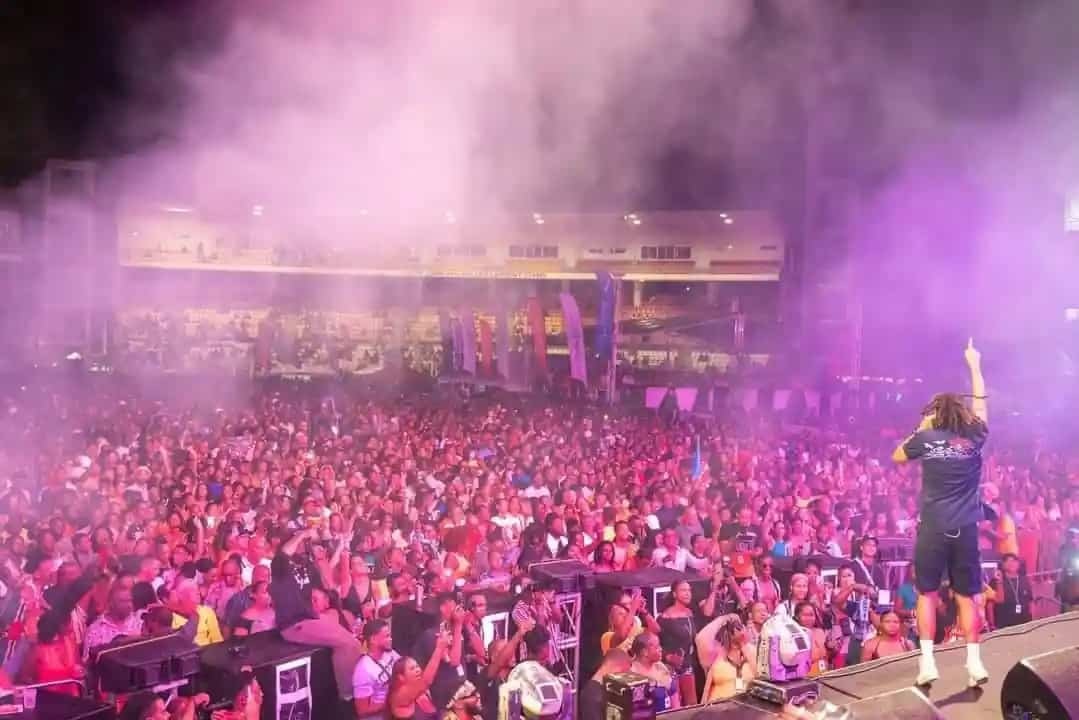
ROSEAU. There is a particular kind of ambition in a small island staging a large festival. Dominica, with a population smaller than many a mainland suburb and a tourism product built on rainforest rather than beach, has for nearly three decades asked the Creole-speaking world to come to it, once a year, for three nights of music that belong to no single country because they belong to all of them. This weekend, October 23 to 25, 2026, the 27th World Creole Music Festival fills Windsor Park Sports Stadium in Roseau, and the lineup reads like a map of the Creole diaspora drawn in sound.
The headline names carry the international wattage. Ne-Yo, the American rhythm-and-blues star, and Machel Montano, the Trinidadian who more than anyone turned soca into an arena music, anchor a bill that also includes the British reggae singer Maxi Priest, the Jamaican dancehall artists Alkaline and Skillibeng, the South African amapiano sensation Uncle Waffles, the reggae veteran Capleton, and the Haitian-American singer Fridayy. It is a bill designed to sell tickets beyond Dominica's shores, and it does its job. But the festival's soul is in the names a visitor might not recognize, and that is the point.
The music that has no border
Around the headliners sits a supporting cast that is really the main event: Klass and the legendary Tabou Combo from Haiti, Les Aiglons and Jean-Marc Ferdinand from Guadeloupe, Maurane Voyer from Martinique, the soukous guitarist Diblo Dibala, V'ghn from Grenada, a St. Lucian contingent led by the DYP Band, and a deep Dominican bench that runs from the veteran Midnight Groovers to the newer Signal Band, Asa Bantan, and Colton T. The genres braid together in a way that happens naturally nowhere else: cadence-lypso, the Dominican sound that gave the festival its first identity, next to Haitian kompa, next to Guadeloupean gwoka, next to zouk, next to the bouyon that young Dominican bands have pushed onto regional charts.

What binds them is not a rhythm but a language, or rather a family of languages. Creole, in its French-lexified Antillean forms and its wider cultural sense, is the thread that lets a crowd in Roseau sing along to a band from Guadeloupe and a band from Haiti in the same night. The festival sits at the climax of Dominica's Creole heritage season, the weeks of Jounen Kwéyòl when the island leans into traditional dress, the Kwéyòl language, and the food that goes with both.
Dominica's own stake in this music is not merely as host. Cadence-lypso, the fusion of calypso with Haitian and African rhythms that spread across the French Antilles in the 1970s, was shaped on this island, and bouyon, the harder, faster electronic descendant that fills sound systems from Roseau to Paris, is a Dominican invention that young bands here have carried onto regional charts. A festival of Creole music held in Dominica is therefore not a neutral venue borrowing other people's sounds. It is a homecoming for genres the island helped create, which is part of why the government treats it as heritage policy as much as tourism marketing.
Marva Williams, chief executive of the Discover Dominica Authority, framed the invitation in exactly those terms before the gates opened. "For nearly three decades, the World Creole Music Festival has provided a distinctly Dominican platform," she said, adding the line that is really the festival's business model: "Come for the music, but stay for the culture, the cuisine, the traditional wear, the village celebrations."

The economics of a bassline
That sentence is not only sentiment. It is strategy, and the numbers behind it are the reason a government underwrites a music festival at all. In 2025, the festival drew more than 42,000 attendees across its three nights, according to figures from the Discover Dominica Authority. More telling than the gate is what happened around it: in the nine days bracketing the 2025 festival, Dominica welcomed 10,540 visitors, up 48% on the same period in 2024 and 61% on 2023.
For an island that cannot compete on sand with its neighbors, a festival that moves the visitor numbers by nearly half is not a cultural ornament. It is a pillar of the off-season economy, a reason for the diaspora to book a flight home, and a showcase for a destination that sells experience over postcard.
The model is one other small islands study. A festival concentrates demand into a weekend, fills hotel rooms that would otherwise sit empty, gives airlines a reason to add seats, and, if it is any good, sends every attendee home as a marketer. The risk is the same everywhere: a festival that chases only the international headliners can hollow out the local culture that made it distinctive in the first place, becoming a generic concert that happens to be held on an island. Dominica's answer, visible in that long supporting bill, is to keep the Creole core load-bearing.
The global names draw the crowd; the regional and local acts are what the crowd remembers, and what it cannot find anywhere else.
A country's argument for itself
There is a reason a nation puts this kind of effort into three nights in a stadium. A small country is always making an argument about why it matters, to investors, to the diaspora, to the young people deciding whether their future lies at home or abroad. Dominica has made its argument in several registries over the years, as a nature island, as a climate-resilience pioneer, as a seller of citizenship. The World Creole Music Festival makes the argument in the register that travels furthest and costs least to dispute: culture.
You cannot outsource a musical tradition. You cannot build it in a special economic zone. It is the one asset a place of 70,000 people can own outright and that no larger neighbor can simply buy.
By the time the last set ends on Sunday night and the stadium empties into the Roseau streets, the festival will have done what it does every year. It will have put a small island at the center of a large cultural world for a weekend, moved real money through real businesses, and reminded a scattered Creole-speaking family that the mother sound still has a home. The Ledger will carry the verified attendance and economic figures when the Discover Dominica Authority releases them. For now, what can be said with confidence is the thing the festival has proved 27 times over: that in the Caribbean, culture is not what you do after the economy is sorted.
For an island like Dominica, it is the economy, and the festival is the proof of concept, played loud.
Read more at The Caribbean Ledger ›