Big tech's AI bet: roughly $800 billion is about to be judged
Roughly US$800 billion of AI spending is about to be judged, and the Caribbean will feel the verdict on its power bills and its remittance checks.
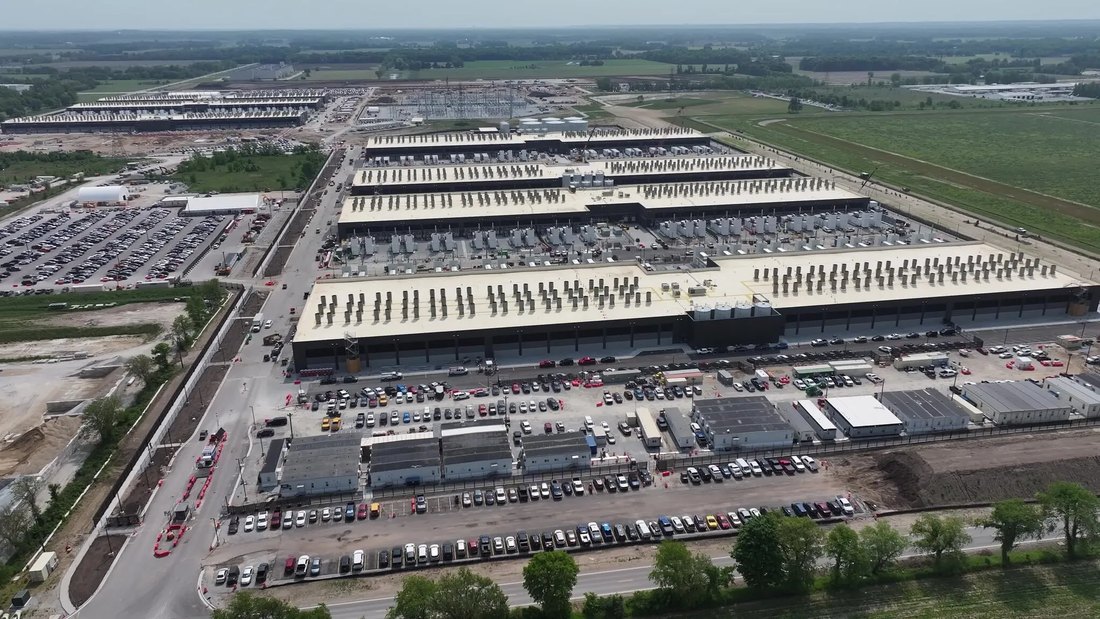
NEW YORK. This is the week the world's largest technology companies have to show their work. Alphabet, Microsoft and Meta report earnings, with Amazon and Apple close behind, and the question hanging over all of them, as Bloomberg framed it, is whether roughly US$800 billion in spending on artificial intelligence infrastructure is beginning to pay off.
The United States Federal Reserve is meeting in the same stretch. For a region that does not build the chips or run the data centers, the Caribbean has more riding on the answer than its distance from Silicon Valley suggests.

Start with electricity. The AI build-out is, at bottom, a construction boom in data centers, and data centers are enormous consumers of power. The scramble to feed them has tightened global markets for natural gas, for turbines, for the grid equipment that Caribbean utilities also need, and has put a floor under energy prices worldwide.
For islands that import most of their fuel and already pay some of the highest electricity rates on earth, a global dash for power is not an abstraction. It shows up on the bill. When the largest buyers of electricity in the world are expanding, every small importer competes in the same market, and the small importer has the least leverage.
That is the hard edge of the AI story for the region. The softer edge is opportunity, and it is real.
The same companies spending hundreds of billions on computation are also spending on the pipes that connect it. Subsea cable routes through the Caribbean basin, the data-center capacity that follows connectivity, and the cloud regions that global firms place near growing markets are all part of the same wave. A region that has long worried about being bypassed by the digital economy has a narrow window to insert itself into it, as a landing point, a transit route, and in a few cases a host.
The islands that have modernized their telecommunications regulation and their energy supply are positioned to catch some of that current. The ones that have not will watch it pass offshore, literally, in a cable they do not touch.
The most vivid Caribbean example of the AI economy is also one of the smallest. Anguilla, a British overseas territory of some 15,000 people, happens to own the internet suffix ".ai," and the artificial-intelligence boom has turned that two-letter coincidence into one of the largest single lines in the territory's budget. Every startup that wants an ".ai" address pays, and the payments have added up to a transformational share of public revenue for an island that has no oil, no gold and limited flat land.
The lesson of Anguilla is not that every island will find a ".ai." It is that the AI economy distributes its rewards in strange, concentrated and often accidental ways, and that the places which happen to hold a scarce asset the boom needs can do extraordinarily well from it. Scarcity, not size, is the variable. For most of the region the scarce asset is not a domain suffix.
It is reliable power, a cable landing, a skilled workforce, a stable legal regime for data. Those are buildable. A domain suffix is luck.
If the earnings this week justify the spending, the capital expenditure cycle continues, the pressure on global energy and equipment markets persists, and the opportunities around connectivity keep expanding. If the numbers disappoint and investors decide the AI build-out has outrun its returns, a pullback would ease some of the energy pressure that has been lifting Caribbean fuel costs, while also cooling the investment that the region's digital hopefuls are counting on. Neither outcome is unambiguously good for the islands, which is exactly why it is worth watching from here.
The Federal Reserve's decision in the same week carries its own weight for a region thick with dollar-pegged currencies and dollar-denominated debt. A central bank in Washington setting the price of money sets it, in effect, for Bridgetown, Nassau and Basseterre too.
The remittance channel compounds the effect. Much of the money the diaspora sends home originates in the same United States economy the Fed is steering, and a tighter or looser labor market there changes how much a worker in New York or Miami can wire to family in the islands. A technology-led boom that lifts American employment is, indirectly, good for the Caribbean household budget. A technology-led bust that cools it is not.
The Caribbean will not move a single one of these numbers. It will live with all of them. That is the recurring condition of a small, open, import-dependent region in a world economy it did not design: the big decisions are made elsewhere, and the bill arrives here. The work, as always, is to be the kind of place that catches the upside of someone else's boom rather than only the cost of it.
Read more at The Caribbean Ledger ›