Turks and Caicos is booming. The argument now is about what the boom is built on
Turks and Caicos has the Caribbean's enviable problem: more visitors want in than the land can comfortably hold, and the islands' own legislators are asking how far to go.
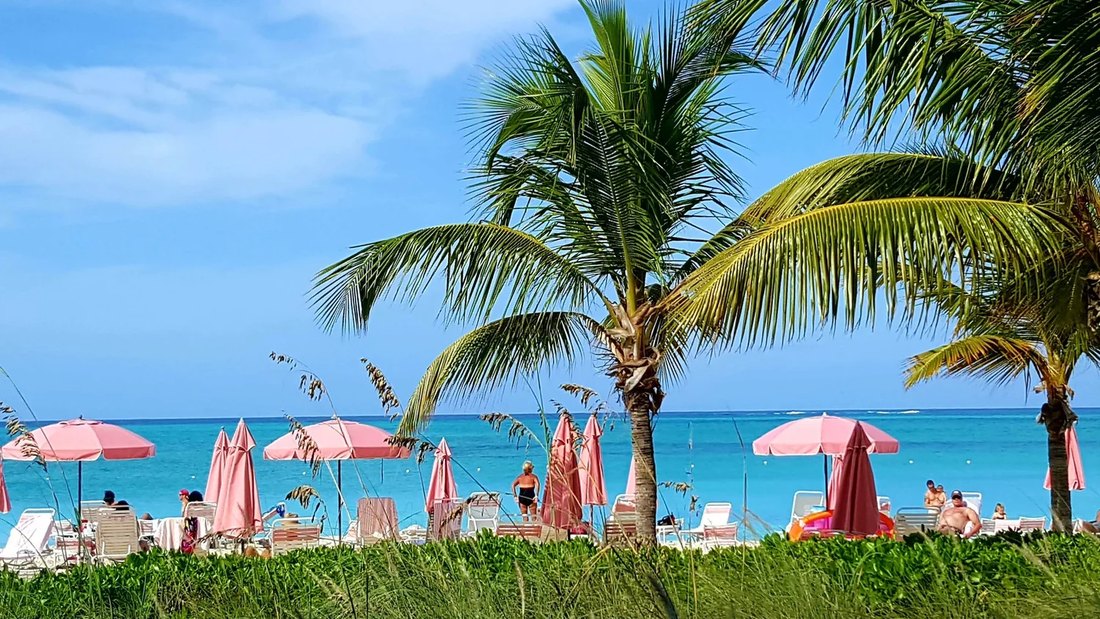
PROVIDENCIALES. Turks and Caicos has one of the Caribbean's enviable problems. The territory is not struggling to attract visitors. It is wondering, out loud and increasingly at the level of its own legislature, whether it can keep absorbing the ones it already draws.
The scale of the success is not in dispute. Figures presented at the Caribbean Tourism Organization's State of the Tourism Industry Conference on October 13, 2026 put Turks and Caicos at 494,466 stayover visitors through August 2026, up 5%, alongside 776,438 cruise passengers. For a territory of roughly 50,000 residents, those are striking ratios, and they sit on top of a development pipeline that the islands' own politicians describe in the billions.
The unease is not coming from critics abroad. It is coming from inside the House of Assembly. In remarks that have shaped the territory's economic conversation, Akierra Missick, the member for Leeward and Long Bay, warned that Turks and Caicos is at a "precipice point" and should "start saying no" to further large-scale construction. She tied that warning to the territory's dependence on what she called "sun, sea and sand tourism," and to the vulnerability that comes with it: a hurricane, a downturn in the United States, even an air-traffic disruption can close the whole economy at once because there is so little behind it.
Her figures sharpened the point. Turks and Caicos is preparing to welcome, by her account, more than US$1 billion in hotel and resort development, and its tourism product generates on the order of half a billion dollars a year. She set that against the roughly US$260 million the British Virgin Islands earns from financial services, and drew the obvious conclusion: a neighbor with a second industry has a cushion that Turks and Caicos does not.
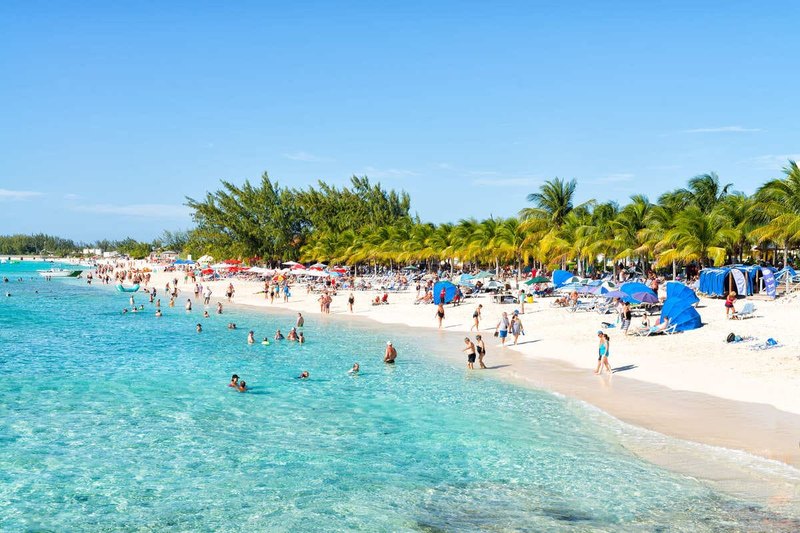
The diversification argument is familiar across the region, but it lands differently on a small archipelago where the buildable land is finite and the pressure on it is intense. Missick's proposals were concrete: develop a niche, resilient economic product that can survive an external shock; rebuild the reinsurance sector, which she said is no longer carrying the weight it should; and explore technology or AI-based revenue streams, pointing to Anguilla's experience as the example to study. The common thread is an economy that does not live or die on the next winter season.
The counterargument is just as grounded. Tourism is working. The visitors are arriving, the spending is rising, and a billion dollars of investment does not wait while a territory debates its soul.
Saying no to construction means saying no to jobs, to government revenue and to the developers who can take their capital to any number of other islands that will say yes. For a government that has to fund schools, clinics and a public service now, the abstract risk of over-concentration competes with the concrete reward of a resort that breaks ground this year.
That tension is already showing up on the ground, and not only in the tourism statistics. The territory has moved recently against the illegal occupation of Crown land, a sign of how much pressure the islands' limited acreage is under as development, population and informal settlement all push against the same finite space. Land is the asset tourism consumes, and on islands this small it is the constraint that eventually decides everything. Congestion, staffing and transport, the practical limits Missick named, are all downstream of the simple fact that there is only so much ground.
Turks and Caicos is not in crisis. It is in the more fortunate and more difficult position of having to choose how much of a good thing is too much. The decisions in front of it are the kind other islands would trade for: how fast to build, how much land to commit, whether to use a decade of tourism receipts to buy a second industry or to double down on the one that is winning. The territory's success has bought it the luxury of that argument.
Its size means it cannot postpone it forever. The precipice Missick described is not a warning that the boom is about to end. It is a warning that the time to decide what comes after it is while the boom is still on.
Read more at The Caribbean Ledger ›