Moscow's pitch to Africa: a better partner, or a familiar bargain?
At a Moscow summit, Vladimir Putin cast Russia as the alternative to a colonial West. The offers are real, and so are the costs that African governments and citizens may be asked to carry.
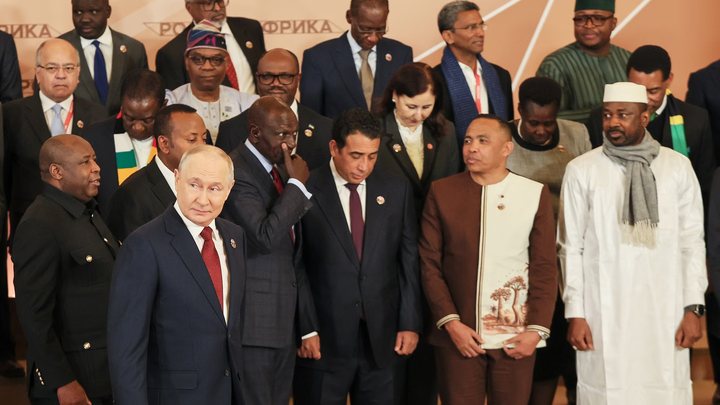
MOSCOW. President Vladimir Putin told African leaders on Wednesday, October 28, that Russia is their best partner. He accused what he called a colonial West of still trying to exploit the continent's resources and of using debt to hold back development. He spoke at the third Russia-Africa summit, a two-day event attended by delegations from 48 countries, 22 of them led by heads of state or government, according to Reuters.
Putin did not name the countries he had in mind. Western critics regularly accuse him of trying to leverage Africa's colonial past for Moscow's benefit, a charge the Kremlin rejects. The message itself was direct. "Africa is increasingly asserting itself as one of the key players in the global economy and politics," he said.
"However, the emergence of a multipolar world is, of course, no easy task." He said the obstacles come from countries "accustomed to thinking in terms of their colonial past and to enriching themselves fabulously."
The offers on the table are concrete. The Kremlin said 33 documents were to be signed, mainly on economic cooperation, and around 20 bilateral meetings were scheduled. Putin pledged to expand Russian agricultural exports, to localize production of Russian medicines and vaccines in Africa, and to share digital and other high-tech know-how. He said Russia would supply grain and fertilizer to more than the 40 African countries that receive them now, and that 13 million metric tons of agricultural products reached Africa in the first nine months of this year.

He also cited around 40,000 Africans studying at Russian universities, which he described as a record. That is Putin's own figure, and it has not been independently verified in the reporting.
His contrast with the West rests on how trade is done. "Our business does not engage in the predatory, neo-colonial exploitation of natural and human resources," he said, according to Reuters. The Daily Herald reported his pledge to localize production rather than simply buy raw materials, a model he said would create jobs and generate tax revenue.
The Western case against Moscow is equally direct. Governments in the West accuse Russia's paramilitary forces of propping up military juntas, such as Mali's, to expand Moscow's influence and push out former colonial powers such as France. Moscow rejects those claims, and Reuters presents them as accusations rather than established facts.
Human rights groups have raised the sharpest concern. Amnesty International wrote to summit leaders to express "deep concern" about Russia's forced and deceptive recruitment of Africans, and urged them to demand that Moscow stop recruiting Africans and other foreign nationals for its military. Nigeria, Kenya and South Africa have publicly voiced alarm over the fate of their citizens recruited by Moscow.

The guest list tells its own story. Mali's Assimi Goita attended, and his government uses Russian paramilitaries against a jihadist offensive. The Democratic Republic of Congo's Felix Tshisekedi attended amid tensions with Rwanda, which sent its prime minister, Justin Nsengiyumva. Fighting continues in eastern Congo despite a US-brokered truce last December.
For Caribbean readers, the pitch carries a familiar shape. Governments in the region know what debt terms look like, and they know how larger partners compete for influence. Every outside partner deserves a fair hearing on its merits.
The test is the paperwork. Of the 33 documents, which carry real money, which set repayment schedules, and which name jobs or local ownership as targets? Who carries the risk if the projects fail? African governments have every right to choose their partners.
Their citizens deserve to read the fine print first.
Read more at The Caribbean Ledger ›