Island in focus: the Dominican Republic keeps growing while the region stalls
September activity rose 5.6%, construction and tourism led, and the central bank sees 4.5% for the year. The engine of the Caribbean economy is still running, even as higher US rates and a 5.12% inflation rate test it.
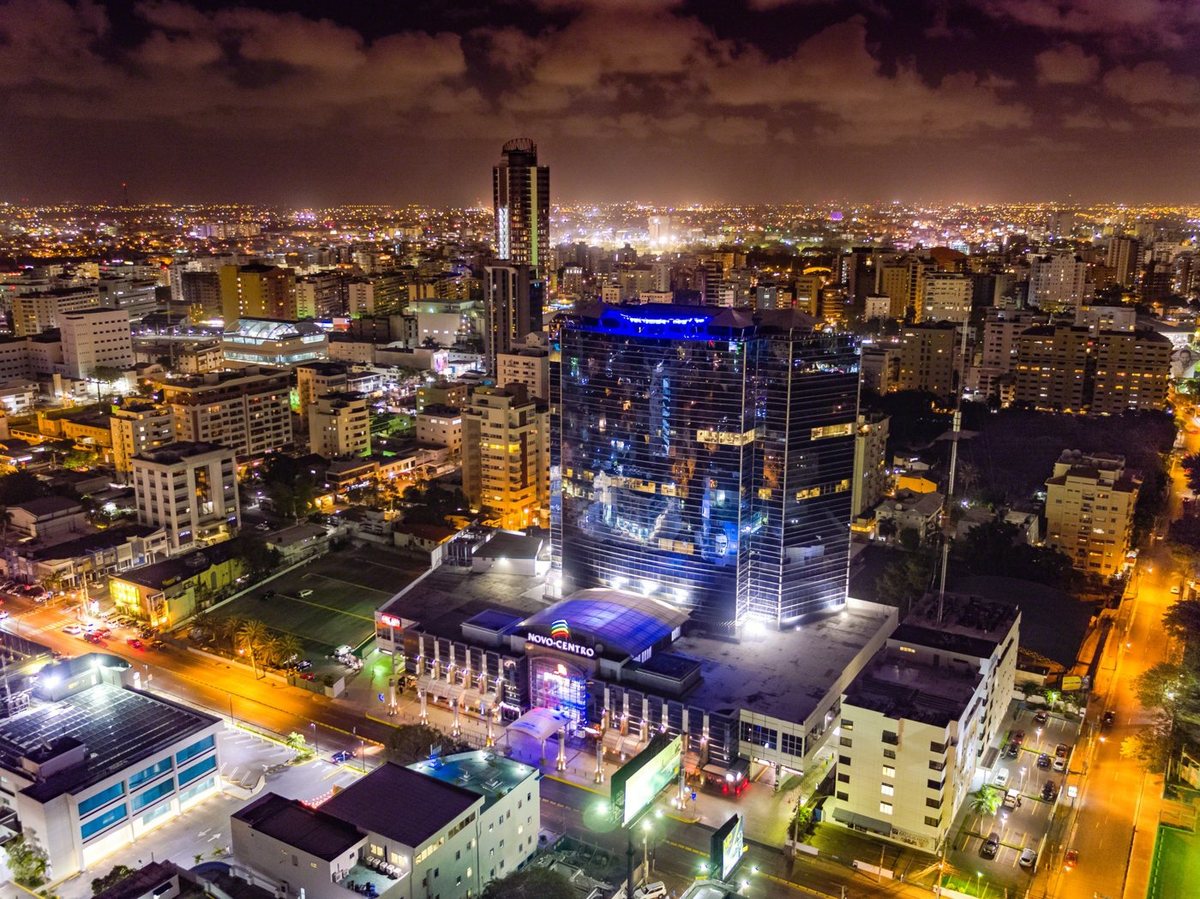
SANTO DOMINGO. While much of the Caribbean spent October counting the cost of expensive dollars and soft tourism, the Dominican Republic reported numbers that belong to a different conversation. The country's monthly index of economic activity rose 5.6% year on year in September and 4.6% over the first nine months of the year, figures the central bank governor, Hector Valdez Albizu, announced on October 23 and that The Rio Times reported. The bank expects growth of about 4.5% for 2026 as a whole.
In a region where 2% is a decent year, the Dominican Republic is running at more than double that.
The composition matters as much as the headline. Over the first nine months, construction grew 8.2%, mining and quarrying 5.2%, local manufacturing 3.4%, and free-trade-zone production 2.8%. Services expanded 4.6%, led by financial services at 7.8% and by hotels, bars, and restaurants at 5.6%. This is not a one-sector boom.
It is a broad economy, anchored by building and tourism but spread across manufacturing and finance, which is precisely the kind of diversification the smaller economies of the Eastern Caribbean have spent decades wishing for and rarely achieving.
The external accounts are sturdy too. Over the first nine months the country took in about 9.7 billion US dollars in tourism income, more than 9.4 billion in remittances, and roughly 4.5 billion in foreign direct investment, leaving reserves above 15.2 billion dollars, about 5.4 months of imports. Those are the buffers that let a dollar-adjacent economy absorb a Federal Reserve that keeps rates high, the same Fed decision that lands as a straightforward squeeze on smaller neighbors. Size and diversification are a form of insurance, and the Dominican Republic has both.
The pressure points
None of this makes the country immune. Consumer prices rose 5.12% in the 12 months to September, down from a peak of 5.67% in June but still above the central bank's target of 4%, plus or minus one percentage point, with core inflation at 4.61%. The bank raised its policy rate 25 basis points to 5.50% in September and blamed the global energy shock for keeping prices elevated, expecting inflation to return to target in the final quarter if risks stay contained. President Luis Abinader, for his part, has said the government will maintain targeted fuel subsidies, a politically popular choice that cushions households and costs the treasury.
Valdez Albizu pointed to the dynamism of domestic investment and the resilience of the external sector as the reasons growth has held.
The contrast with its nearest neighbor is impossible to ignore. The Dominican Republic shares the island of Hispaniola with Haiti, whose economy has collapsed under a security crisis that has emptied its capital and driven a cruise line to write off its last Haitian resort until 2028. The same island holds the region's fastest-growing economy and one of its most broken, a divide that shapes everything from migration to the deportation policy the Ledger reported on earlier this month. The Dominican growth story is real, but it unfolds in the shadow of a border that defines much of the country's politics and absorbs much of its security spending.
The Dominican Republic's quiet achievement is to have become the Caribbean's economic center of gravity without much of the region noticing. It is the largest economy in the Caribbean, the busiest tourism market, and increasingly the place where regional capital and ambition point. The risks are real, inflation above target, a policy rate climbing with Washington's, a fuel subsidy that cannot run forever, but they are the risks of a growing economy rather than a stalling one. For a region looking for a model of diversification that works, the clearest one is next door, posting another 5.6% while its neighbors do the arithmetic of a harder year.
Read more at The Caribbean Ledger ›