The Fed held high, and the Caribbean's dollar economies brace for December
Kevin Warsh's Federal Reserve kept its benchmark at 3.75 to 4% and two members wanted it higher. For the region's pegged and dollarized economies, higher for longer is not a forecast. It is the bill.
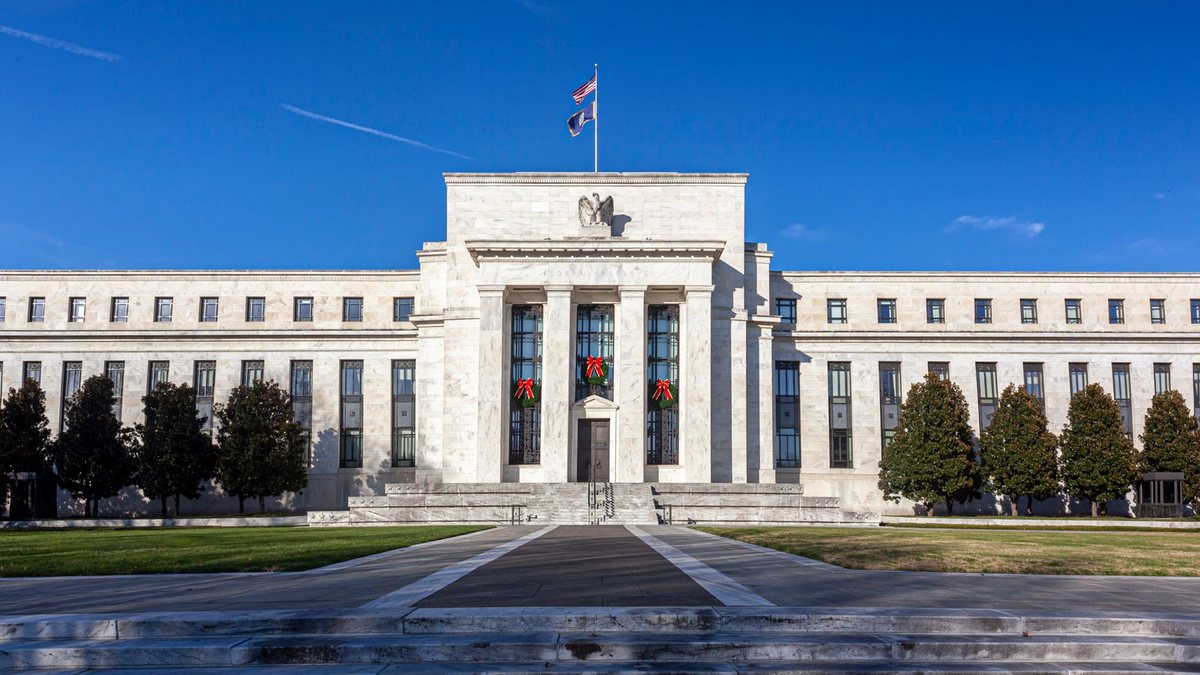
WASHINGTON. The Federal Reserve left its benchmark interest rate unchanged at a target range of 3.75 to 4% on Wednesday, October 28, holding after a quarter-point increase in September. The vote was 10 to 2, and the two dissenters, Cleveland Fed President Beth Hammack and Governor Lisa Cook, both wanted the rate higher, not lower. Chair Kevin Warsh said inflation has run above the committee's objective for close to six years and that it is the Fed's responsibility to get it down.
Markets took the hint.
The CME FedWatch tool put the probability of a quarter-point hike at the December 8 and 9 meeting at 82.6%, and Goldman Sachs told clients it expects the Fed to resume raising rates before the year is out.
For most of the world this is an American story about an American problem. For the Caribbean it is closer to home than that, because a large part of the region does not set its own interest rates. It imports them from Washington. The Eastern Caribbean dollar is pegged to the US dollar at 2.70.
The Bahamian and Barbadian and Belizean dollars are pegged. The Bermudian dollar trades one to one. The British Virgin Islands, the Turks and Caicos, and the British overseas territories of the region use the US dollar outright. When the Federal Reserve holds its rate high and signals higher still, those economies do not get a vote and do not get a buffer.
They get the rate.
Why the peg transmits the pain
The mechanism is unforgiving. A central bank that pegs its currency to the dollar has to keep its own interest rates in the neighborhood of American ones, or watch capital leave in search of the higher US yield. So when the Fed holds at nearly 4% and threatens to go higher, the floor under borrowing costs in Bridgetown, Nassau, and Basseterre rises with it. Governments that need to roll over debt pay more to do it.
Businesses that borrow to expand think twice. Families with variable-rate loans feel it in their monthly payments. None of this is a consequence of any decision made in the Caribbean, which is the point and the grievance.
The region has been living this for more than a year. The Ledger reported in September on the Fed's earlier increase and the vote the Caribbean never cast, and again this month on a weak American jobs report that briefly raised hopes of cuts. Those hopes are now gone. A Fed that is still fighting inflation after six years, with two of its own members pushing for more, is not a Fed about to make dollar borrowing cheaper.
The working assumption across the region's finance ministries has to be that the cost of money stays high into 2027.
Who feels it first
The exposure is uneven. Guyana, flush with oil revenue, can absorb expensive dollars more easily than a tourism economy living on thin margins. Trinidad and Tobago, which earns in a currency it manages more actively, has more room than the Eastern Caribbean states locked to the peg. The most exposed are the small, open, dollar-linked economies that borrow in hard currency and earn in a sector, tourism, that softens the moment American households feel squeezed.
For them the Fed's decision is a double hit, dearer debt and a customer base under pressure at the same time.
The region does have levers, if limited ones. Governments can lengthen the maturity of their debt while they still can, locking in today's rates rather than gambling on cheaper ones later. They can lean harder on concessional finance from multilateral lenders, whose rates do not track the Fed as tightly as commercial markets do, which is part of why Barbados and others have pushed so hard for reform of how that finance is priced and delivered. And they can do the slow work of widening their tax bases so that a dearer cost of borrowing bites less.
None of these offsets the Fed. All of them, done early, soften the blow when a decision made in Washington lands on a budget written in the Caribbean.
There is a version of the next few months in which the Fed is right, inflation finally breaks, and the region gets its relief in 2027. There is a version in which prices prove stubborn, the December hike arrives, and the Caribbean spends another year paying for a monetary policy designed for a labor market 2,000 miles north. The difference between those worlds will be decided in a boardroom in Washington by people who do not think about Basseterre when they vote. That is the quiet condition of a dollar economy, and this week the region was reminded of it again.
Read more at The Caribbean Ledger ›