The Lime: a nation of lamps, and the week Trinidad glows
Divali Nagar has opened in Chaguanas, the deyas are coming out, and on November 8 Trinidad will light itself from the coast to the central plain. The Caribbean's largest celebration of light is also its loudest argument for what a plural society can be.
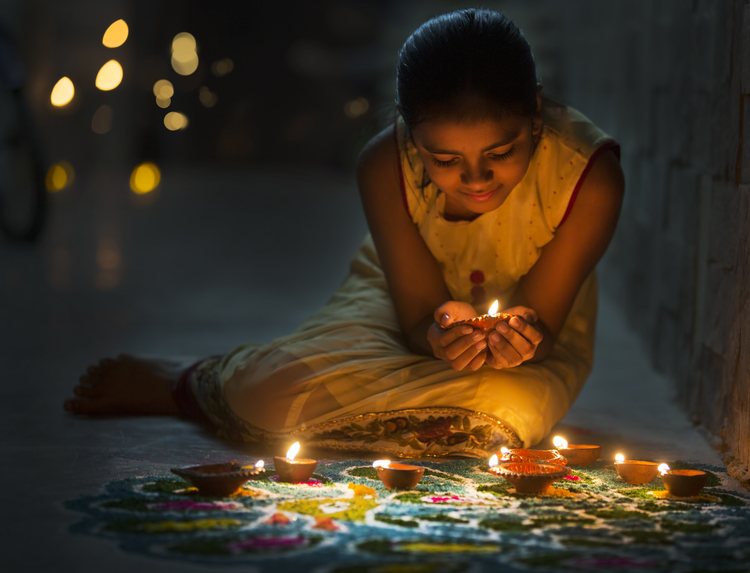
PORT OF SPAIN. There is a week in Trinidad, every year, when the island stops performing for anyone and simply lights itself. It began on Friday, October 30, when the National Council of Indian Culture opened the Divali Nagar on its grounds at Endeavour in Chaguanas, a nine-day fair that runs through November 7 and that the council has staged every year since 1986. It will reach its peak on Sunday, November 8, the day the President has appointed a public holiday, when families across the central plain and down into the south will set out rows of clay deyas, perform Lakshmi Puja after sunset, and turn their homes, their fences, and in places like Felicity whole stretches of road, into fields of small flames.
Divali, the festival of lights, marks in the Hindu tradition the return of Rama to Ayodhya and the triumph of light over darkness, and for many Trinidadian families it is also the day of Lakshmi Puja and the start of a new business year. But to describe it only as a religious observance is to miss what it has become in Trinidad, which is a national event. Surujdeo Mangaroo, the president of the NCIC, calls the Nagar the country's second-largest festival after Carnival, and the numbers back the claim. About 320,000 people passed through the Nagar in 2025, and the council expects at least 400,000 this year.
A fair that is really a country talking to itself
The Divali Nagar is not a temple and it is not a fete. It is something in between and particular to Trinidad, a nine-night gathering of stage performances, classical and folk music, a replica village, food stalls, and tableaux that retell the stories behind the festival. This year's theme is Viveka, which the council glosses as discerning truth in the age of artificial intelligence, a strikingly modern frame for a festival rooted in antiquity, and a reminder that the Indo-Caribbean culture on display in Chaguanas is not a museum piece but a living tradition arguing with the present. The council puts the cost of staging it near 5 million Trinidad and Tobago dollars this year, a sum it has had to find after the telecommunications company bmobile stepped back as a sponsor, which tells you both how large the production has grown and how precarious even a beloved institution's finances can be.
What moves me about the Nagar, and about Divali in Trinidad generally, is that it is both deeply particular and completely public. It is the festival of the island's Indian-descended majority-minority, the descendants of indentured laborers who came from across the kala pani in the 19th century, and it is also, unmistakably, everyone's. Trinidadians of every background drive out to Felicity to see the roadway strung with lights, buy sweets from the stalls, and stand in the warm dark while the deyas are lit. The food crosses every line in the society.
So does the music. A country that argues about race as openly and as wearily as Trinidad does still manages, for this one week, to gather around a shared pleasure in light and sweetness, and to mean it.

The deya and the discipline
The deya itself is the heart of it, a small clay lamp filled with oil and a cotton wick, lit at dusk and set out in rows along walls and walkways. There is a discipline to it that the fireworks, which now require a police permit except in a narrow window on the holiday itself, can obscure. Lighting a hundred deyas by hand, as families do, is slow, patient, communal work, children and grandparents bent over the little flames as the sky goes from orange to black. Sunset in Chaguanas on November 8 falls at 5:40 in the evening, and Lakshmi Puja is performed in the dark that follows, in the first stretch of the auspicious period, as the lamps take over from the day.
It is a ritual that rewards attention rather than spectacle, and in a region whose festivals often run on spectacle, that quiet is its own distinction.
Divali in Trinidad also travels. The same festival lights homes in Guyana and Suriname, the other corners of the Caribbean where indentured migration planted a large Indian-descended population, and the three societies share a version of it that is subtly their own, shaped a century and a half away from the subcontinent into something Caribbean. That diaspora within the diaspora is one of the region's least discussed cultural facts, a Hindu and Muslim Caribbean that sits alongside the African-descended Caribbean of Carnival and the church, and Divali is the week it is most visible, most confident, and most generously shared.
There is a civic lesson tucked inside the festival that Trinidad does not always articulate but clearly understands. A plural society does not hold together because its groups tolerate one another at a distance. It holds together when they show up to one another's celebrations, eat one another's food, and take genuine pleasure in traditions that are not their own. Divali is one of the clearest examples of that in the hemisphere, a Hindu festival that an entire multiracial nation has adopted as a shared inheritance without anyone's faith being diluted or anyone's heritage erased.
In a world where difference is so often weaponized, a country that lights up together for a week is making a quiet argument worth hearing.
The festival's economics are their own small story. The Nagar alone draws hundreds of thousands of visitors to Chaguanas over nine nights, filling restaurants, car parks, and craft stalls, while the sweet shops and clothing stores across central Trinidad run their busiest week of the year. A 5 million dollar production that has lost a major sponsor still sets off a far larger wave of spending around it, which is the usual shape of a cultural festival, a costly centerpiece that pays for itself many times over in the activity it generates. Culture, done at this scale, is also an industry, and Divali is one of the region's quietly significant ones.
I will leave the economics and the elections to the rest of the paper this weekend. Divali earns a page of its own because it is one of the things the Caribbean does better than almost anywhere, which is to take a tradition carried across an ocean under hard circumstances and turn it, generations later, into a gift the whole society unwraps together. Go to the Nagar if you can. Buy the barfi.
Stand on a Felicity street after dark and watch a town disappear into light. And if you cannot get to Trinidad this year, light a deya wherever you are, because the point of the festival is not the size of the flame but the decision, repeated by hundreds of thousands of people on the same night, that light is worth choosing over darkness. Shubh Divali.
Read more at The Caribbean Ledger ›