Jamaica abstains, Trinidad says no, and the CARICOM consensus on Cuba cracks
Jamaica's abstention and Trinidad and Tobago's no vote split a region that has long voted together on the US embargo.
The vote that broke the pattern
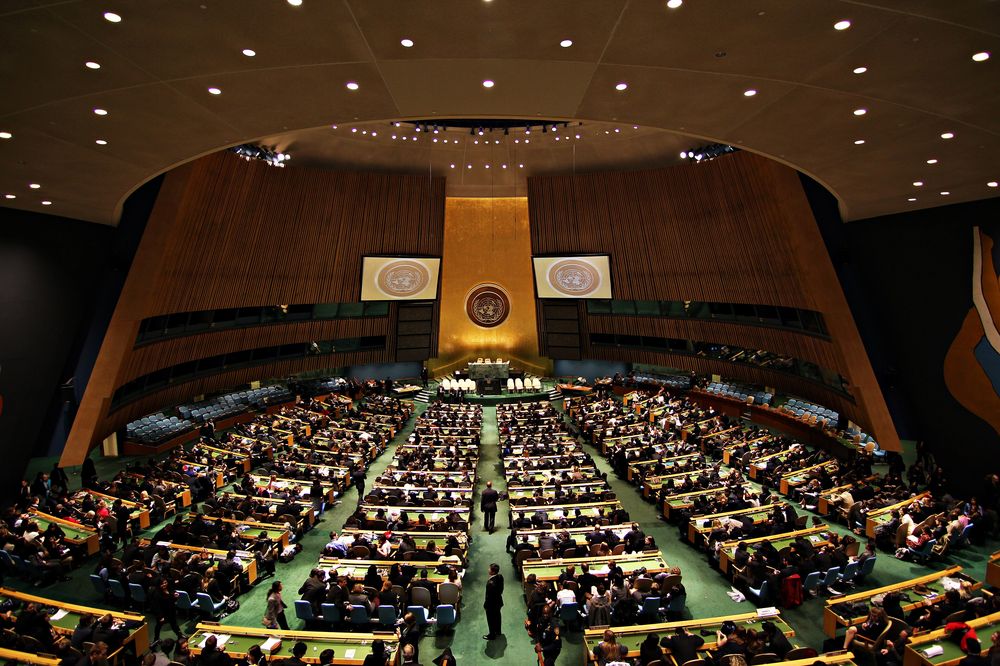
KINGSTON. For more than thirty years, the Caribbean's position at the United Nations on the US embargo of Cuba was a settled matter: the region voted, year after year, for the resolution calling for the embargo to end. On October 28, 2026, that consensus broke. Jamaica abstained, Trinidad and Tobago voted against, and a regional bloc long known for its solidarity on Cuba suddenly looked divided.
The resolution itself passed comfortably. Reporting on October 29, 2026 put the General Assembly vote at 130 in favor, 17 against, and 25 abstentions, the lowest level of support in 30 years. The headline in the Caribbean was not the global tally, though. It was that Jamaica, after voting yes for more than three decades, had stepped aside, a move that regional coverage has called a titanic shift.
The government's explanation
Foreign Affairs Minister Senator Kamina Johnson Smith confirmed the change at a post-Cabinet briefing at Jamaica House on October 28, acknowledging it as a shift in policy. Her explanation drew a careful distinction. Jamaica did not vote against the resolution, she said, because it does not support unilateral actions of the kind the embargo represents under the UN Charter. But it did not vote for it either, on the reasoning that repeating the same resolution each year without improved conditions does not serve the benefit of the Cuban people.
The position, she argued, reflected a broader Jamaican view that multilateral systems need reform and that this requires acting differently. Jamaica's UN Ambassador, Brian Wallace, delivered an explanation of vote in New York.
The government was at pains to stress that it had not abandoned Cuba. Johnson Smith pointed to a parliamentary motion, passed the day before the vote, on the economic and humanitarian situation in Cuba, and recalled that Prime Minister Andrew Holness had expressed concern about Cuba's humanitarian conditions and called for US-Cuba dialogue at the CARICOM heads meeting in St. Kitts and Nevis in July 2026.
The backlash at home
The opposition did not accept the distinction. Senator Donna Scott-Mottley, the People's National Party spokesperson on foreign, regional and diaspora affairs, said on October 28 that Jamaica's long-standing position had transcended changes of administration, and that the shift had been made without any explanation to the Jamaican people. She pointed to the inconsistency between the Tuesday parliamentary motion, which passed without objection, and the Wednesday abstention, asking what had changed in the space of 24 hours and demanding an immediate explanation.
Former Prime Minister PJ Patterson has also criticized the abstention, according to reporting on October 31.
A regional fracture
Jamaica was not alone in breaking ranks. Trinidad and Tobago went further, voting against the resolution outright, a departure that regional reporting described as leaving CARICOM divided. For a region whose support for Cuba has been among the most durable features of its foreign policy, two of its larger members declining to back the resolution in the same year is a significant realignment, and one that unfolds against a backdrop of US pressure, including an earlier decision by Jamaica to wind down medical cooperation with Cuba.
The deeper story is about where small Caribbean states position themselves as the relationship between Washington and Havana hardens. Jamaica's government frames its move as principled recalibration rather than retreat. Its critics see a long-held regional commitment quietly set aside under external pressure. What is no longer in doubt is that the Caribbean no longer speaks with one voice on Cuba, and that the cost of that division, diplomatic and domestic, is now part of the regional conversation.
Sources: UN General Assembly voting record on the resolution on the US embargo against Cuba, October 28, 2026; Government of Jamaica, post-Cabinet briefing, October 28, 2026; Parliament of Jamaica, motion on the situation in Cuba, October 27, 2026.
Read more at The Caribbean Ledger ›