Martinique's road deaths fall by half, and the island asks whether it will hold
October's official figures show a steep drop in fatalities and injuries on the roads. The year-to-date numbers point the same way, but the people still dying fit a stubborn profile.
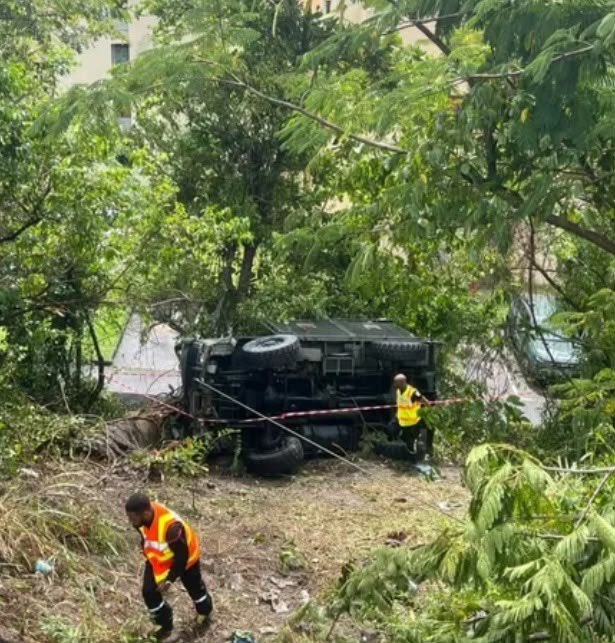
FORT-DE-FRANCE. Martinique recorded a sharp improvement in road safety in October, according to official figures reported by RCI Martinique on November 4. The island logged 22 injury accidents during the month, down 50% from October 2025, with one death compared with three a year earlier and 38 people injured, 13 of them seriously enough to be hospitalized. For a territory where the car is the backbone of daily life, a halving of the monthly toll is the kind of number that deserves attention rather than a shrug.
The year-to-date picture points in the same direction, which matters, because a single good month can be luck while ten months is closer to a trend. Across January through October 2026, Martinique recorded 395 accidents, 16 deaths and 549 injuries, with 187 people hospitalized. The death toll represents a 48% drop from the 31 people killed over the same period in 2025. Whatever is driving the change, enforcement, infrastructure, behavior or some mix of the three, it has been sustained across most of the year rather than confined to a quiet stretch.
The people still dying
The composition of the fatalities is where the comfort runs out. Of the 16 people killed on Martinique's roads so far this year, 14, or 88%, were men, with an average age of 47.3. And vulnerable road users, the pedestrians, cyclists and riders of two-wheelers who have no metal cage around them, made up 75% of the deaths. That profile is familiar to road-safety officials everywhere, and it is the hardest part of the problem to solve, because it is less about the number of crashes than about who is exposed when a crash happens.

The lesson embedded in those proportions is that the next phase of improvement is harder than the last. Reducing total accidents can be achieved with broad measures, speed enforcement, better signage, awareness campaigns, that lift the whole island at once. Protecting vulnerable users requires narrower and more expensive work: separated cycle lanes, safer crossings, lighting, and a redesign of the roads around the assumption that not everyone on them is in a car. A territory that has cut its death toll in half has earned the right to be pleased, and the obligation to ask what the remaining deaths have in common.
There is also the question of whether the gain holds. Road-safety numbers are notoriously volatile on small islands, where a single bad weekend can undo months of progress in the statistics, but the 2026 figures are genuinely encouraging, and the year-to-date trend gives them more weight than a lucky October alone would. But the real test is next year, when the comparison is no longer against a high 2025 baseline but against a 2026 that set a better standard. Holding a halved toll is harder than achieving it once, and that, not the headline drop, is the challenge the figures quietly set.

For an island of Martinique's size, every life saved on the road is felt in a community that is small enough for the loss to be personal rather than statistical. The figures reported for October translate, in human terms, into funerals that did not happen and families that were spared. That is reason enough to take the numbers seriously and to resist the temptation to treat one strong month as a problem solved. The authorities who can claim credit for the improvement would do well to publish the detail behind it, so that whatever is working can be sustained and extended rather than quietly allowed to lapse once the headlines move on.
Read more at The Caribbean Ledger ›