Grenada hands Mitchell almost everything: the NDC takes 14 of 15 seats
A second term arrives as a landslide. The New National Party is reduced to a single constituency, and the real test now is whether one-party dominance can be turned into lower prices rather than just a bigger majority.
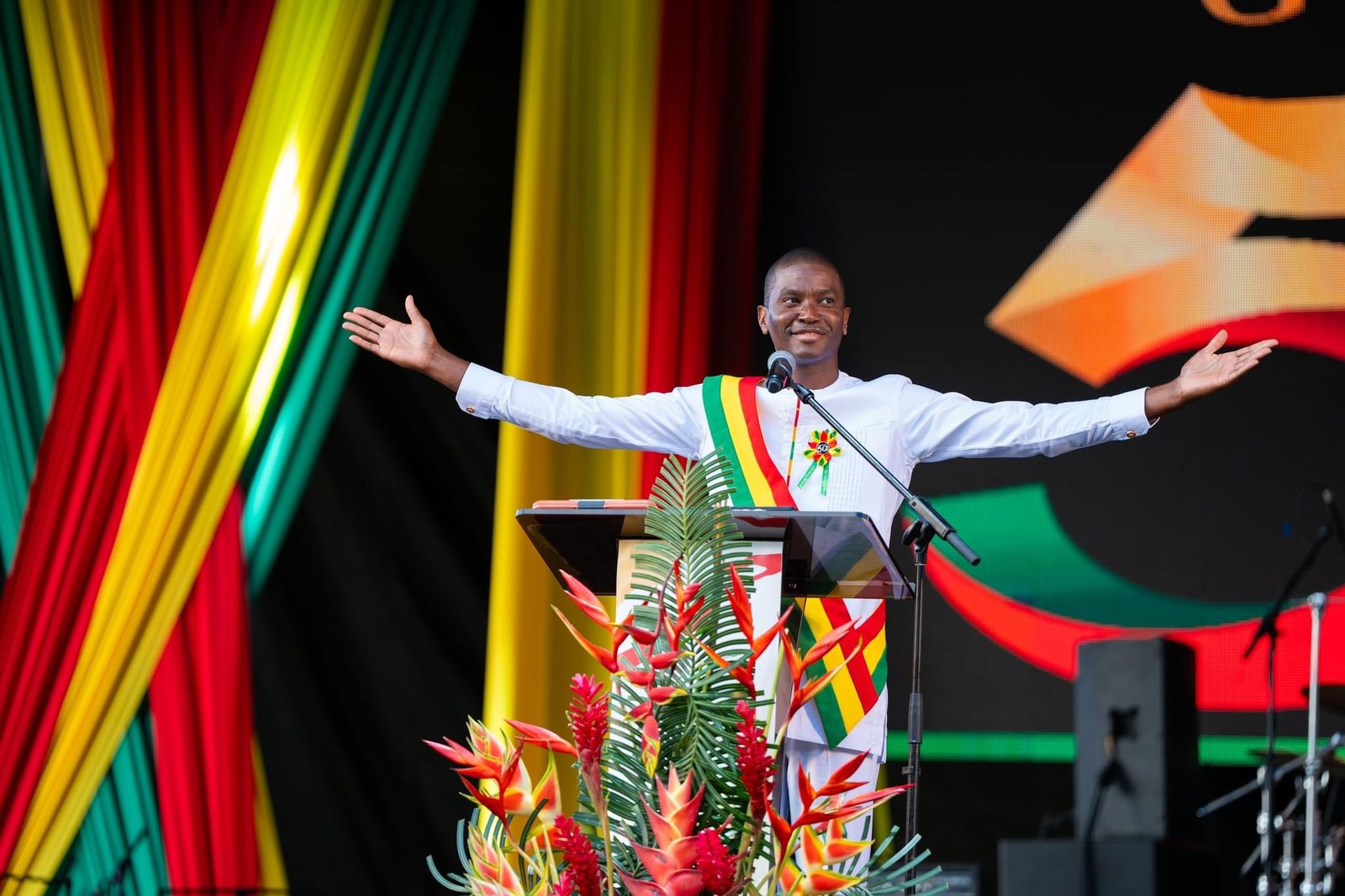
ST GEORGE'S. Grenada went to the polls on Thursday, November 5, and returned a verdict that leaves almost nothing for the other side. In provisional results tracked through the night on the Parliamentary Elections Office dashboard and carried live on the Government Information Service, Prime Minister Dickon Mitchell's National Democratic Congress won 14 of the 15 seats in the House of Representatives. The New National Party, which governed the country for most of the past three decades, was reduced to one.
That one seat is St George North West, where the NNP finished ahead by 662 votes to 267, a margin of 395, according to the constituency returns reported by NOW Grenada. Everywhere else, the map turned a single color. The result, corroborated by WIC News, the St Vincent Times and News Americas Now, hands Mitchell a mandate that is close to total and a parliament with almost no formal opposition inside it.
To measure how far the ground has moved, set this against 2022. When Mitchell first took office that June, the NDC won nine of 15 seats and the NNP held six. In a little over three years, a six-seat opposition has become a one-seat opposition. Grenada has not so much changed direction as pressed harder on the pedal.
A campaign about the grocery bill
The election was Mitchell's own choosing. He called it close to a year ahead of the constitutional deadline, parliament was dissolved in early October, and nomination day was set for October 15. The gamble was that a government seeking renewal is strongest when it picks its own moment, and the numbers suggest the gamble paid in full.
Stripped of the rally bunting, the contest came down to the question most households can answer without a pollster: has daily life become more affordable or less. The cost of living, the price of imported food, the weight of utility bills and the reach of government support payments were the terms on which the campaign was fought. Voters who feel squeezed do not always punish incumbents. Sometimes they reward the party they believe is at least trying, and that is the more plausible reading of Thursday's numbers.
The depth of the win is easiest to see in the places that are hardest to win. In St David, the NDC took 2,130 votes to the NNP's 903, a lead of 1,227. Even the seats that should have been close did not stay close for long: in St Andrew South East, one of the genuine marginals, the NDC edged home 803 to 771, a margin of just 32 votes. A party that holds its strongholds by four figures and still steals the knife-edge seats by a few dozen is a party that organized better and turned out more of its own.
In the sister isles, the sweep was complete. Tevin Andrews, the member for Carriacou and Petite Martinique and a minister in the outgoing government, posted on Facebook that the NDC had won every polling station in both islands. 'We won every single polling station in Carriacou and in Petite Martinique,' he wrote. For a territory that has often felt like an afterthought in national politics, a clean sweep is its own kind of statement.

An opposition without its patriarch
This was the first Grenadian general election in a generation that the NNP contested without Keith Mitchell at its head. The former prime minister, who dominated Grenadian politics for the better part of thirty years, stepped down as opposition leader, and Emmalin Pierre carried the party into the vote as its new leader. The transition was always going to be difficult. Parties built around one commanding figure rarely make the handover look easy, and the NNP made it in the middle of a campaign rather than before one.
The scale of the defeat now poses a structural problem that goes beyond any single leader. A one-seat opposition is barely an opposition at all in the chamber. It cannot form committees of any weight, it struggles to hold ministers to sustained account, and it gives the government the luxury of governing without a persistent internal check. That is a comfortable position for the party that holds it and a worrying one for the health of the system, whatever your politics.
Grenada has been here before, and the memory should temper any triumphalism. In 2013 and again in 2018, Keith Mitchell's NNP won all 15 seats, a clean sweep twice over. Total dominance did not make those governments immune to the ordinary disappointments of office, and in 2022 the voters turned the board over entirely. The lesson of Grenadian politics is that landslides are loans, not gifts, handed over on trust and called back without ceremony.
What a supermajority is for
The practical question for Mitchell is what he does with a mandate this large. The honest answer is that a supermajority removes his excuses. He no longer has a meaningful opposition to blame for a stalled agenda, nor a thin majority to explain away caution. The policies he has promised on the cost of living, on agriculture and food security, on housing, health and jobs now sit squarely on his desk, and the credit or the blame for them will be his alone.

Food is the obvious place to start, because it is where the squeeze is felt first. Grenada imports a large share of what it eats, which means that global shipping costs and world commodity prices arrive on the island as higher supermarket receipts. A government serious about the grocery bill has to work on both ends of that chain at once, lifting domestic production of the spices, ground provisions and produce the island can grow, while using its fiscal room to cushion the imported goods it cannot avoid. Neither lever is quick, and voters who gave a mandate for relief will not wait three years to feel it.
There is a fiscal backdrop that makes the task easier than it might have been. Grenada has spent the past several years running responsible budgets, rebuilding buffers and keeping its debt on a downward path under the regional fiscal rules. That discipline is what now gives Mitchell the headroom to spend on the things he campaigned on without frightening the lenders. A landslide combined with a sound balance sheet is a rare and valuable thing in the Eastern Caribbean, and it would be a waste to spend it only on the comforts of incumbency.
The citizenship-by-investment program remains the quiet engine underneath much of this. Grenada's passport sales have funded a meaningful part of its capital spending and its reserves, and the money has bought real schools, roads and clinics. It also ties a small island's finances to a product whose rules are set elsewhere, by banks and by partner governments that can change the terms without notice. Managing that dependence, rather than simply enjoying the inflows, is one of the less glamorous tests of the next five years.
The opposition's rebuilding job is its own long project, and it starts from almost nothing. A party reduced to a single seat has to decide quickly whether it renews from the top or from the ground up. The NNP's machinery, its branch structure and its fundraising were all built in another era around another leader, and the comfortable assumption that the pendulum will simply swing back has just been tested and found wanting. Grenada's democracy needs the NNP, or something like it, to recover its footing, because a chamber with only one voice of dissent is weaker for everyone, the government included.
There is also the matter of expectation management, which is where large majorities quietly go wrong. A government that wins almost everything is credited, fairly or not, with the power to fix almost everything. Prices set in foreign ports, interest rates set in Washington, shipping costs set by global carriers and weather set by a warming Atlantic are all beyond the reach of any Grenadian cabinet, however large its majority. The skill now is to deliver visibly on the things that are within reach while being honest about the things that are not, and honesty of that kind is harder to sustain when you no longer have to argue with anyone across the aisle.
The regional read
For the wider Caribbean, the Grenada result lands in a season of incumbent strength. Across the Eastern Caribbean, governments that kept a grip on their public finances and spent visibly on the cost of living have tended to be returned, often comfortably. The pattern is not universal, but it is real, and it cuts against the lazy assumption that inflation automatically sinks the government of the day. Voters appear to be rewarding competence and visible effort over ideology, and punishing drift.
It also matters for the balance inside CARICOM and the OECS. A Grenadian prime minister with a near-unanimous parliament behind him carries more weight at the regional table, and Mitchell has shown a willingness to take positions on foreign policy and regional security that are not always the safe consensus choice. A stronger hand at home usually means a louder voice abroad, and the region will hear more of Grenada in the months ahead, not less.
None of this is settled until the Parliamentary Elections Office publishes its final certified tally and the Governor General invites Mitchell to be sworn in for a second term, the ordinary next steps once counting concludes, but the shape of the result is not in doubt. Grenada has given one man and one party almost the whole of its parliament. The gift is enormous, and so, now, is the bill that comes with it. A mandate this size answers who governs, but it sharpens, rather than settles, the harder question of whether life gets cheaper.
Read more at The Caribbean Ledger ›