Why Barbados said no to citizenship for sale, and what the Eastern Caribbean should do next
Barbados has turned away citizenship by investment while the Eastern Caribbean builds a regional regulator. St. Jean & Co. asks the question every regional government must answer, and offers to help.
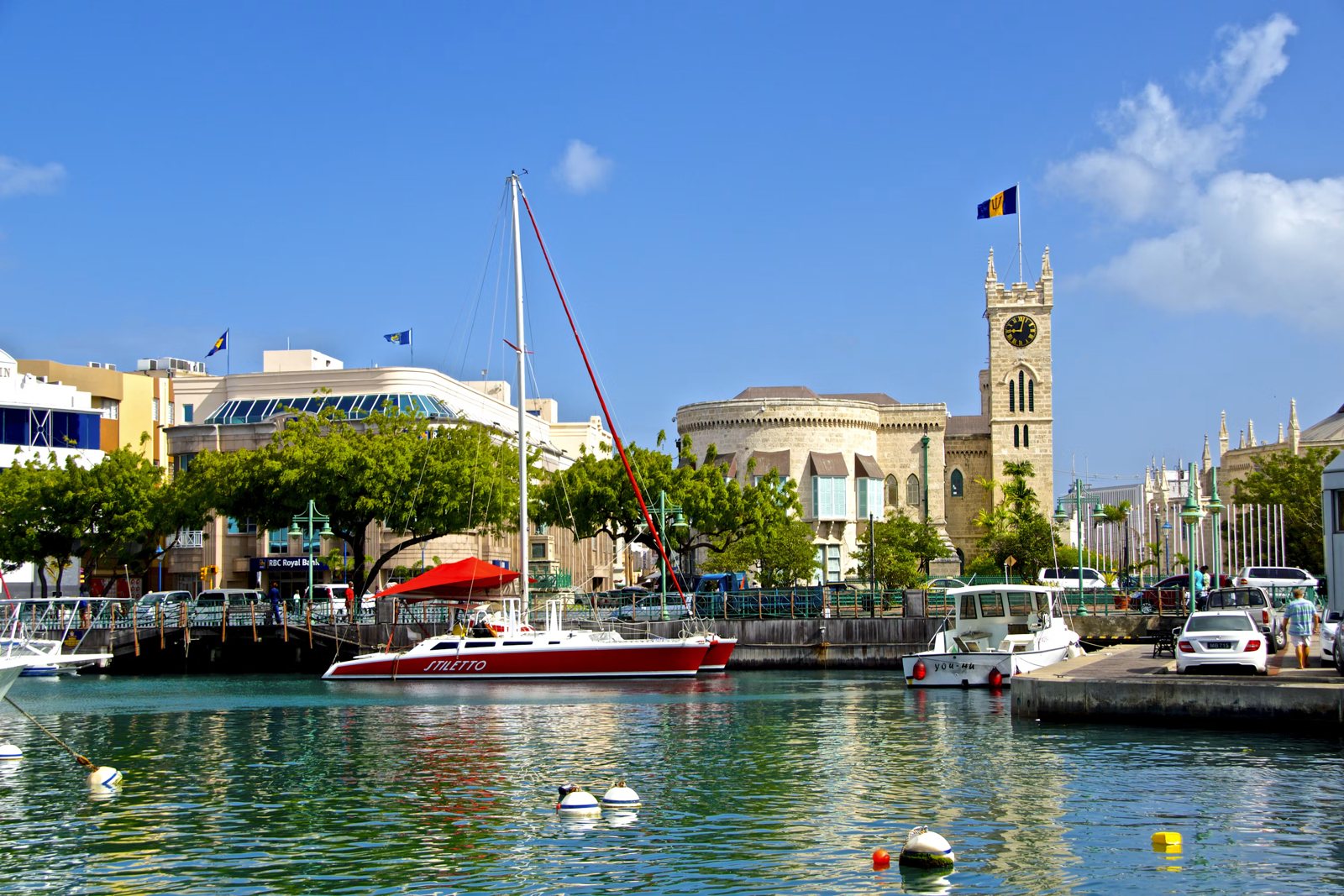
BRIDGETOWN. For more than a decade, citizenship by investment has been one of the most visible exports of the Eastern Caribbean. It brought foreign capital into small economies, helped fund public projects and gave the region a global passport brand. Barbados chose a different path, and the choice deserves a serious look from every government in the region.
A clear no from Bridgetown
Barbados has never operated a citizenship-by-investment program. In August 2025, Prime Minister Mia Mottley told the nation that "Barbados will not sell citizenship." She linked that position to national identity, arguing that the Barbadian passport reflects who the country is rather than a commodity to trade.

Barbados is now legislating a residence route, not a passport sale. The Immigration Bill and the Citizenship Bill passed the House of Assembly on October 27, 2026, and the Senate has not yet debated them. Under the bill, a foreign national can seek permanent residence after investing at least five million Barbadian dollars in an approved national development project, while citizenship requires a period of residence and remains at the minister's discretion.
Minister Gregory Nicholls has said the bill does not sell citizenship or passports and is not a backdoor. Those are the government's words. The real test will be how the discretion is used once the regulations and fee schedules are issued.

The question worth asking
Why would a country with Barbados's standing decline a program that others have used to raise revenue? The question deserves a direct answer, not a slogan. Our reading is that Barbados weighed the long-term value of its passport against a one-time capital inflow, and concluded the passport was worth more.
Prime Minister Mottley has built her reputation on weighing the real path rather than the easiest one. Her government's position suggests a leader who asks what a program will cost a nation's standing over a decade, not only what it will raise this year. The question for the rest of the region is whether the same logic applies at home.
Why the program is losing ground
The pressure is documented. In July 2023, the United Kingdom revoked visa-free access for Dominican passport holders, citing due diligence concerns. In April 2025, the European Court of Justice ruled that Malta's investor citizenship program breached EU law, a precedent that makes transactional citizenship harder to defend.
The European Commission's Visa Suspension Mechanism report in December 2025 went further, finding that operating these programs can itself be grounds for suspending visa-free access to the Schengen area. Our earlier analysis of the region's decade of decision sets out these developments, and they explain why the programs' future looks shorter than their past.
The regional response
The Eastern Caribbean's answer is a regulator. A 92-article draft agreement, signed on July 1, 2025, created the Eastern Caribbean Citizenship by Investment Regulatory Authority, headquartered in Grenada. It sets a harmonized US$200,000 investment floor, mandatory biometric due diligence, applicant interviews, annual application caps and a 30-day residency requirement.
In April 2026, The Voice reported that five member states had secured parliamentary approval: Antigua and Barbuda, Dominica, Grenada, St. Kitts and Nevis, and Saint Lucia. The regulator was projected to be fully operational by mid-May 2026. Barbados, which does not run such a program, is not among them.
What our earlier analysis recommended
In our 2026 commentary, Beyond the Boom: The ECCU's Decade of Decision, we argued that governments should manage the citizenship transition as a fiscal cliff rather than a cyclical dip. We recommended that member states with citizenship-program revenue above 10 percent of government revenue publish transition plans showing how the loss will be absorbed without new debt.
We also proposed that at least 25 percent of net program inflows be earmarked for a Regional Medical Excellence Fund, to build one internationally accredited specialty center in each member state. We urged governments to treat ECCIRA as a template for regional regulation in other sectors, from healthcare accreditation to financial supervision.
The same commentary cited reporting that St. Kitts and Nevis saw citizenship-program revenue fall by 60 percent in 2024. Those numbers are the reason we urged governments to plan now rather than wait for the decline to arrive.
Two roads from the same region
Barbados and the Eastern Caribbean have chosen different roads, but both start from the same reality. Small economies cannot rely on a single source of revenue or a single reputation. Barbados is building a residence route with ministerial discretion at each step, while the Eastern Caribbean is building a regulated program with a regional floor and shared standards.
Both approaches carry risk. The Barbados bill still lacks fee schedules and a designated project list, and the ECCU regulator still has to prove its standards hold in practice. The lesson for the region is that credibility, not speed, will decide whether any program survives.
To the leaders of the Eastern Caribbean
To the Prime Ministers and Ministers of the Eastern Caribbean, we ask a warm and direct question. What is your plan for the years after citizenship by investment? Which projects will replace the revenue, what timeline will you publish, and how will your citizens see the benefits?
We ask because the answers will shape the next decade for your islands. A transition planned in public is easier to trust than one announced in a crisis.
We stand ready to assist, as it has throughout this debate. We can offer analysis of transition scenarios, independent review of due diligence standards, and help mapping national plans against the Caribbean Development Bank's strategic pillars. The region has built a regulator.
Now it needs to build the future that the regulator protects.
Barbados has made its choice. The rest of the region still has time to make one its citizens can be proud of.
Fletcher St. Jean
