Paraguay's president is impeached minutes after resigning following a bank collapse
The Senate removed Santiago Peña on Friday, and he was placed under house arrest. Behind the political collapse is a digital bank that held public money, and a governance failure that raises questions for the whole region.
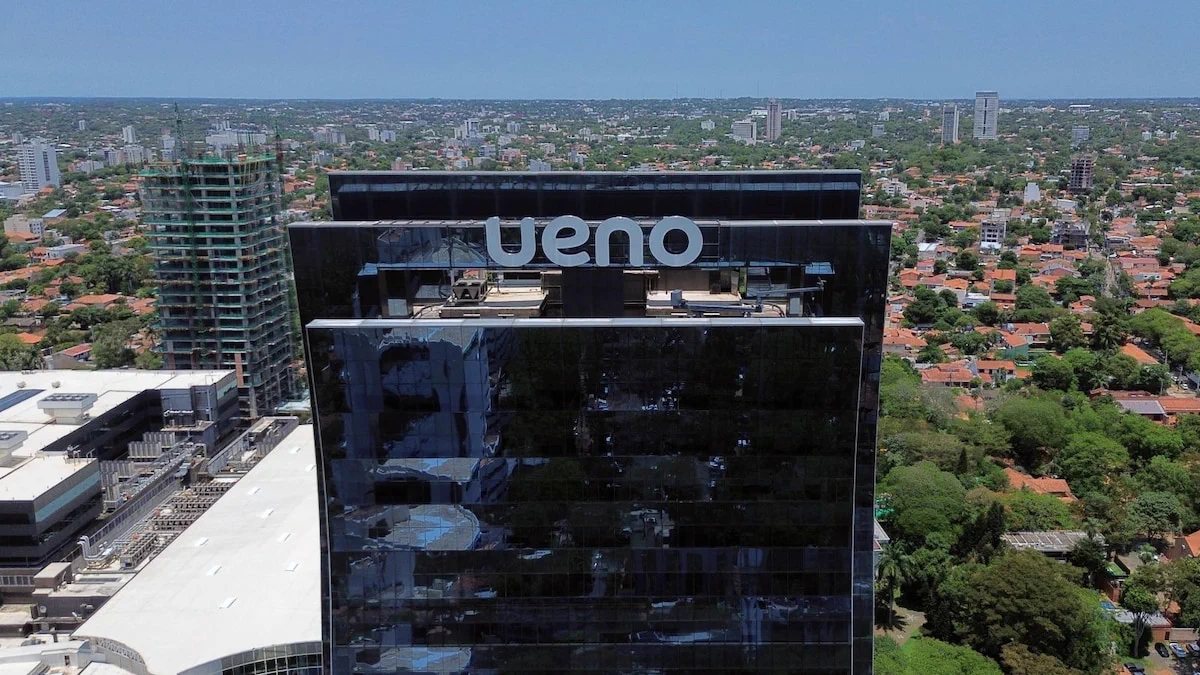
ASUNCION. Paraguay's president, Santiago Peña, announced his resignation on Thursday, November 5. Minutes later the lower house of Congress impeached him unanimously, and both houses declined to accept the resignation. On Friday, all 44 senators present voted to remove him from office, and he was placed under house arrest.
The collapse at the center of the crisis is Ueno Bank, a digital lender that grew from a niche fintech into a mid-sized institution in a few years. By its own account it reached about 3 million customers in a country of 6.5 million people. Reuters reports that Ueno administered roughly $850 million in public funds, including money from state institutions and pension-related bodies.

This investigation draws on the public record: central bank findings reported by the wires, court actions, and the government's own statements. Where a claim rests on an allegation, it is labeled as one. Where the record is silent, this piece says so, because the silence is part of the story.
What the regulators found
According to the central bank, Ueno's capital fell to less than half the legal minimum once corrections were made. Regulators found loans to companies linked to the bank's owners that were poorly documented, along with expenses that had been wrongly counted as assets. Reuters reports the central bank placed Ueno in resolution, which it describes as the strongest measure short of immediate liquidation.
The owners at the center of those loans are Grupo Vázquez, which Reuters reports owned Ueno until March 2025. Reuters describes the scrutiny as focused on alleged excessive lending to companies linked to that shareholder. The public record gives no amounts and no timeline, and that gap is the first question any inquiry must answer: how much, to whom, and when did the regulator know?

The president's stake
Peña's name entered the story through his past ties to the group. He says he was a Grupo Vázquez shareholder until March 2025, when he sold his stake, and that he had no improper role in the bank's affairs. Ueno says Peña never had a direct relationship with the bank as a shareholder or investor. Those denials are on the record, and so are the questions they leave open.
The questions are specific. Did any benefit from the bank's lending to related companies reach the people who owned, sold or ran the group? Did the president's office know that concentrated lending was under review before the public did? Prosecutors have not answered those questions in public.
Carlos Carvallo is the sharpest of those questions. Peña appointed him to run the central bank, after Carvallo had headed Financiera Ueno, the company that grew into the bank. The central bank says Carvallo recused himself from all Ueno-related decisions and denies any conflict of interest. Carvallo resigned as central bank chief on Tuesday, and prosecutors have since ordered his arrest, the AP reports.

Peña has not been convicted of anything, and every claim against him should be read that way. The Attorney General ordered three criminal investigations, including allegations involving Peña and other current and former officials. The AP reports that the charges named in the case include breach of trust, influence peddling and using public office for personal gain. He denies wrongdoing.
Pressure came from inside his own party as well. Horacio Cartes, a former president and the Colorado Party's chief, publicly called for Peña's ouster, according to the AP. Reuters reports that Peña had lost support within the party before he announced his resignation.

Why governance is the story
A bank does not fail only because the economy turns. Corporate governance is the set of rules and people that decide who owns a bank, who may borrow from it, and who checks the answer. When those checks are weak, growth can hide risk for years, and the warning signs are usually visible inside the institution long before they reach the public.
The Federal Reserve's review of Silicon Valley Bank, published in April 2023, put the point plainly. The bank's board and management, it found, "failed to manage their risks," and the board did not receive adequate risk information or hold management accountable. Supervisors, the review said, "did not fully appreciate the extent of the vulnerabilities" as the bank grew.
SVB is the example most people in the Caribbean will recognize. Its deposits were concentrated in a tech and venture capital network and were largely uninsured. On March 9, 2023, it lost more than $40 billion in deposits, and management expected more than $100 billion in further withdrawals the next day. Reporting on the Fed probe also found that the bank had no chief risk officer from April to December 2022.

Signature Bank, in New York, failed the same month. The FDIC said the root cause was poor management, including unrestrained growth funded by uninsured deposits without a liquidity risk plan in place. It also found the bank often did not act on examiner concerns.
Credit Suisse offers the European version of the same lesson. In February 2023, weeks before it collapsed, Swiss regulator FINMA found that the bank had seriously breached its obligations in the Greensill case. The lending arrangement tied to Greensill had unraveled in 2021, and the bank was later absorbed by UBS.
Could the Caribbean survive a banking collapse?
Ueno is a Paraguayan story, but its ingredients are regional. Small markets tend to have concentrated ownership, a few groups behind several institutions, and regulators who know the same people across boardrooms, ministries and parties. Digital lending and mobile banking are spreading across the region. None of that is a crime, but each of those features raises the stakes on governance.

The Bahamas offers a useful test. The Tribune reports that the Central Bank of The Bahamas held its Deposit Insurance Fund at $101.5 million at the end of 2024, or 3.6 percent of insured deposits, about $29.5 million short of its target. The target is 4.67 percent, against a global standard of 3 to 4 percent. Deposits up to $50,000 are fully insured, and the fund dates to the late 1990s, after the collapse of Gulf Union Bank.
Governor John Rolle told the Tribune that depositor confidence depends on that insurance, and that the fund needs at least two to three more years to reach its target. Those are the right priorities. They also show the gap: a fund below its own target has not yet been tested by a failure on the scale of Ueno, which held roughly $850 million in public funds alone.
Can the people who see the problem act on it?
The most important question for any Caribbean bank is not whether it has a compliance officer. It is whether that officer can act. Anti-money-laundering and internal control officers are often the first to see weaknesses: loans to insiders, missing documentation, and accounts that do not match a stated business.
The Central Bank of The Bahamas reported that its 2024 on-site examinations of money transmission providers found deficiencies in board and senior management composition, and in how internal audit aligned with its governance guidelines. That is the kind of finding supervision exists to produce. It is also a reminder that board composition and internal audit remain basic governance questions, not formalities.
Can those officers act independently? The public record rarely shows it. When an officer reports a weakness and is later removed or sidelined, the reasons are often private and the complaint rarely reaches the public. The Ledger has found no public record in this case of a compliance officer at Ueno being targeted, and we have not established that any was.
Independence requires more than good intentions. In the Ledger's view it needs a reporting line to the board that does not run through the chief executive, protection against removal without board approval, and a regulator that asks for the compliance file when a whistleblower calls. Silicon Valley Bank shows the cost of the alternative. A bank without a chief risk officer has no one whose job is to say no to growth.
Regulators carry the heaviest burden. The Fed's review said supervisors did not take sufficient steps to ensure that SVB fixed its problems quickly enough. The FDIC found that Signature's management did not always act on examiner concerns. In both cases the lesson is the same: a supervisor that sees a problem and waits has not really supervised.
For the Caribbean, that means publishing enforcement timelines, rotating examination teams, and keeping regulators out of the boardrooms they oversee. It also means asking the question Paraguay now faces in public: did the central bank act early enough, and who in government knew?
What comes next
Pedro Alliana was sworn in as president on Friday to serve out the term ending in August 2028, the AP reports. The AP also reports that Alliana is under investigation in connection with the bank. Miguel Vázquez, Ueno's founder and former chief executive, is in prison, and a judge has ordered six Ueno executives jailed pending trial.
The Ledger Desk will follow the Senate record, the depositor payments and each criminal case, and will update this story as the record changes. Depositors are the first people to pay for a governance failure. They should be the first people told what happens next.
Read more at The Caribbean Ledger ›