Antigua's vote on Cuba shows how small states bend under Washington's weight
A phone call, a visa dispute and a citizenship program explain one Caribbean government's retreat. The story reaches back to 1960, and it is larger than one vote.
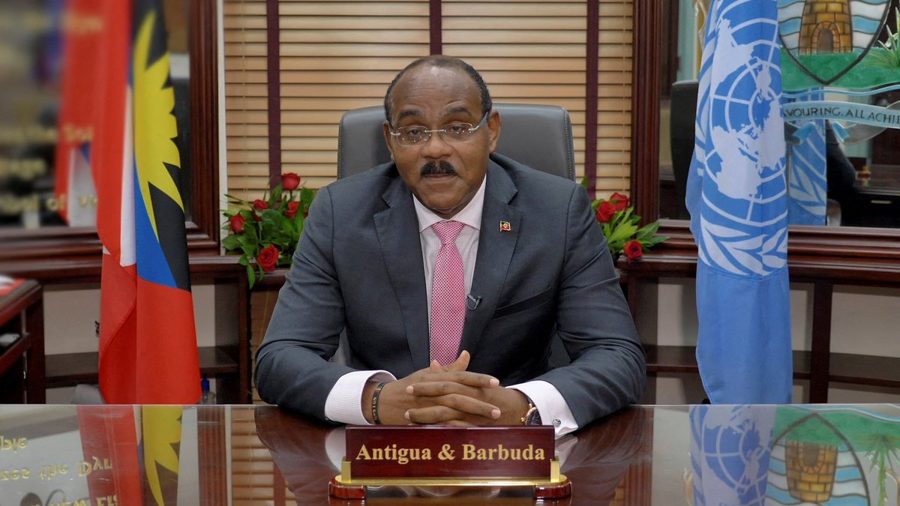
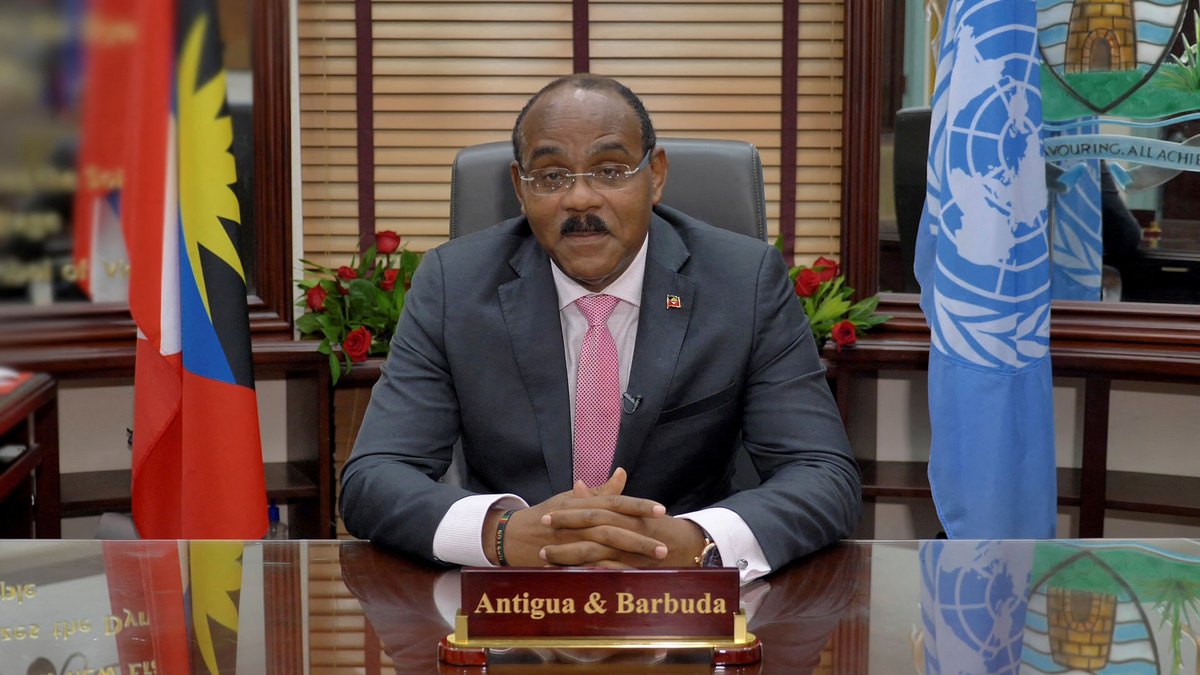
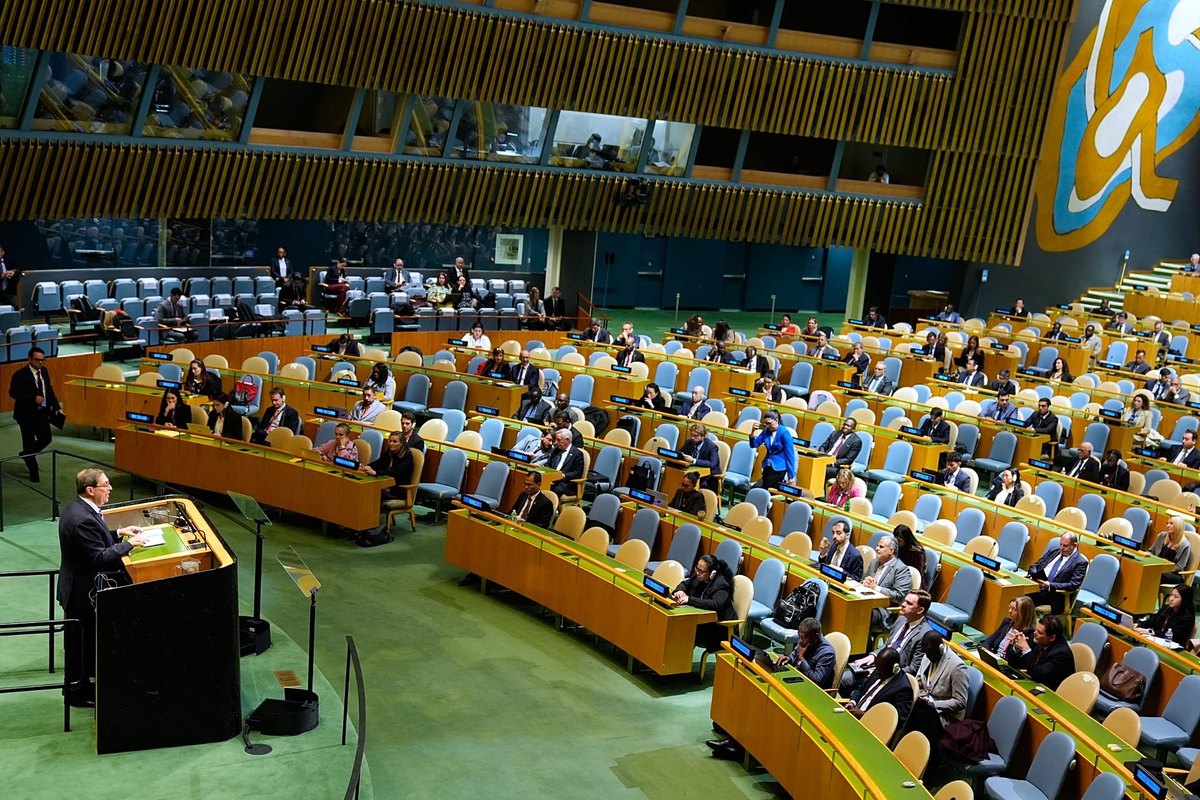
ST. JOHN'S. On October 28, 2026, the United Nations General Assembly voted 130 to 17 to call for an end to the United States embargo on Cuba.
Twenty-five countries abstained, and 21 were absent. Antigua and Barbuda was among the absent. Its prime minister, Gaston Browne, later explained that his government had first decided to support the resolution and then changed course after a call from the State Department.
Browne said the call advised that the United States was making progress in negotiations and that supporting Cuba would undermine them. He said his instructions to the ambassador in New York were to abstain, and that the ambassador did not appear at the vote. Antigua was recorded as absent.
The government has not disclosed a written position from Washington.
A visa dispute sits behind the call
The reason the call mattered to Antigua is visas. On December 16, 2025, President Donald Trump issued a proclamation restricting entry for travelers from Antigua and Barbuda and Dominica, beginning in January. The administration cited the citizenship-by-investment programs of both countries, which it said historically lacked residency requirements and posed challenges for screening travelers.
Dominica's prime minister, Roosevelt Skerrit, called the decision unexpected and disappointing.
Browne said the visa matter is now being handled at the State Department, and he described it as a very difficult proposition. He said members of the department were working on it, but that a decision had been made by someone in the White House. He did not know whether the president had signed an order.
He also wondered aloud whether the citizenship program was the reason for the American position. The United States, he said, has not explained its reasons.
Browne said the government has agreed to suspend its citizenship-by-investment program from November 12, with a phase-out over three and a half years, and that it has written to the European Union. That is a large concession for a country whose economy has leaned on the program for years.
How small governments decide
Antigua and Barbuda has roughly the population of a mid-sized American town. Its government runs on a small civil service, a handful of diplomatic posts, and a budget that depends heavily on tourism, which in turn depends on air links, American visitors and the goodwill of American regulators. Each of those dependencies is a point at which a larger power can apply pressure without raising its voice.
Small island developing states share a set of structural vulnerabilities. Their markets are too small to absorb shocks alone. Most of their food, fuel and manufactured goods are imported.
Public debt is high relative to economic output, and borrowing costs move with decisions made far away. Hurricanes and rising seas can erase years of investment in a single season. Each of these conditions gives a government a reason to avoid a fight with its most important partner.
Banking is a quieter pressure point. Correspondent banks in New York and London decide whether Caribbean banks can process dollar payments. When those banks decide a country is a risk, transactions slow, costs rise and the government's own ability to pay suppliers is strained.
Small states rarely write this into their foreign policy, but they feel it in every budget meeting.
The American hand
The United States holds most of the cards in the Caribbean. It controls visas, the largest source of tourists, a large share of development assistance, security cooperation and access to dollar markets. The reporting on Antigua did not name the American official handling the visa matter.
The lobbying effort against the Cuba resolution was led by Secretary of State Marco Rubio and by Ambassador Mike Waltz at the United Nations.
Waltz has argued in public that there is no blockade. He cited more than $876 million in licensed exports to Cuba during the first eight months of 2026. Cuba's government puts the cost of American sanctions at a record $8 billion in the year to February 2026, and cumulative losses at $178.7 billion at current prices.
Both figures are the claims of the governments that issued them, and they should be read that way.
The embargo, from 1960 to now
The modern restrictions began in 1960, when the Eisenhower administration imposed an embargo on most exports to Cuba after the revolution and the expropriation of American property. Relations were broken in January 1961. In February 1962, President John F.
Kennedy issued a proclamation that extended the trade ban nearly in full, and Congress later codified it in law.
The Cuban Democracy Act of 1992 tightened restrictions on subsidiaries of American companies. The Helms-Burton Act of 1996 wrote the embargo into statute and made it harder for any president to lift it without congressional action. Since the early 1990s, the United Nations General Assembly has voted annually on a resolution calling for the embargo to end, and the United States has voted against it, usually alone or with Israel.
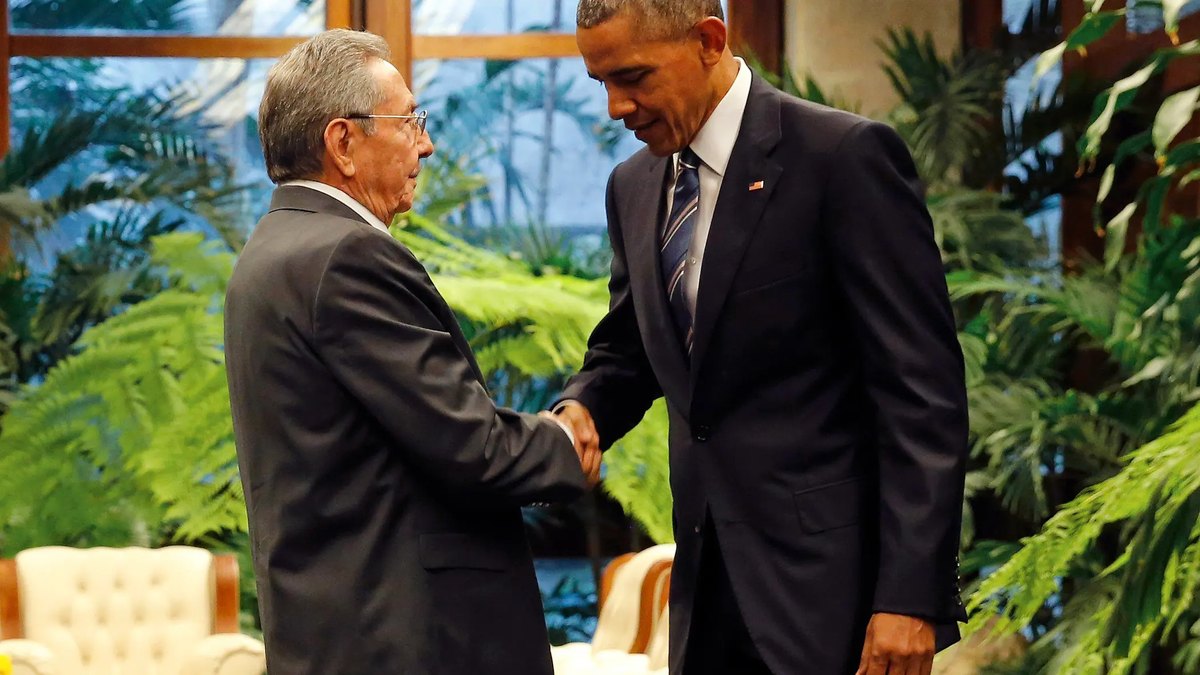
The most sustained effort to change course came under Barack Obama. On December 17, 2014, he announced plans to ease sanctions and restore diplomatic relations. Diplomatic ties resumed on July 20, 2015, after 54 years, and embassies reopened.
On March 21, 2016, Obama became the first sitting president to visit Cuba in decades.
His successor, Donald Trump, partially rolled back the opening on June 16, 2017, restricting most dealings with military-linked enterprises while keeping air and sea travel open. The Biden administration described Cuba policy as not a top priority when it took office in 2021. The embargo itself remained in place through each change, because it rests on law that only Congress can change.
Which presidents were friendliest to Havana
Three presidents stand out for their openness toward Havana, and the evidence on each is specific. Jimmy Carter opened reciprocal interests sections in Havana and Washington in 1977, the closest approach to normal relations since 1961. Obama went further than any president since, with the 2014 announcement, the embassy reopenings and the 2016 visit.
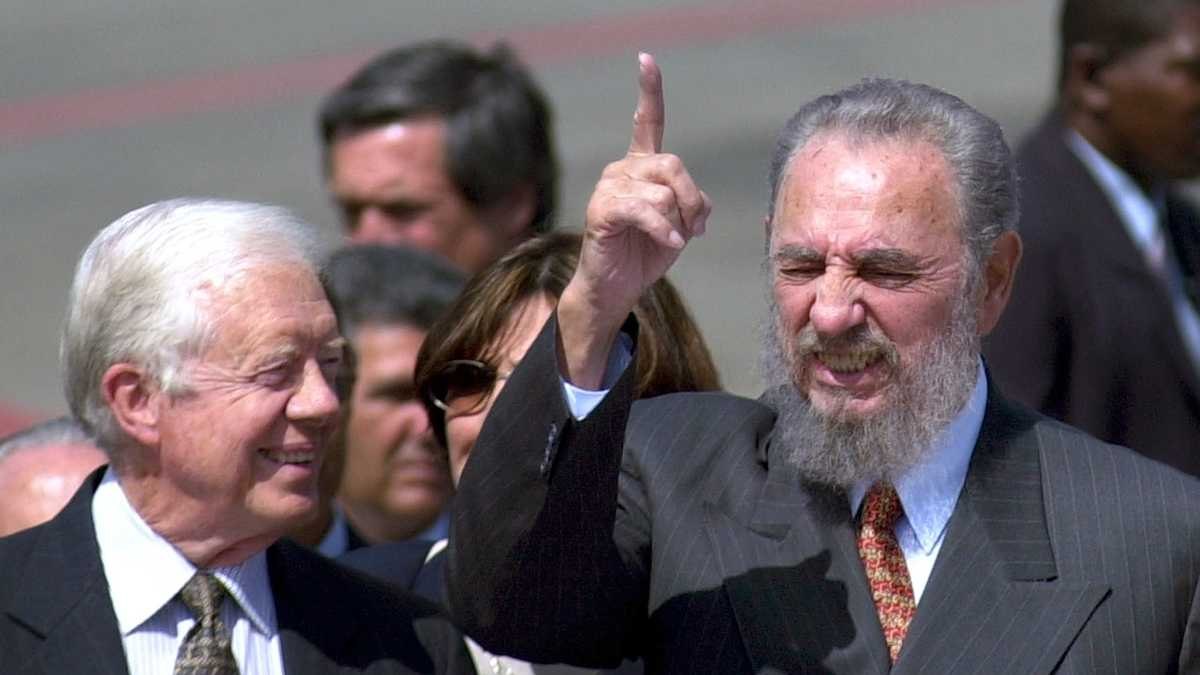
Carter later returned to Cuba as a former president in 2002 and met Fidel Castro.
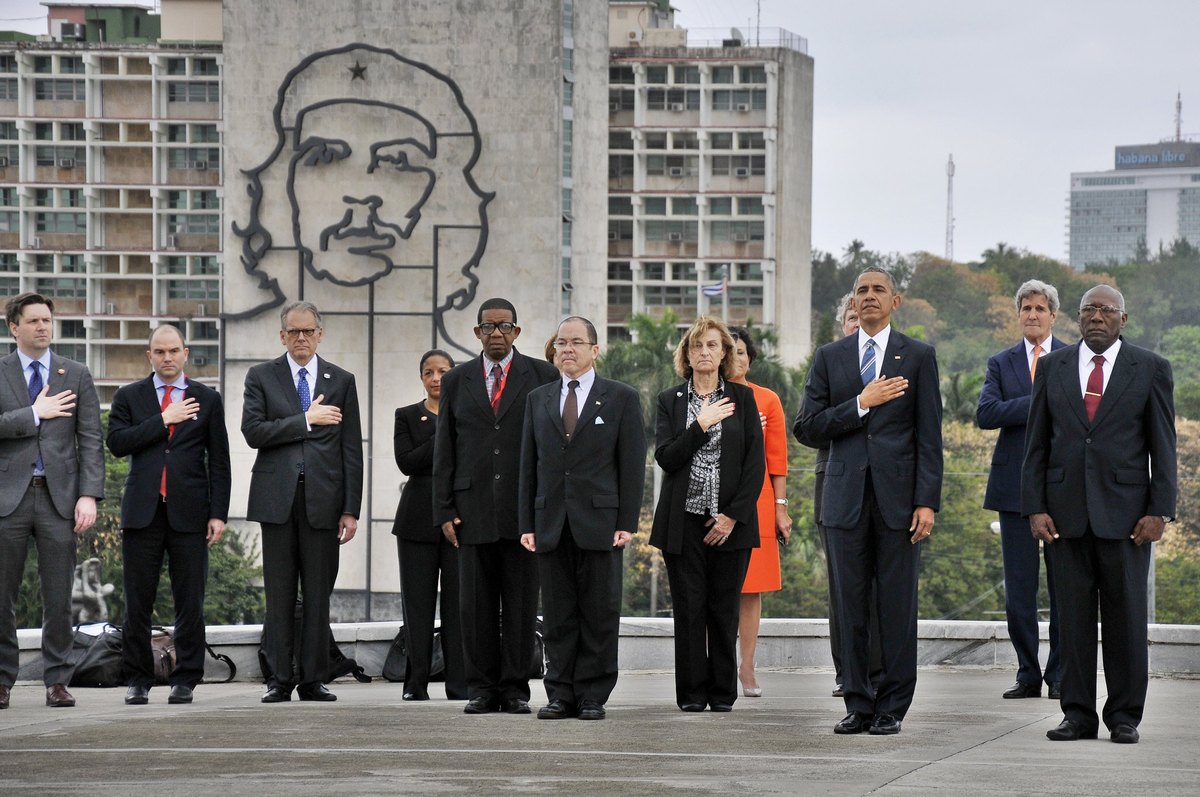
Carter's 1977 interests sections were the closest approach to normal relations for nearly four decades. Diplomats worked from those offices rather than from full embassies until July 20, 2015, when the two governments formally resumed relations.
Each of these steps was taken by the executive branch, and each stopped short of lifting the embargo, because the embargo rests on statute. Kennedy, Bill Clinton through the Helms-Burton Act, and Trump in his first term moved the other way. The lesson for small states is that friendly presidents still could not deliver the full change that governments in Havana and the Caribbean wanted.
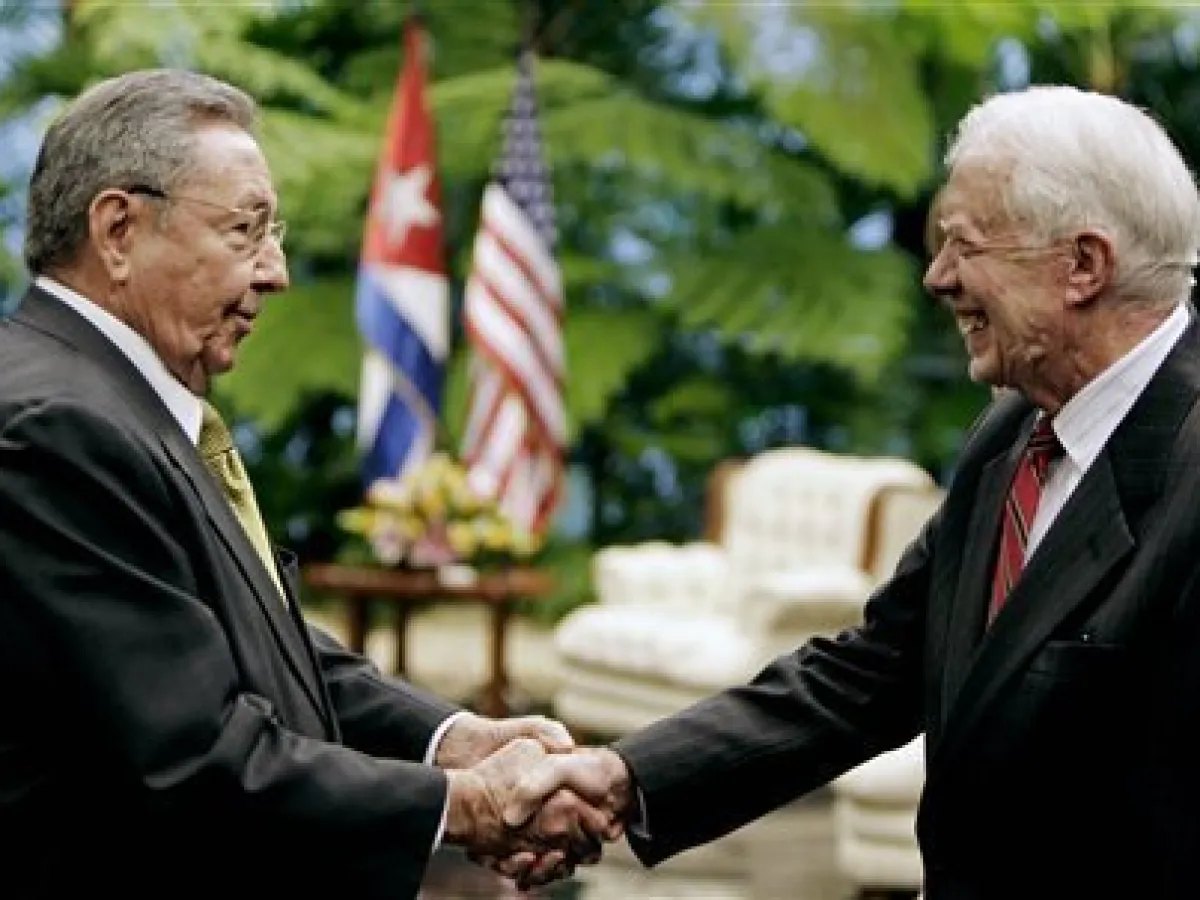
Carter's visit to Havana in 2002 came as a former president, a role that gave him more freedom to speak with Cuban leaders than any sitting president had. Those meetings did not change the embargo, which remained a matter for Congress.
Kennedy's 1962 proclamation and Helms-Burton's 1996 statute were built to outlast any single president. That is why each openness effort has been reversible, and why small states have treated American policy toward Havana as something to manage rather than trust.
What Cuba has given the region
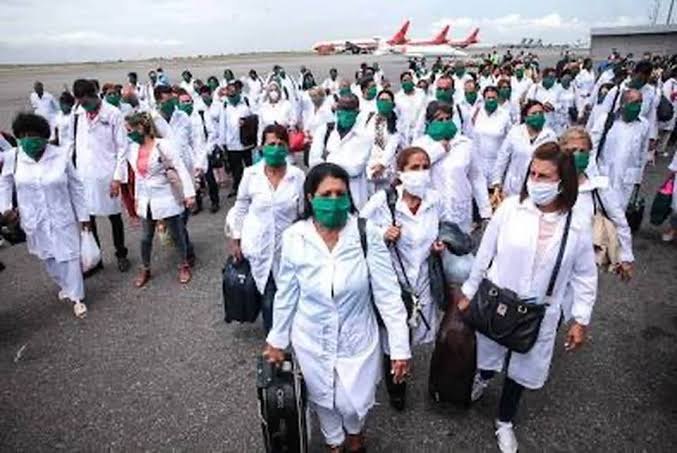
Cuba's most visible contribution to the Caribbean is medicine. The Henry Reeve Brigade, founded in 2005, is a contingent of Cuban doctors and nurses that deploys to disasters and epidemics. During the COVID-19 pandemic in 2020, when vaccines were scarce and wealthier countries kept supplies at home, Cuban teams went abroad early.
The first team began treating patients in Italy on March 26, 2020.
A contingent of 101 nurses arrived in Barbados on April 5, 2020. By late April, Cuba reported 24 teams working in 23 countries, and more than a thousand health professionals deployed abroad. For small island states with few doctors and limited access to emergency supplies, that presence was not an abstraction.
Cuba's medical school in Havana, the Latin American School of Medicine, has trained students from across the Caribbean on scholarships, many of whom returned to practice at home. The scale of that program, the number of Caribbean graduates and the terms of the scholarships should be confirmed with each country's health ministry before publication, because the figures available to this newsroom are not complete enough to print.
The October vote suggests the region has moved away from a united position. For more than three decades, the Caribbean Community voted as a bloc on the embargo resolution. In 2026, Trinidad and Tobago voted against the resolution, ending that unanimity.
Jamaica, Guyana and Haiti abstained, as did the Dominican Republic. Antigua and Barbuda, Dominica and Saint Lucia were absent.
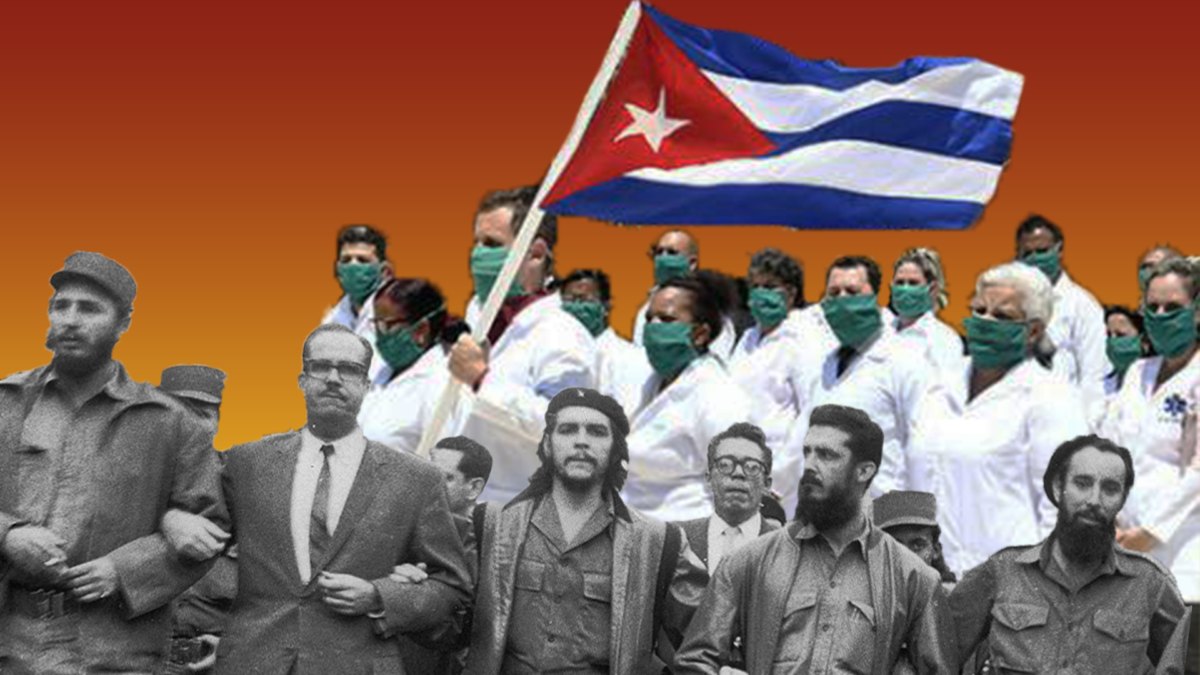
Has the Caribbean left Cuba behind?
Former Jamaican prime minister P. J. Patterson called Jamaica's abstention an abominable betrayal that history would never forget.
That judgment will not be universal, and the governments in question would say they weighed national interest.
The fairer answer is that the Caribbean has not abandoned Cuba in memory, but it has become more cautious in votes. Governments that remember the medical brigades still have to answer to a visa officer, a banker and a tourism minister. The gap between what citizens remember and what governments can afford is the story of the region's relationship with Havana.
What comes next
Three things will show whether Antigua's shift is a pause or a turn. The first is whether the citizenship-program suspension and its phase-out schedule are carried out. The second is whether the visa talks end with a restored entry arrangement.
The third is whether other Caribbean governments face similar calls before the next General Assembly vote.
Read more at The Caribbean Ledger ›