Caribbean banks call their system resilient. The bigger bets are on power, cable and Brussels.
Regulators describe a sturdy banking sector, the IMF points to old bad loans, and the government of St. Kitts and Nevis is courting European money for geothermal power and undersea cable.

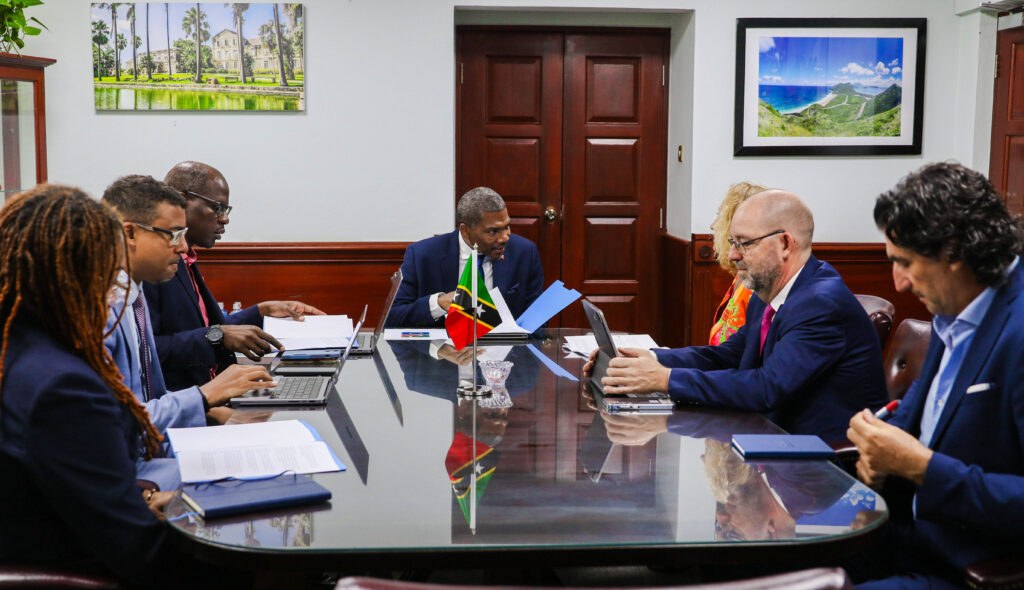
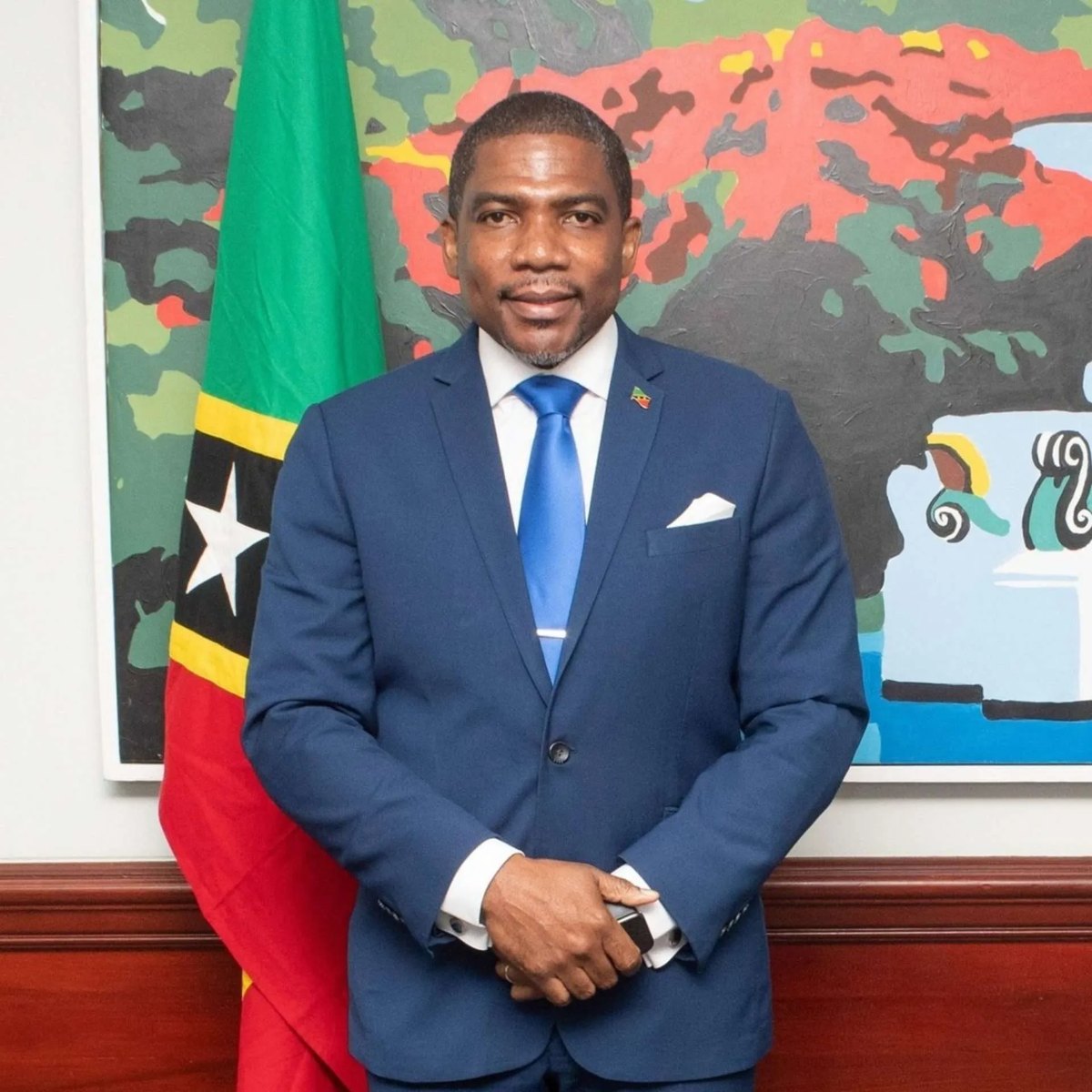
BASSETERRE. On Thursday, November 12, Prime Minister Terrance Drew hosted a European Commission delegation at Government Headquarters. The visitors were led by Myriam Ferran, the Commission's deputy director-general for international partnerships. The agenda covered energy, digital connectivity and sea links, all framed under the European Union's Global Gateway strategy, which is Brussels' program for financing infrastructure abroad.
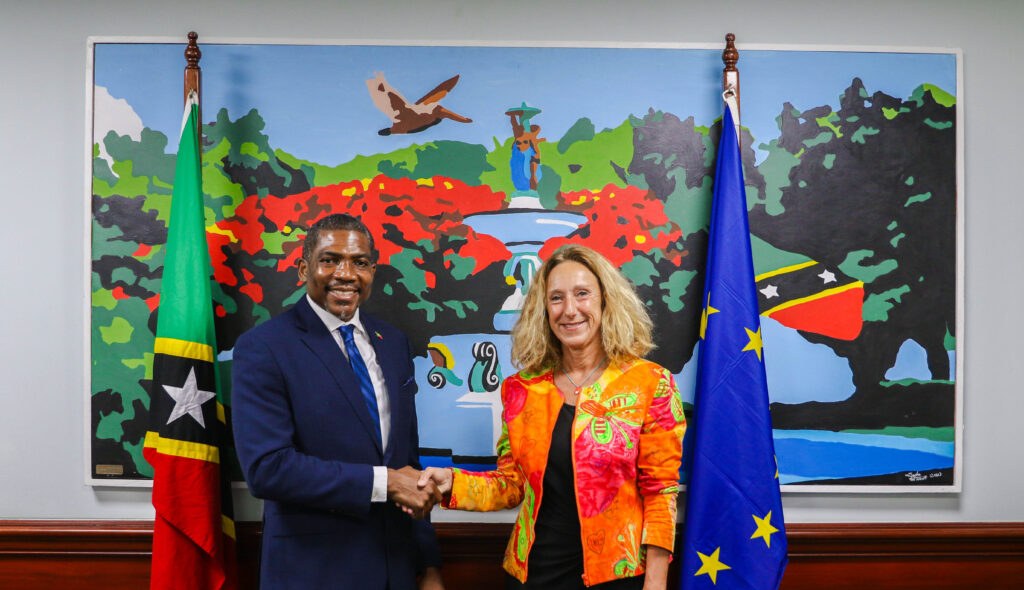
The energy item is the most concrete. The government wants to develop geothermal power on Nevis and build an electricity interconnection linking Nevis to St. Kitts, aimed at reducing reliance on imported fuel. The government's release did not attach a dollar figure, a capacity target or a timeline to the plan. The digital discussion centered on a possible second submarine fiber-optic cable, pitched as a matter of resilience and digital sovereignty.
The government's stated aim is to reduce reliance on imported fossil fuels, and an interconnection would let the two islands share generation capacity. The release framed the shift as cleaner, more reliable energy, but it offered no cost estimate or generation target.
Sargassum, the seaweed that fouls beaches and fisheries across the region, was also on the list, as were maritime links that officials say could move people and goods more cheaply. The release described diversification and investment as the goal, but it named no sums and no deadlines. Nothing in the public record shows that European money has been committed.
The sargassum item deserves more attention than its place on the agenda suggests. The seaweed affects tourism, fisheries and coastal communities, the sectors the government hopes to look beyond. A regional response is the logic behind the release's call for cooperation.
The region's banks have a different story to tell. In its communique from July 10, the Eastern Caribbean Central Bank described the banking sector as resilient, with strong liquidity, higher capital adequacy and lower non-performing loans. The bank also highlighted two payment projects. The CAPSS pilot is meant to allow instant cross-border payments in local currencies, which would reduce reliance on correspondent banks, and a Fast Payment System would offer real-time electronic transfers across the currency union.
The International Monetary Fund's assessment in February is less comfortable. Its staff said the system-wide non-performing loan ratio sits above the central bank's own 5 percent benchmark, and that many impaired loans have been overdue for years. The financial system is broadly stable, the Fund said, but it carries legacy weaknesses on its balance sheets, and supervision of nonbanks is fragmented.
For a lender, the arithmetic is simple. A loan book carrying old impaired credit has less room to finance new projects, however attractive the pipeline. The Fund recommended full provisioning for long-dated bad loans and time-bound capital restoration plans where capital is short.
Both readings can be true at once, since one is a snapshot of liquidity and capital and the other is a view of old loans that have not been cleared. Readers should weigh them together. The bank's communique does not address de-risking, the practice of big foreign correspondent banks cutting ties with smaller Caribbean lenders, which remains one of the region's most persistent financial headaches.
The growth backdrop is modest. The Fund estimated regional growth at 3.0 percent in 2025 and expects it to slow to about 2.5 percent over the medium term, with tourism running near full capacity. Visitor arrivals rose 9.0 percent in the first quarter of 2026, according to the central bank, and visitor spending rose 4.0 percent. Against that, the currency union's target of holding public debt at 60 percent of GDP by 2035 has stalled, the Fund said, and several members are at risk of missing it.
That is the context for Brussels' interest. Europe can offer grants, guarantees and project finance. What the region needs is a banking system that can carry the projects that follow, including geothermal and cable investments, with books that the Fund still describes as heavy with old loans. The central bank's 114th Monetary Council meeting was scheduled for October 30, and this newspaper has not yet reviewed its communique.
The St. Kitts visit produced intentions, not agreements. The question for the region is whether those intentions can be turned into financed projects, and whether the banks that would lend against them are as sound as their regulators say.
Sources: Government of St. Kitts and Nevis, Department of Information (SKNIS), including its November 12, 2026 release; International Monetary Fund, staff concluding statement, February 9, 2026; Eastern Caribbean Central Bank, communique of the 113th Meeting of the Monetary Council, July 10, 2026.
Read more at The Caribbean Ledger ›