A foreign army over Port-au-Prince, and a question the region has not answered
El Salvador's intervention against Haiti's gangs has grown from a rescue mission into an air campaign, with 2,000 troops, a destroyed gang headquarters and 20 dead. The force is real. So is the silence about who commands it.
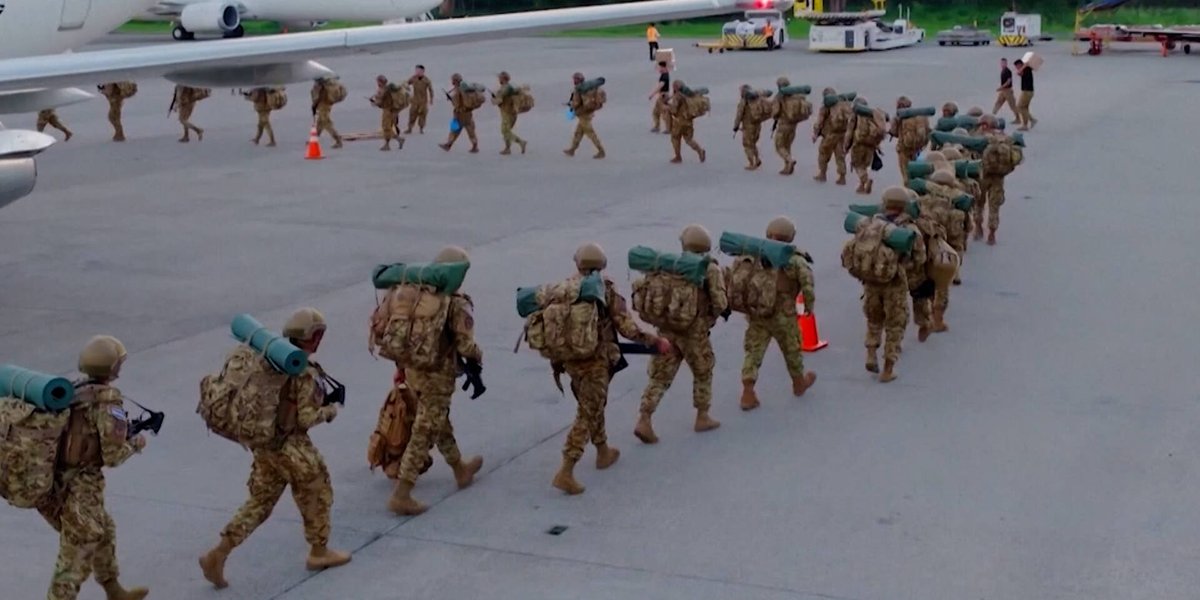
PORT-AU-PRINCE. For the better part of two years, the question in Haiti has been who would fight the gangs that hold the capital, and with what. This week the question changed.
The gangs were fought, hard, from the air, by a foreign army. The debate now is not whether anyone will act in Haiti. It is who gives that army its orders, under what law, and what the Caribbean is prepared to accept in the name of ending a siege.
On Tuesday, November 10, El Salvador's president, Nayib Bukele, posted a video on X showing helicopters circling a compound in Croix-des-Bouquets, on the eastern edge of Port-au-Prince, and firing down on it. "We destroyed the house of Lanmo San Jou and the 400 Mawozo gang's headquarters," he wrote, naming one of the most feared gang leaders in the country and the group that kidnapped a busload of North American missionaries in 2021. Al Jazeera reported that the operation, carried out on Sunday, November 8 by Haitian police with Salvadoran support, left 20 people dead.
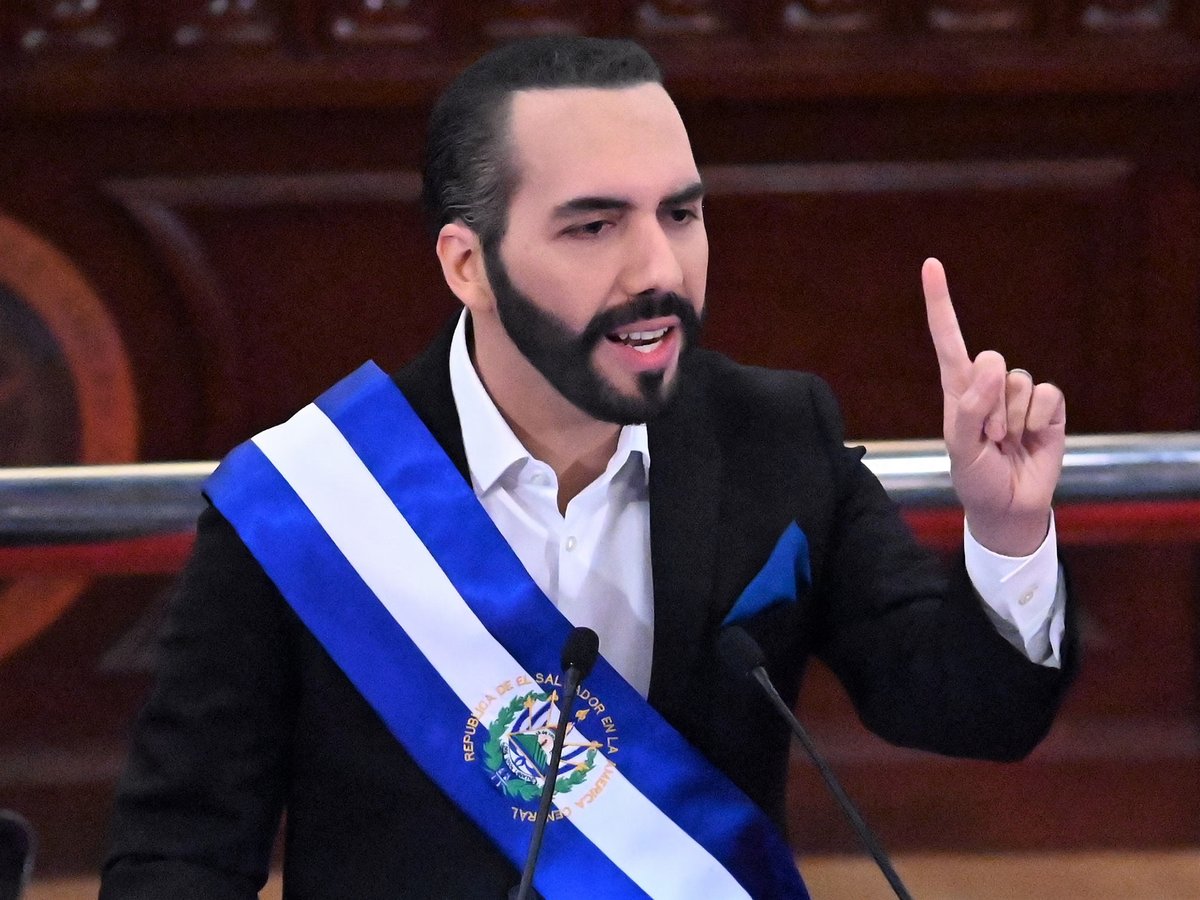
It was the clearest sign yet that a mission sold to the public as a rescue has become something larger. Bukele first sent troops after an ambush on October 18, when gang members attacked four Salvadoran aviation technicians attached to the United Nations backed Gang Suppression Force and later kidnapped them. He said at the time, in Haitian Creole on X, that the sole goal was to bring the four home alive.
By late October he was describing a broader aim. On October 29 he insisted the deployment was "not an invasion of Haiti" and said his forces would leave when the job was done, while adding that El Salvador was covering 90% of the costs.
From eight airmen to two thousand soldiers
The scale has moved quickly, and the public numbers have struggled to keep up. El Salvador first sent eight air force personnel to Haiti in January 2025 in non-combat roles, then 70 more soldiers a month later. By late September 2026 its contribution to the Gang Suppression Force stood at about 124 people. Then came the ambush, and the buildup.
The Wall Street Journal reported 100 special forces soldiers on October 22. Le Nouvelliste, the Port-au-Prince daily, put the figure at up to 450 the next day. Reuters cited a source describing around 1,000 soldiers by October 27. On October 28 the Salvadoran government confirmed 2,000 troops, more than the Gang Suppression Force's own authorized strength of 1,500.
Those 2,000 did not arrive on their own. According to the public record assembled from Reuters and regional reporting, El Salvador moved in five MD 500E and two UH-60 Black Hawk helicopters. United States Southern Command and the Colombian Aerospace Force flew Salvadoran troops in aboard C-130 transports, and the Dominican Republic, which on October 24 sent 10,000 of its own soldiers to seal its border with Haiti, facilitated the transit.
Guatemala added 50 soldiers to the Gang Suppression Force on October 19. What began as a handful of airmen on a medical-evacuation brief is now a multinational order of battle operating over a sovereign Caribbean capital.
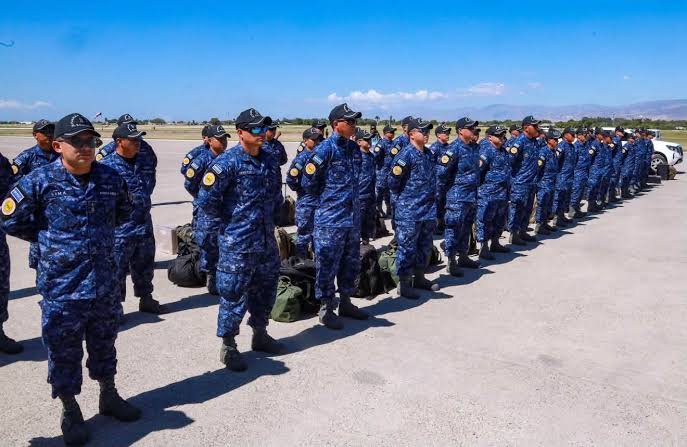
A mission sold as a rescue has become a campaign, and the orders are being written somewhere other than Port-au-Prince.
The sovereignty problem nobody has answered
Haiti is a member of the Caribbean Community, and its government, such as it is, did not plan this. The country has had no elected president since the 2021 assassination of Jovenel Moise, and it is run by an unelected prime minister, Alix Didier Fils-Aime, who sits atop a transitional arrangement that has struggled to govern beyond parts of the capital. On October 21, Fils-Aime said his government intended to assert its authority over armed groups and called the technicians' release an "absolute priority." He is, according to Al Jazeera, due to travel to El Salvador in the coming week to discuss the future of the Salvadoran troops. That a host government visits the deploying government to learn the future of soldiers on its own soil tells you where the initiative sits.
The legal questions are not academic. The Gang Suppression Force operates under a United Nations mandate with defined limits. Sandra Pellegrini of the conflict-monitoring group ACLED has questioned whether Salvadoran forces acting outside that force's jurisdiction would undermine the legitimacy of the whole mission.
Romain Le Cour of the Global Initiative Against Transnational Organized Crime has pressed on the chain of command and the rules of engagement, and urged scrutiny of the United States role. After the November 8 strike, Amnesty International's Americas director, Ana Piquer, put it directly: "Both governments must make public the agreement governing the deployment and explain how they oversee the deployed forces." She warned that the response to gang violence "must not replicate the abuses and impunity that have characterized previous interventions in Haiti."
That history is the shadow over all of this. Haiti has seen foreign boots before, under the United Nations and under Washington, and the ledger of those missions includes a cholera epidemic and abuse scandals that the country has never fully been compensated for. The worry is not only that an operation goes wrong. It is that nobody will be accountable when it does.
Washington's hand, lightly on the wheel
The United States is not absent here, whatever the distance it keeps in public. On October 27, President Donald Trump told Bukele to "do what you have to do," according to accounts of their phone call, while saying the United States would not supply equipment because Bukele "doesn't need help." American transport aircraft nonetheless helped move the force in. The University of Miami law professor Irwin Stotzky has speculated that Washington has an interest in the outcome, noting the administration's decision to end temporary protected status for some 350,000 Haitians in the United States. A Haiti stabilized by proxy, on someone else's budget, is a tidy outcome for a government that wants fewer Haitians arriving at its own door.
For the wider Caribbean, that calculus should be uncomfortable. The region has spent two years asking the world to help Haiti and getting little. Now help has arrived in a form the region did not design and cannot easily steer, delivered by a Central American president who built his reputation on mass incarceration at home and who is now exporting the model by air.
The cost measured in people
Whatever the politics, the violence it is meant to answer is real and enormous. The United Nations has reported more than 5,700 people killed or wounded in Haiti between January and mid-September of this year, and a separate United Nations report counted more than 1,000 killed between July and September alone. Doctors Without Borders said it treated 30 civilians wounded between October 18 and 26, the window when the Salvadoran operation was ramping up, and the organization UNA-Haiti asked Secretary-General Antonio Guterres on October 28 to investigate alleged aerial bombardments and civilian deaths in Croix-des-Bouquets.
Bukele and the Gang Suppression Force have denied using explosives or carrying out bombings. The denials and the allegations cannot both be fully correct, and no independent accounting has yet settled them.
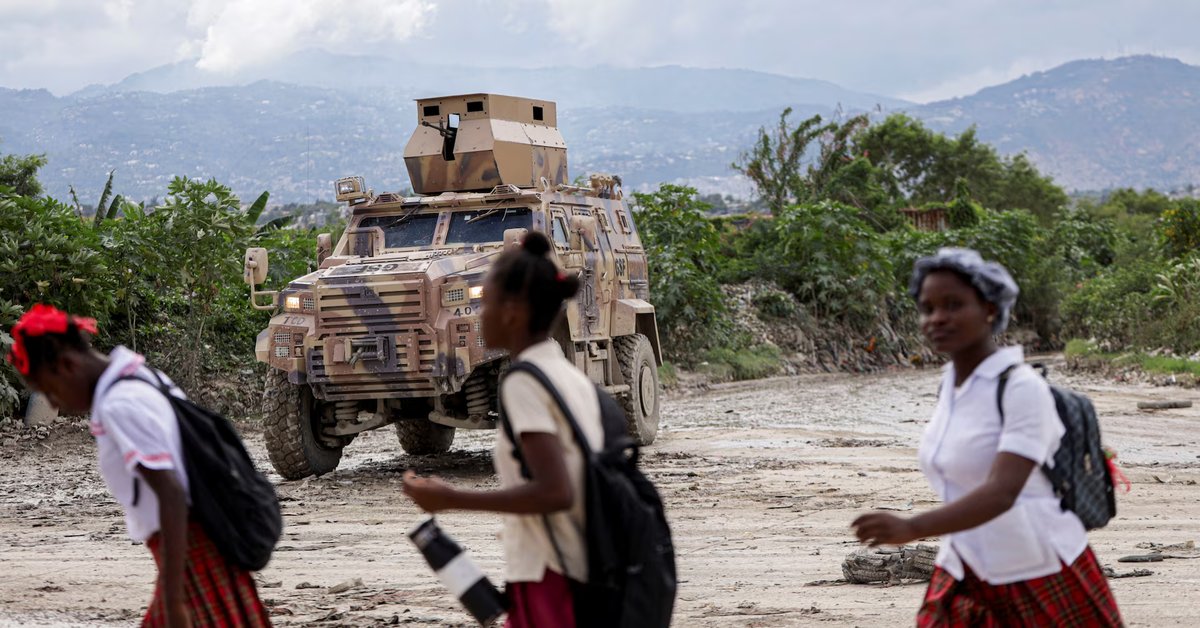
There is also the matter of what comes after the gunfire. Haiti's Provisional Electoral Council announced in early November, as reported by The Associated Press, that it had set a first round of long-delayed general elections for July 18, 2027, with a second round to follow, after an earlier December date collapsed under the weight of the violence. A vote in July presupposes a country calm enough to hold one. The Salvadoran campaign is, in that sense, a bet that force now buys the quiet that a ballot will later need.
The money under the gunfire
There is a financial logic here that the region ignores at its peril. Haiti ran on remittances long before it ran on anything else, with money sent home by the diaspora accounting for roughly a fifth of national income in better years, and the capital's descent has choked the very banking and transfer rails those dollars travel on. Every month the gangs hold the ports and the roads, the cost of moving food, fuel and cash into the country climbs, and the informal exchange rate punishes the poorest. A campaign that reopened Croix-des-Bouquets and the eastern approaches to Port-au-Prince would, in theory, lower those costs.
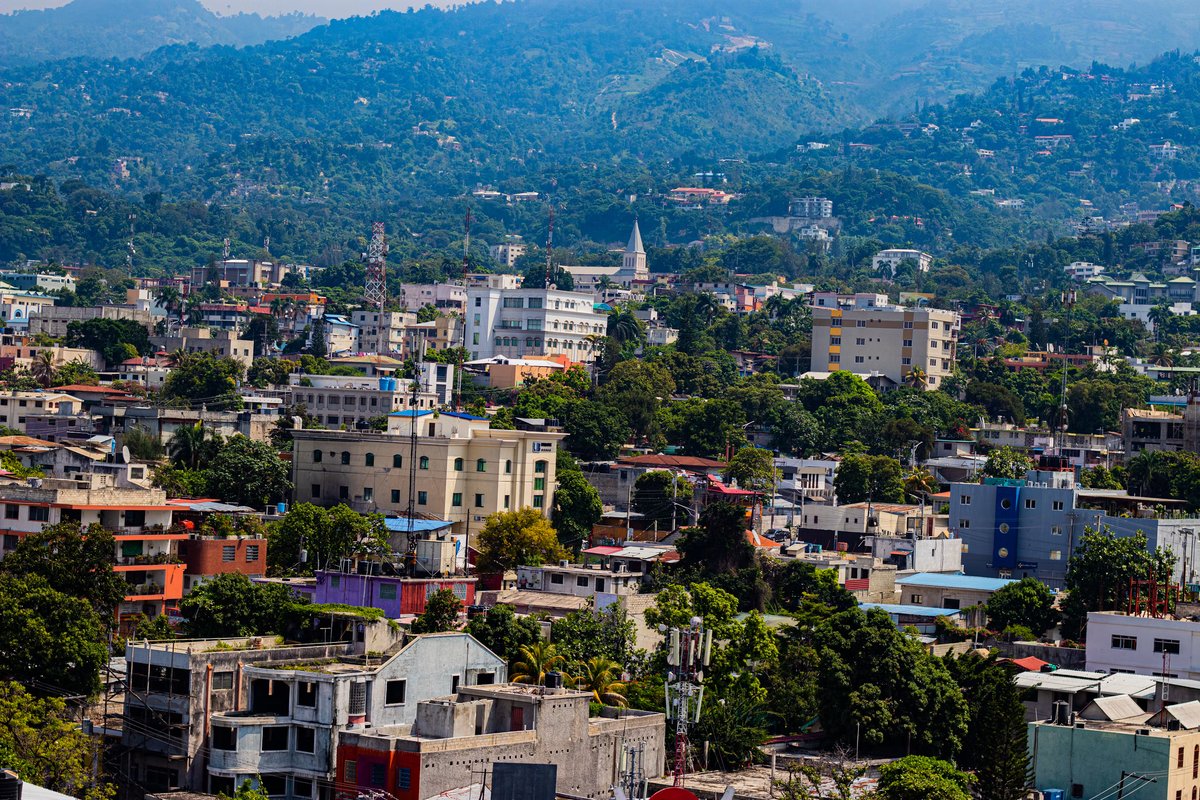
That is the optimistic case for what Bukele is doing, and it is not a trivial one. The pessimistic case is that a short, violent clearance operation buys a few weeks of calm, the soldiers go home on their 90% Salvadoran budget, and the territory reverts, as it has after every previous intervention, because nothing was built to hold it. The difference between those two outcomes is not firepower. It is whether anyone follows the helicopters with police, courts, payrolls and a plan, and on that question the public record is still silent.
What the region should ask for
The Ledger does not question that the 400 Mawozo and the gangs like it have terrorized Haitians and must be confronted. The point is narrower and it is about rules. A Caribbean Community member is hosting a foreign army whose mandate, command structure, and exit are not publicly defined. The region's governments, through Caricom, have standing to ask for three things that cost nothing and would change much: the text of the agreement that governs the deployment, a named chain of command with a Haitian at the top of it, and an independent mechanism to count and investigate civilian harm.
Bukele has shown he will act where others have only deliberated, and in a country this far gone that willingness is not nothing. But a precedent is being set in the Caribbean Sea this month, that a determined neighbor can put soldiers over a member state's capital with the terms left deliberately vague. If that precedent stands unexamined, the next deployment, somewhere else in the region, will cite this one. Haiti deserves to be rescued.
It also deserves to know who is doing the rescuing, and on whose authority. Those are not competing demands. They are the same one.
Read more at The Caribbean Ledger ›