The region's best equities year since the pandemic, and the profits behind it
Mayberry swings to a J$1.57 billion quarter, the Jamaica Stock Exchange runs up double digits, and Republic Financial Holdings lifts its dividend. Two big markets, two kinds of gain.
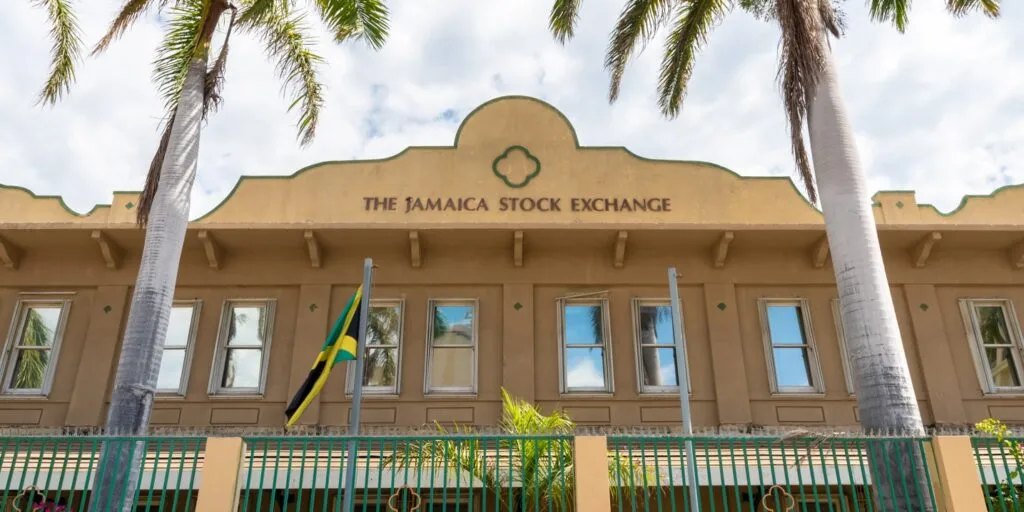
KINGSTON. The numbers coming out of the region's earnings season this month describe something the Caribbean has not seen in years, a genuine equities rally with profits to match. Across two of the three largest markets, Jamaica and Trinidad and Tobago, the companies reporting into November are posting results that would have looked fanciful eighteen months ago, and the index that captures it best, Jamaica's, is having its strongest run since before the pandemic.
Start with the clearest signal. Mayberry Group, the Kingston investment house, swung to a quarterly profit of J$1.57 billion for the September quarter, against a loss of J$751.4 million in the same period a year earlier, according to the Jamaica Gleaner on November 4. Over nine months the firm earned J$585.8 million, reversing a J$2.4 billion loss in the first nine months of 2025.
The turn was driven by the market itself. The Gleaner reported that 76.8% of Mayberry's nine-month net revenue, some J$3.04 billion, came from unrealized gains on its holdings, which is another way of saying the firm made its money because the stocks it owns went up.

The index doing the lifting
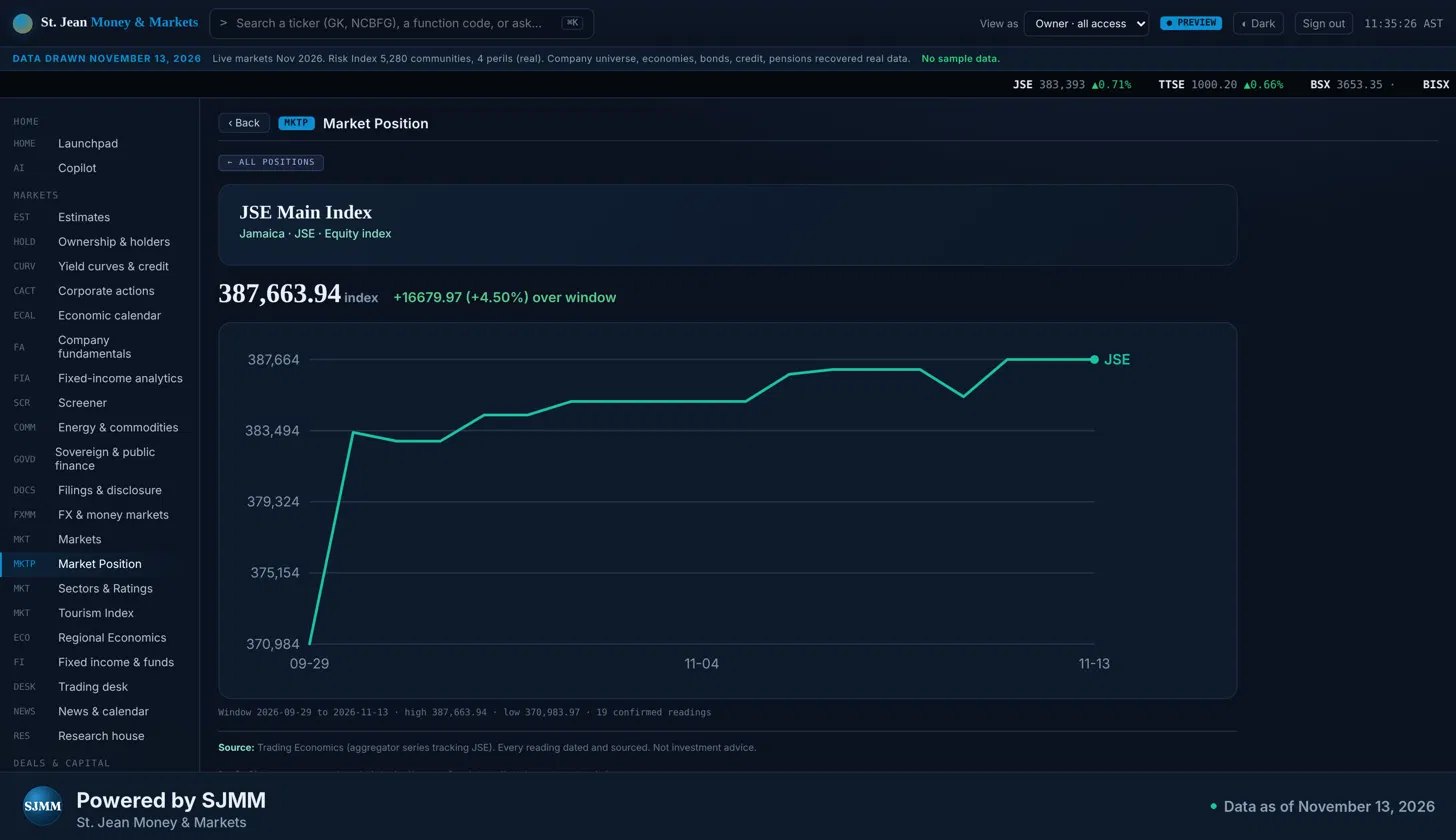
They went up a great deal. The same reporting put the Jamaica Stock Exchange's US dollar equities market ahead by 37% over the first ten months of 2026, and its main market up 21%, with only the junior market lagging, down 5.0% for the year. In October the Gleaner had already described the JSE's broad index as posting a gain of more than 20%, its strongest since the pandemic. For a market that spent 2023 and 2024 grinding sideways under high interest rates, that is a decisive change of direction.
The question every investor should ask is why, because the backdrop is not obviously friendly. The United States Federal Reserve held its policy rate at 3.75% to 4.00% on October 28, its highest sustained level in years, and has signaled no cut before December. Dollars remain expensive, which normally weighs on small-market equities.
The Jamaican answer appears to be domestic. With local rates having eased from their peak and inflation, though still elevated at 8.6% in September per the Gleaner, off its worst, Jamaican savers have rotated back into stocks, and company earnings have followed the economy's recovery from last year's hurricane.
Trinidad's quieter strength
Trinidad and Tobago tells a steadier version of the same story. Republic Financial Holdings, the largest bank on the Trinidad and Tobago Stock Exchange and one of the biggest financial groups in the English-speaking Caribbean, reported full-year profit of TT$2.3 billion for the year to September 30, up 5.8%, according to reporting by Rio Times on the group's results released this month. Earnings per share rose to TT$14.22 from TT$13.44, and the board lifted the total dividend to TT$6.30 a share from TT$6.00, a 5% increase, with a final dividend of TT$4.15 payable on December 4 to holders of record on November 20. The group's total assets stand at about TT$135.5 billion, or roughly US$20 billion.
That is not a spectacular number. It is a reliable one, and reliability is the point. A bank that can raise its dividend by 5% while the regional cost of money sits near a multi-year high is a bank whose loan book is holding up.

The contrast with Jamaica is instructive. Where Kingston's gains are coming from a repricing of equities, Port of Spain's are coming from the slow compounding of a universal bank across several economies, which is the less exciting and more durable kind.
Two of the region's three big markets are posting their best results in years, for opposite reasons, and both reasons are worth owning.
What to watch, and what to doubt
A rally built substantially on unrealized gains deserves a cold eye. The same mechanism that turned Mayberry's year can turn against it, and 76.8% of revenue coming from marking positions to a rising market is a figure that looks very different if the market falls. The Jamaican junior market, down 5.0% on the year, is a reminder that the enthusiasm is selective, concentrated in the larger, more liquid names and in the US dollar listings rather than spread evenly across the exchange.
Still, the shape of the season is unambiguous. The region's listed companies are earning real money again, the exchanges are rewarding it, and the dividends are rising rather than being cut. For Caribbean investors who spent two lean years being told to wait, the November reporting is the first broad confirmation that the waiting produced something.
The prudent posture now is not to chase the US dollar listings that have already run 37%, but to look for the companies, like the Trinidadian banks, whose gains rest on lending and earnings rather than on the mood of the tape. Markets that rise on sentiment can fall on it too. Markets that rise on profit are a different proposition, and this month the Caribbean has some of both.
Read more at The Caribbean Ledger ›