Haiti takes back its national stadium, and foreign troops move in
For nearly three years the country's main stadium sat inside gang territory. This week it changed hands again, and the new occupiers are Salvadoran soldiers.
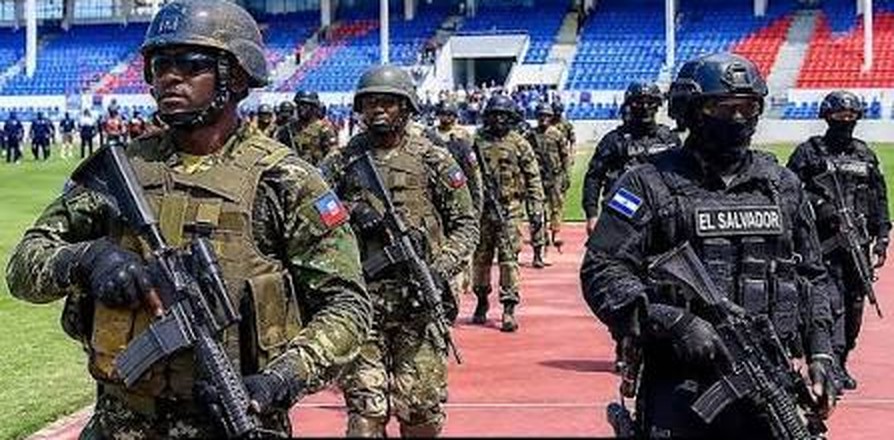
PORT-AU-PRINCE. For almost three years, the Sylvio Cator Stadium, the country's main football ground, sat inside gang territory and out of reach of the people it was built for. Haiti's national team had to play its home World Cup qualifiers abroad, and the Jamaica Observer reported that those matches were played in Curaçao. The stadium had become a symbol of how far armed groups had pushed into the everyday life of the capital.
In the early hours of Thursday, November 12, 2026, Haitian National Police, the Armed Forces of Haiti, a government-contracted security unit called the Task Force, and Salvadoran special forces retook the ground. The operation was carried out under a bilateral agreement between the two governments, according to President Nayib Bukele of El Salvador. Bukele announced the retaking and said the allied forces now held the advantage on the ground.
Haitian police said their officers took full control of the stadium and its surroundings. They then handed security of the complex to the Salvadoran armed forces, and that handover gives the story its new shape. The stadium is no longer simply a recovered public space. It is now a base run by a foreign army, operating on Haitian soil under an agreement between two governments.
Gangs first took the stadium in early 2024. The reports reviewed do not name the group that held it, which is a reminder of how many armed actors now operate in the capital. Control of the grounds passed from one armed structure to another while the people who lived around them carried the cost.

The operation was tied to a specific grievance. According to the Jamaica Observer, the deployment was ordered to rescue four Salvadoran soldiers who went missing after an ambush in Port-au-Prince on October 18. The same outlet reported that Bukele ordered about 2,000 soldiers deployed, a scale that makes this more than a single rescue mission.
After the retaking, more than 20 armored vehicles and trucks carrying Salvadoran military personnel were stationed inside the stadium, according to the Tico Times. Bukele described the site as a forward base from which troops would push deeper into gang-held territory. For residents of the surrounding neighborhoods, that change will be felt in daily routines long before it appears in any official report.

Bukele also said troops found several human skulls inside the facility. Authorities have not said whether the remains will be identified or examined. This account has not been independently verified, and it deserves careful treatment until it is. The skulls are the most emotionally powerful detail in the story, and they are also the least documented.
Bukele told gang members to leave before the next phase begins, and he warned that those who stayed to fight would face consequences. He did not give a start date for that phase. The gap between a warning and a timetable is where ordinary people tend to carry the risk, because they cannot leave the places where the fighting happens.
The Gang Suppression Force, a UN-backed multinational group, has been described as distancing itself from the rescue mission. That detail raises the central question, which is not who took the stadium first but who will run it, and the neighborhoods around it, once the foreign troops leave. Security arrangements in Haiti have a history that makes that question urgent, and any answer has to come from Haitians as well as from the governments that negotiate on their behalf.

For the Caribbean, the stadium is more than a venue. Haiti is a member of the Caribbean Community, and the region has long treated the country's security crisis as a problem it could not fully solve on its own. A national stadium carries a different meaning, because it is where children learn the game, where teams build an identity, and where communities gather without fear. For nearly three years, that possibility was closed off.
Football does not solve a security crisis. It does give a country a place to gather, to argue about teams, and to see itself in something other than its headlines. The national team's return to its home ground would be one of the clearest signals that the state is again in charge of its own public spaces. It would also signal that the people who play and watch can use those spaces without an escort.
Three questions will shape what this moment becomes. The first is who controls access to the stadium once the foreign forces are no longer stationed there. The second is whether the national team can return to play its home matches, and on what timetable. The third is what happens to the remains that Bukele described, and whether the authorities will identify and examine them in a way the public can trust.
The Ledger will follow the stadium, the operation and the people who live beside it. The core facts are clear enough. A national venue has been retaken, foreign forces are now based inside it, and the government's account includes claims that remain unverified. Whether this becomes a return to the home ground or a longer foreign military presence will depend on decisions made in the coming weeks, not on the first night.
Read more at The Caribbean Ledger ›