The lenders came back to the Caribbean hotel table. The discipline is the new story.
A 15th-anniversary summit at Atlantis drew more than 300 investors and, for the first time in a while, the banks. What they found was a pipeline weighted to luxury and to a handful of markets, and a margin squeezed by the cost of building and insuring it.
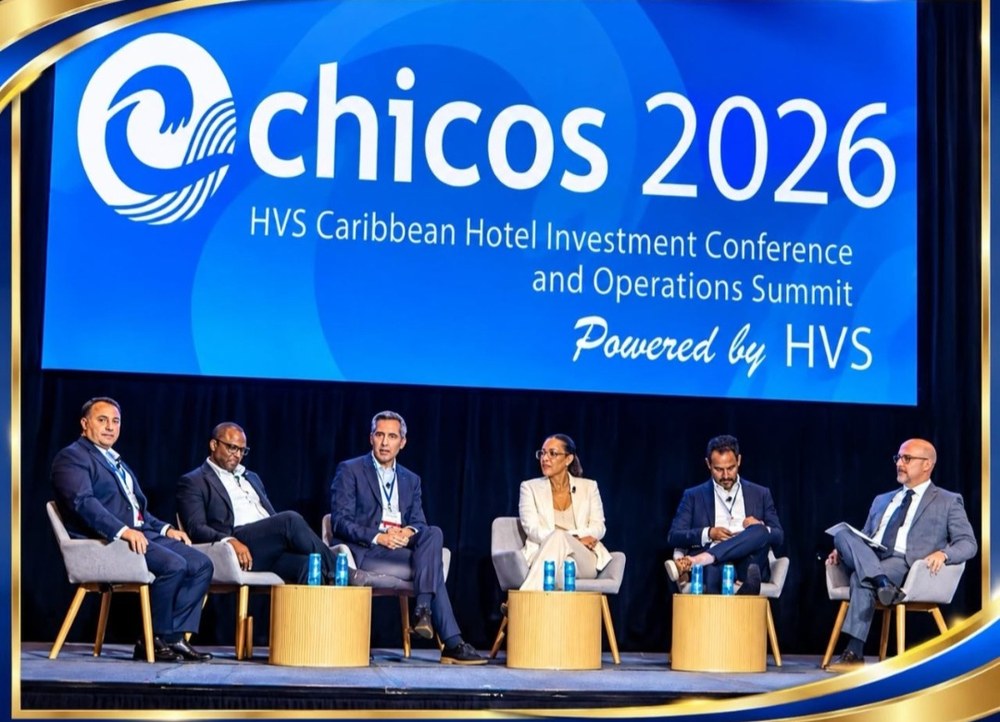
NASSAU. Every November the people who finance Caribbean hotels gather in one room, and what they say about money is a cleaner read on the region's prospects than any arrivals statistic. This year the room was at Atlantis Paradise Island in Nassau, where the Caribbean Hotel Investment Conference and Operations Summit, known as CHICOS, held its 15th edition from November 10 to 12, hosted by the consultancy HVS with the Bahamas Investment Authority and the Ministry of Tourism, Investments and Aviation.
More than 300 investors, developers, hotel brands, lenders and government officials attended a summit whose very framing, looking beyond the build, pointed past construction to the harder questions of financing and operations. The headline from the floor was not a project but a presence. The banks are back.

"We've seen a significant uptick this year in terms of their participation," HVS managing director Parris Jordan told The Nassau Guardian ahead of the summit, referring to lenders. For a region where hotel projects live or die on debt, that is the number that matters. "For me and for us it all comes down to financing," Jordan said.
The return of the lenders is a vote of confidence earned by operating performance. Strong occupancy, room rates and revenue per available room across the region are, in his account, drawing banks back to the table, including to Bahamian deals.
What the capital is chasing is unusually concentrated, and that is the story underneath the optimism. HVS counts more than 200 hospitality projects in the Caribbean pipeline, and by the firm's tally, published October 13 with data from CoStar, the Dominican Republic alone accounts for 48.6% of them and 53.1% of the rooms, across 103 separate projects, more than any other market. The next tier, the Bahamas, Puerto Rico and Barbados, takes most of the rest. Jamaica, long a tourism anchor, holds just 4.2% of projects though 11.3% of the keys.

The pipeline is also skewed to the top of the market. Luxury and upper-upscale developments make up 58.9% of projects and 71.1% of the new rooms, with marquee names entering or expanding, among them Aman, Rosewood, Mandarin Oriental, Bvlgari, Pendry and Equinox. Mandarin Oriental is completing its first Caribbean new-build in Grand Cayman, Pendry is entering through Barbados, and Equinox is debuting in Anguilla alongside a 118-berth marina.
Branded residences are the quiet engine. HVS counts 64 residential components attached to pipeline projects, and reports that the Bahamas and Turks and Caicos together hold 40.6% of that branded-residential pipeline. Selling condominiums under a hotel brand lets a developer recover capital before the first guest checks in, which is precisely why lenders who once treated the structure warily now ask about it first. The single largest dollar figure on the board, the 2 billion US dollar Esencia development in Puerto Rico, pairs Mandarin Oriental and Rosewood hotels with residences.

If demand and capital are no longer the binding constraints, cost is. Jordan was blunt about the margin pressure. "Construction costs continue to go up, insurance costs continue to increase, as well as utility costs," he said.
Each of those is a structural Caribbean problem, not a passing one. Building on an island means importing materials and labor. Insuring a beachfront asset after a decade of costly storms means paying a reinsurance market that has repriced the entire region, the same dynamic that reshaped disaster financing after Hurricane Melissa.
Powering a resort on diesel ties the operator's bill to a crude price set far away. Strong trading is offsetting the pressure for now. It is not eliminating it.
The cautionary data sits next door to the enthusiasm. Jamaica's government told the US Securities and Exchange Commission in July that its investment agency, JAMPRO, had facilitated more than 4.2 billion US dollars in hotel investment across 13 major projects, some 8,943 rooms and roughly 25,705 jobs, with about 10% of the pipeline delayed. The same filings recorded the drag from Hurricane Melissa, which left about 6,200 rooms out of circulation by the end of 2025, and showed first-quarter 2026 arrivals down 17% year on year and hotel employment off 18%, to about 36,000 direct jobs.
A pipeline is a promise. A storm is a fact.

For policymakers the CHICOS picture carries an uncomfortable question about distribution. The capital is real, but it is pooling in a few markets and at the luxury end, and the region has long complained that a strong tourism season retains too few dollars at home. Governments that present well, with credible approvals, clear incentives and reliable airlift, will win the projects. Those that do not will watch the pipeline flow past them to Punta Cana and Nassau.
That is the real work the summit does. As Jordan put it, the deal is rarely closed in the room. "Sometimes the deal isn't completed at the conference, but you make the introductions." The introductions made at Atlantis this month will show up as cranes, or they will not, over the next three years.
