Antigua turns down a $100 million cruise beach club to keep Fort James open to the public
Prime Minister Gaston Browne says the government refused Royal Caribbean exclusive access to Fort James. The decision comes as Antigua faces an EU deadline on a citizenship program that supplies more than half of its non-tax revenue.
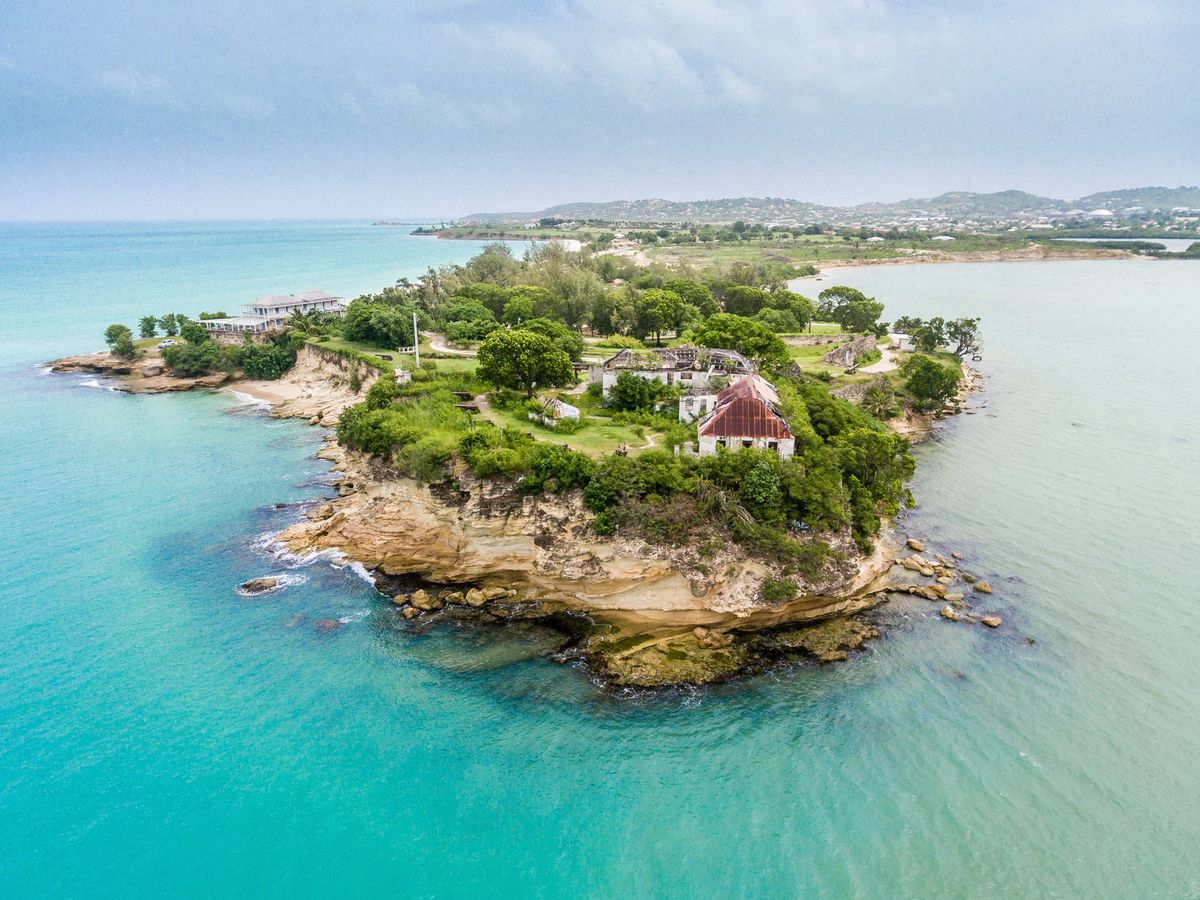
ST. JOHN'S. Antigua and Barbuda has turned down a proposed $100 million Royal Caribbean development at Fort James, after the government refused the cruise company exclusive access to the site. Prime Minister Gaston Browne explained the decision on Saturday, November 21, 2026, on the Browne and Browne Show.
The reasons he gave are short. The economics behind them are not.
"They want exclusivity. And we said no, because our people must have access to the beach," Browne said on the broadcast. The Ledger has attempted to reach Prime Minister Browne for comment and has been unsuccessful. We will continue to follow up.

Browne did not say what restrictions Royal Caribbean had asked for, or whether the company would be offered a revised plan that kept the site open to the public. Those two questions shape everything that follows.
The currency question
The Royal Caribbean proposal has been reported at $100 million, but the currency has not been stated. At the official rate of EC$2.70 to US$1, EC$100 million is about US$37 million, and US$100 million is about EC$270 million. That gap of roughly EC$170 million changes the scale of every comparison in this article.
Whether the figure is in U.S. or Eastern Caribbean dollars is one of our questions to Prime Minister Browne.
A plan that has been years in the making
Royal Caribbean and the government signed a Memorandum of Understanding in 2019 for a "Royal Beach Club" at Fort James. That agreement described an investment of between US$75 million and US$100 million, on about half a mile of beachfront, with an opening planned for 2021.
In September 2023, reports said Royal Caribbean would spend more than US$100 million on the beach club. By March 2024, reporting said uncertainty surrounded the investment, and the project never reached the stage of a finished development. Each year of delay gave the government more time to weigh private investment against public use of the shoreline.
What changed in June
On June 6, 2026, the government announced that it had taken over the Fort James development and put the Royal Caribbean proposal aside. Maurice Merchant, Director General for Communications in the Prime Minister's Office, said the government's position "was not a rejection," adding, "It's just putting aside the proposal."
The June plan called for a public-private partnership in which individuals could invest, with the government intending to divest its stake to Antiguan and Barbudan investors over time. It described about three acres of government-owned land, an amphitheatre, and designated shop spaces for local vendors and artisans. It also included groynes, beach replenishment and a retention wall to address shoreline erosion.
The difference between June and November is worth noting. In June, the government said it was not rejecting the proposal, only setting it aside. In November, the Prime Minister tied the refusal directly to who should have access to the beach.
Citizens and the shoreline
"We want to create a space that people can enjoy while preserving the history and natural beauty of Fort James," Browne said in June, when he announced the Fort James Renaissance Park. He said $5 million from the Sandals settlement had been allocated to begin the project. Reports said construction was expected to begin by September. We have not confirmed that it has started.

On the wider access question, Browne was measured. "We're making progress," he said, pointing to planned beach accesses at Jolly Beach and Pearns Point. A government committee is also negotiating with private landowners for more routes to the shore.
The citizen's case is simple. A shoreline that is open by default is worth more to residents than one that is open only where a development allows. The economic case is just as direct. A $100 million investment, and the jobs and spending that come with it, is hard for a small island to walk away from.
Both are true, and the government has chosen one of them.
The citizenship program and the cliff
The Royal Caribbean decision lands in the middle of a larger problem. In a June 25, 2026 letter, EU Commissioner for Internal Affairs and Migration Magnus Brunner asked Antigua and Barbuda to phase out its citizenship by investment program by June 1, 2028, with a 24-month transition window. The EU presented two options: keep the program and risk visa-free access to the Schengen area, or commit to ending it by that date.
Browne said on October 24, 2026 that preliminary Cabinet discussions favored suspending the program. In July, the government said it would not be pressured into a unilateral phase-out. Both positions are on the record, and they point in different directions.
On October 30, the government wrote to the European Commission proposing to wind down the program and asked for a transition to December 31, 2030, according to Savory and Partners. A memorandum from the Citizenship by Investment Unit dated November 12, 2026 says the program remains open and continues to accept applications. The EU has not publicly accepted the 2030 date.
What the program is worth
The 2026 Budget Statement projects $157 million in citizenship by investment revenue, within $289.7 million in non-tax revenue. That is more than half of the non-tax take. The IMF's staff tables carry the program at EC$74 million a year from 2024 onward, a much smaller figure.
The Ledger is working to reconcile the two numbers, because the answer determines how large the gap is. Browne has said the program has generated more than EC$1.4 billion over 11 years. Chart 1 shows Antigua's GDP in the five years before the citizenship by investment Act of 2013, and Chart 2 shows the five years of the most recent program era.

The economic footprint of the decision
The question for a business reader is not whether a $100 million club is good. It is what the economy gives up when a project of this kind does not go ahead, and what the government gives up when a revenue stream ends. We model both, and every assumption is shown.
Start with the scale of the economy. GDP was about EC$6.1 billion in 2025, according to the IMF. Tourism receipts were 46.8 percent of GDP in 2024, and the ILO estimated that tourism supported 91 percent of employment in 2019, counting indirect and induced effects. Hotels and restaurants employed 8,250 workers, or 17.4 percent of total employment, in the ILO's 2018 figures.
The Fort James club would earn its revenue from visitors. The IMF counted 563,699 cruise passengers in 2024. If the club captured 10 to 20 percent of them, and each visitor spent the $104.36 average that the Florida-Caribbean Cruise Association recorded for direct spending in the 2023-24 cruise year, the site would take in about EC$16 million to EC$32 million a year.

That spending does not stop at the club gate. Visitors buy food, drinks and transport, and the club buys from local suppliers. Farmers who supply vegetables and produce to hotels and restaurants, fishermen, taxi drivers and craft vendors all sit in that chain.
Applying a multiplier of 1.3 to 1.8, which we assume for a small services economy, the club's operations would support between EC$21 million and EC$57 million of GDP a year. That is 0.3 to 0.9 percent of GDP.
Airport and departure taxes on overnight visitors are a further channel. We have not been able to confirm the current rates, so the totals leave them out. Each additional overnight visitor also adds room, meal and tax revenue that the cruise-day figures do not capture. Those are the first numbers we will add once the rates are confirmed.
Jobs follow the same logic. On an assumed ratio of one job for every EC$250,000 of annual site revenue, the club would employ 64 to 127 people. That is 0.8 to 1.5 percent of the hotel and restaurant workforce recorded in 2018. Construction would add jobs during the build, but that work is one-time and is not in these figures.
Two cautions apply. The multipliers and the job ratio are our assumptions, not published figures for Antigua. The club's lease terms, size and operating plan are not public, so the estimates cover the operating economy only.
The projection without citizenship revenue
Chart 3 starts from the IMF's GDP path, which assumes the program continues, and then runs three scenarios from the June 1, 2028 exit. In 2028, half a year of flows is lost. From 2029, the full amount is lost. The scenarios differ in the size of the flow and the multiplier applied to it.

In the low case, GDP in 2029 is about 0.5 percent lower than it would be with the program. In the mid case it is about 1.1 percent lower, and in the high case about 2.1 percent lower. By 2032 the losses are 0.4, 0.9 and 1.9 percent of GDP, because the lost flow stays flat while the economy grows.
Set against the proposal, the operating estimate of 0.3 to 0.9 percent of GDP would offset between about one-sixth and two-fifths of the high-case loss. It would offset up to nearly nine-tenths of the mid case. A club can help, but it cannot replace the program on its own. The government would need a broader set of revenue measures to close the gap.
Employment, and what the data does not show
The Ledger looked for an annual unemployment series for Antigua and Barbuda. The IMF's 2026 staff statement lists outdated labor force data as a gap, and the 2025 staff report says labor statistics have been delayed. A widely republished figure of 11 percent appears for every year from 2010 to 2024, which looks carried forward rather than measured, so we have not used it.
The most reliable series available is formal employment. The IMF counted 47,317 formally employed persons in 2019, 46,540 in 2022 and 46,134 in 2023, a fall of 2.5 percent over the period. Formal employment has lagged the recovery in output, which is the context a hotel project would enter.

On employment, the case for the club is real but modest. A club of this kind would employ 64 to 127 people on our assumptions, and the wider supplier chain would add more. Against a formal workforce of about 46,000, the direct gain is small. The larger question is whether the public spending that citizenship revenue supports would be replaced if the program ends.
Is this final, or are talks ongoing?
The Royal Caribbean refusal is final on exclusive access. Nothing in the reporting we reviewed says the government will reopen the deal on those terms. Whether the company or another developer returns with a plan that keeps the site public remains open.
Several questions are open. Is the refusal the end of the Royal Caribbean talks, or the start of negotiations on terms? Can the government replace the citizenship revenue on the EU's timetable, or on the 2030 timetable it has requested? And which of the two budget figures is right?
The Caribbean Ledger has attempted to reach Prime Minister Browne's office and has not yet been successful. We will continue to follow up.
We will put these questions to him directly: whether the decision on Fort James is final, whether the government has invited a revised proposal, whether the proposal is priced in U.S. or Eastern Caribbean dollars, how the Fort James Renaissance Park will be funded and when it will be built, and how the government plans to make up the citizenship revenue at risk. We will report his response in full when it arrives.
What is still unknown
Three things would change the analysis: the currency and terms of the Royal Caribbean proposal, the reconciled citizenship revenue figure, and an official unemployment series. Airport and departure tax rates, and the club's lease and operating plan, are also missing. We will update this article when those figures are confirmed.
Send news tips, corrections, or comments to newsroom@caribbeanledger.com.
Read more at The Caribbean Ledger ›