Where is the money? Dormant deposits, IFRS and board oversight
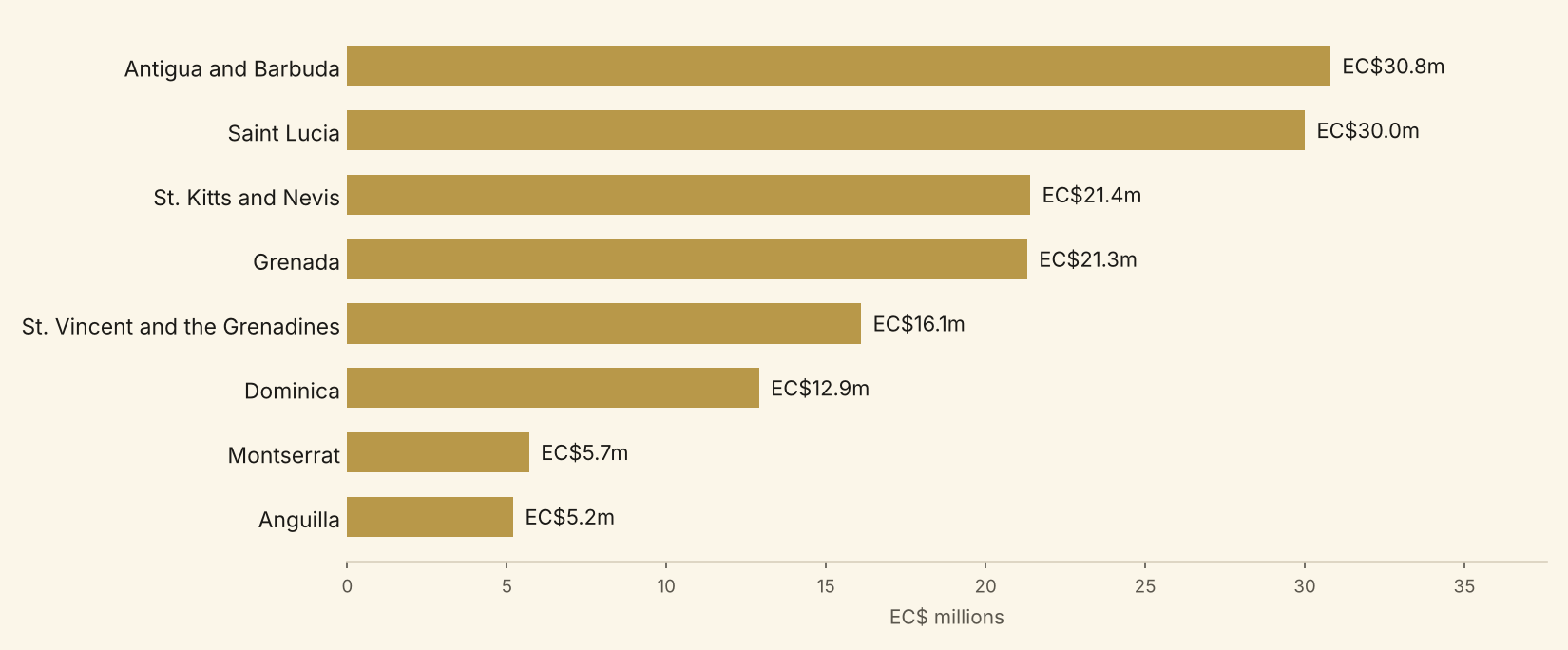
More than EC$140 million in dormant deposits could move to member governments. Under IFRS 9, a bank cannot book those balances as income while the customer’s claim still stands.
The money
ECCU. Prime Minister Gaston Browne has said, during the Browne and Browne Show, that more than EC$140 million in dormant bank deposits held through the Eastern Caribbean Central Bank could be released to member governments. He says about EC$31 million of that total is attributable to Antigua and Barbuda, and that the objective is to put idle resources to work within the region's economies.
Before any board treats these balances as earnings, it has to answer a more basic question: who owns the money, and for how long? The answer decides whether a bank can record a single dollar of it as income.
Can a bank book dormant balances as income?
Not while the customer's claim stands. Under IFRS 9, a deposit is a financial liability. A bank removes that liability only when it is extinguished, meaning the obligation is discharged, cancelled or expires (IFRS 9.3.3.1). Silence does not discharge a debt.
The owner keeps the right to claim until a law or a transfer ends it. Recording those balances as income would lift profit while hiding a liability that is still owed.
A transfer does not change that arithmetic by itself. When dormant money moves to a central bank or a state fund, the cash leaves the bank along with the liability, so profit does not rise. A gain would appear only if the bank kept the cash after its obligation had ended. That is a judgment for the external auditor to test, not an entry to make because an account has gone quiet.
The disclosure matters as much as the entry. Where balances move, the notes should show the amounts, the dormancy rules applied and the cash that went out.
Questions for the regulators
The questions below concern the central banks and financial regulators across the Caribbean, including the Eastern Caribbean Central Bank, which runs the abandoned-property regime for its member states. The Ledger will answer these questions once its follow-up report is finalized.
How much dormant money was transferred in each of the last three years, by bank and by territory?
Do banks report dormant balances as retained, transferred or derecognized, and has any bank recorded a gain on transfer?
Which examiner tests the dormancy register, and what does that test cover?
The ECCB's published rules presume a balance abandoned after 15 years without contact. The bank must publish notices within 30 days after its financial year ends, and transfer the balance to the ECCB within 90 days after that. In St. Kitts and Nevis, Times Caribbean reported that 724 dormant accounts at two banks faced transfer to the ECCB on August 17, 2025, unless claimed. The answers to these questions should appear in regulatory filings, not only in news reports.
Governance: the board and the external auditor
Dormant balances are a governance question before they are an accounting one. The board should approve a written dormancy policy that sets the look-back period, the notice steps to customers, the transfer timetable and who signs off each transfer. The audit committee should receive a register of dormant accounts every quarter, with counts, balances and transfers. Basel's 2015 corporate governance principles for banks expand the board's role in overseeing risk management systems, and dormant balances fall squarely within that oversight.
For the external auditor, the questions are direct. Does the register reconcile to the general ledger? Is every derecognition supported by a legal transfer or an expiry? Is any gain recorded, and if so, is it disclosed?
Does management's policy match the bank's own reading of IFRS 9? Those tests belong in the audit file, and the answers belong in front of the audit committee.
A board that cannot answer these questions is not yet in control of its own balance sheet.
What major international banks do
Practice varies by country, and the clearest public framework is the United Kingdom's. Under the Dormant Bank and Building Society Accounts Act 2008, a bank may transfer balances with no customer contact for 15 years to a central reclaim fund. The fund then assumes the legal obligation to repay account holders who come forward. Banks credit any interest due on the account at the moment of transfer, and the scheme is voluntary.
This model keeps the accounting clean, because the liability moves with the cash.
In the United States, state unclaimed property laws require banks to turn over inactive deposits to the state after a dormancy period set by each state. We have not verified those periods for this piece, and we have not yet reviewed the dormancy policies of individual global banks. That is the next step, and we will publish what we find.
Basel and the rules that apply
The Basel Committee's Corporate Governance Principles for Banks, issued in July 2015, set out the board's oversight duties for risk and internal control. We did not find a Basel standard that sets a specific rule for dormant deposits. The Basel Committee's guidance on money laundering and terrorist financing risk notes that external auditors have an important role in evaluating banks' internal controls and procedures. Dormant accounts are a common route for abuse, so that role applies here as well.
In practice, the Caribbean rules do the work, and they differ from one central bank to the next. The ECCB regime presumes a balance abandoned after 15 years without contact. Banks must publish notices within 30 days after their financial year ends, then transfer the balance to the ECCB within 90 days after that.
The Central Bank of The Bahamas applies a seven-year test of customer inactivity under its 2021 guidelines. Dormant balances move to the Central Bank within two months after the end of the calendar year in which the period expires, and claims remain open for ten years from the Central Bank's receipt of the funds. The Central Bank of Barbados applies a ten-year test under a guideline first issued in 2003. Banks report to the Central Bank within 60 days after each financial year ends, and balances are conveyed after a 90-day period that follows newspaper publication.
The Cayman Islands Monetary Authority applies a seven-year test. Dormant monies pass to the Cayman Islands Government, and holders who come forward are directed to its Treasury Department.
The Central Bank of Trinidad and Tobago publishes notices on unclaimed interest and maturity payments on government securities and, separately, collects unclaimed monies from insurers. Neither covers bank deposits, and we found no deposit dormancy rule on either page. Our review of Jamaica, Curaçao and Sint Maarten continues. Across these rules, boards should read the regulations alongside IFRS 9, because the law decides when the liability ends.
Dormancy periods compared

The rules differ in length, so a balance can sit for years longer in one jurisdiction than another before it must move.
Where the money is
The money sits in three places. Most of it is still on bank balance sheets as a liability, owed to customers who have not come back. Once a dormancy period ends, the bank transfers the balance to the ECCB, where claims run for 15 years through the holding bank. After that, the balance passes to the government of the country where it was held.

Prime Minister Gaston Browne has said the proposal would release more than EC$140 million for development. It would need legislative change, and an indemnity arrangement would be needed so that a rightful owner who comes forward can still be repaid.
Three questions remain open. First, do the ECCB's published balances match what banks report? Second, how much of the total can still be claimed? Third, who bears the cost of an indemnity if owners come forward after the money has been spent?

What the central banks report
We checked the websites of the central banks we could reach. None publishes a current total of dormant deposits. The table shows what each one does publish.
| Central bank | Dormancy rule | Reported figure found |
|---|---|---|
| Eastern Caribbean Central Bank | 15 years without contact | No total on its site. Prime Minister Gaston Browne has put the figure at more than EC$140 million, with about EC$31 million attributable to Antigua and Barbuda. |
| Central Bank of The Bahamas | 7 years without a customer transaction (2021 guidelines); claims within 10 years after transfer | None. The guidelines set no total |
| Central Bank of Barbados | 10 years without activity (2003 guideline) | None on the page checked |
| Central Bank of Trinidad and Tobago | Not stated on the page checked | Holds unclaimed interest and maturity payments on government securities. A 2025 circular covers unclaimed insurer monies. Neither covers bank deposits. |
| Cayman Islands Monetary Authority | 7 years of inactivity | None on the CIMA page. A Cayman Compass article from about 2013 reports CI$12.88 million transferred over three years and 5,784 accounts since 2010 |
| Bank of Jamaica | Not checked | Its 2024 annual report could not be retrieved |
| Central Bank of Curaçao and Sint Maarten | Not checked | No dormant-deposit figure found |
Several rules and figures date from earlier years. The Barbados guideline is from 2003, and the Cayman figures are from about 2013. We have not yet reached the central banks of the Dominican Republic, Haiti, Aruba, Guyana or Belize.
Sources
Send news tips, corrections, or comments to newsroom@caribbeanledger.com.
Read more at The Caribbean Ledger ›