Fitch warns the Bahamas is winning the wrong kind of tourist
Cruise passengers made up 84% of all visitors in the first seven months of the year. The ratings agency says the record numbers hide how little of the money stays ashore.
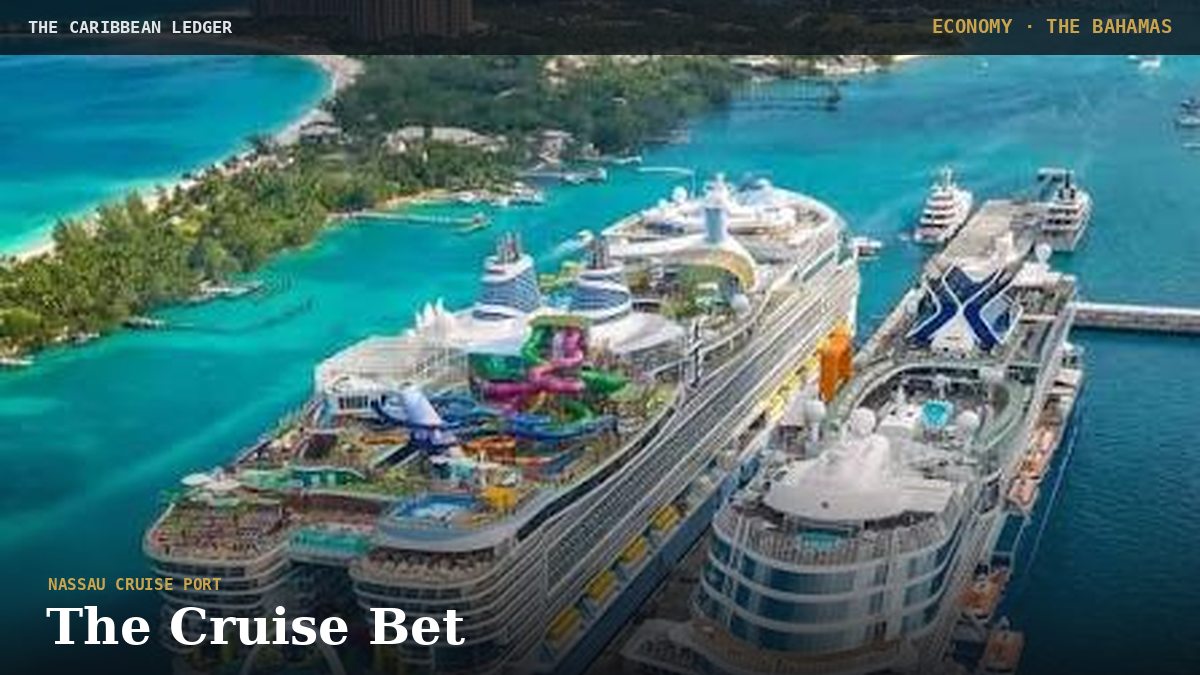
The Bahamas is setting tourism records, and one of the world’s major ratings agencies has just explained why that is not entirely good news. In an assessment reported by The Nassau Guardian on October 2, Fitch Ratings noted that cruise passengers accounted for 84% of all visitors to the Bahamas in the first seven months of 2026, with cruise arrivals up 16.9% to 7.1 million and total arrivals up 14.8% over the same period a year earlier. The headline is growth. The warning is about its composition.
Fitch’s concern is that a heavy reliance on cruise traffic, in its words, lessens the economic and fiscal benefits the country draws from tourism, because cruise visitors spend far less ashore than overnight guests who fill hotels, restaurants and taxis. A cruise passenger might spend a few hours and a few dollars on an island before returning to the ship for dinner. A stopover guest spends nights, meals and excursions. Counting heads at the dock tells you the sector is busy. It does not tell you how much of the money stays in the country.
The context makes the point sharper. The Bahamas recorded a record 12.5 million visitors in 2025, up 11.4%, and 2026 is running ahead of that pace. Yet Fitch’s caution sits alongside a more optimistic reading from S&P Global, which in September projected the Bahamian economy would grow about 2.5% this year. The two views are not contradictory so much as differently weighted. One sees the volume and the momentum. The other asks what each visitor is actually worth to the treasury and to the businesses that depend on spending rather than footfall.
For a government, the distinction is not academic. Tax revenue, employment and foreign exchange all flow more generously from an overnight visitor than from a day-tripper, and a tourism boom built disproportionately on cruise calls can flatter the arrival statistics while leaving the fiscal benefit thinner than the numbers suggest. The Bahamas has leaned into cruise infrastructure, including the private islands and expanded port facilities that the major lines have developed, and that investment is paying off in volume. Fitch’s point is that volume and value are not the same thing.
The debate matters for how the government budgets. A treasury that assumes the arrival figures translate directly into revenue risks planning for income it will not collect, while one that discounts the cruise share appropriately gets a truer picture of what the sector can fund. For the businesses on the ground, from straw-market vendors to tour operators, the distinction is lived daily, because a quiet afternoon on an island hosting several thousand cruise passengers can still leave tills emptier than a single well-booked resort.
The country is not short of higher-value development in the pipeline. Baha Mar has announced plans for a new hotel worth around US$700 million, the kind of stopover capacity that would shift the balance back toward guests who stay and spend. And at the end of September the government opened a B$25 million bond, part of the ordinary business of financing a state whose revenues lean heavily on a single sector. The task the Fitch note describes is a familiar one for every Caribbean tourism economy, which is to convert a crowd into income. The Bahamas is drawing the crowd. Whether it captures the income is the question the ratings agencies are now asking out loud.
Read more at The Caribbean Ledger ›