The Caribbean's Two-Front Year: A Merciful Sky, A Relentless Sea
A quiet 2026 hurricane season has spared the islands the wind, but a near-record sargassum bloom has turned the region's beaches and budgets into the real stress test.
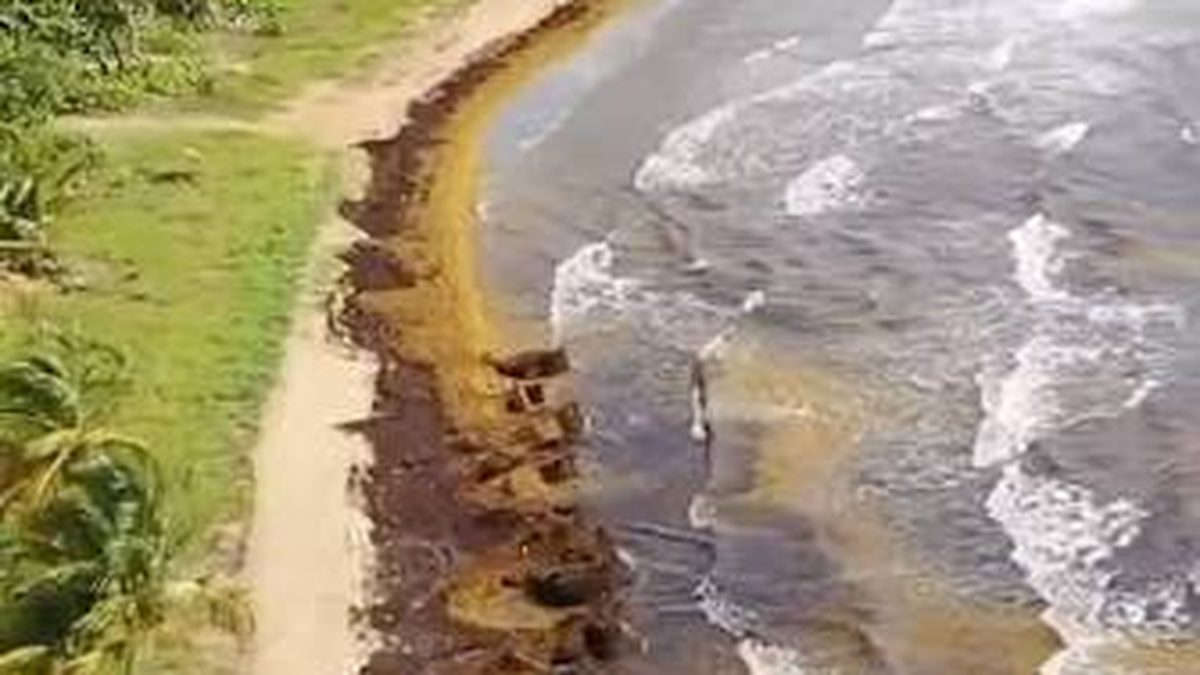
Every autumn the Caribbean runs a stress test it did not design and cannot decline. This year the examination arrives on two fronts at once. The Atlantic hurricane season, now past its historical September 10 peak and moving into its late phase, has been unusually merciful. The sargassum that blankets the region's beaches has been anything but. Read together, the two threads describe a region living on the front line of a changing climate, where the dangers do not arrive on a single schedule and resilience has to be budgeted for all of them at once.
The wind, for once, has mostly stayed away. Colorado State University's final seasonal outlook, issued August 5, 2026, forecast just 9 named storms, 4 hurricanes and 1 major hurricane for the entire year, numbers the university described as pointing to the least active Atlantic season in more than a decade. Through early August the basin had produced an accumulated cyclone energy of only 2.6 units, more than 70% below the long-term average, with Arthur and Bertha the only named systems to that point. The suppressing hand is a strengthening El Nino in the Pacific, which lifts vertical wind shear and dries the air over the Atlantic's main development region, conditions hostile to storm formation. Crucially for the islands, Colorado State put the probability that a major hurricane would track into the Caribbean this year at 17%, against a long-run average near 47%.
A quiet sky, a long shadow
That reprieve should be read against what the region knows the sky can do. The benchmark is Hurricane Melissa, which made landfall in western Jamaica on October 28, 2025 as a Category 5 with sustained winds near 185 miles per hour, among the most intense Atlantic landfalls on record. Post-storm tallies recorded at least 95 deaths across the region, with 45 in Jamaica, 43 in Haiti, four in the Dominican Republic and one in Cuba, and damage estimated at more than $12 billion, making it the costliest storm in Jamaica's history. A strong El Nino does not cancel that risk. The Caribbean Institute for Meteorology and Hydrology notes that the same pattern can raise the odds of rapid intensification near landfall, and that waters around the islands remain warmer than average. A single bad landfall in a quiet year can still define a decade of public finances.
The tide that will not recede
If the wind has been the dog that did not bark in 2026, the sea has more than compensated. The University of South Florida's Optical Oceanography Lab reported in its February 28, 2026 outlook that sargassum had reached record February levels across most of the tropical Atlantic, and projected another major year. The trajectory held. By June the floating belt stretching from the Atlantic into the Caribbean and Gulf carried roughly 34 million metric tons, and about 27 million in July, according to the lab's figures reported by the Associated Press. That is below the all-time record of about 40 million metric tons set in 2025, when inundation prompted a state of emergency in Puerto Rico, but it still puts 2026 on course to be the second-largest bloom ever measured. "None of this is normal," Brian Barnes, a research assistant professor at the university, told the agency.
The cost of that biomass is paid on the sand. In Martinique, authorities had collected more than 11,500 tons of sargassum by early August and opened a shelter for residents sickened by the hydrogen sulfide the rotting weed releases. On the worst days up to 9,000 tons wash onto Mexico's Caribbean coastline near Tulum and Playa del Carmen, where crews can clear only about 1,200 tons a day and Mexico has committed roughly $115 million to the response. Tourism, the region's economic engine, feels it first. Business estimates cited by the Associated Press put the fall in sales across Mexico's Quintana Roo state at 30% in the first half of the year. In the US Virgin Islands, consultants have described mats of weed several feet deep before the water even begins.
The economics of the front line
The through line connecting a calm hurricane season and a record seaweed year is the same balance sheet. The Caribbean's blue economy, the tourism, fisheries and coastal property that depend on clean beaches and standing infrastructure, is exposed both to the acute shock of a storm and the chronic grind of sargassum, and the region carries the bill for events it did little to cause. Melissa's reconstruction in Jamaica, estimated between $8.8 billion in a December 1, 2025 joint assessment by several development banks and more than $12 billion in other accountings, will shape that island's borrowing for years. The sargassum, by contrast, demands recurring operating spending, season after season, on collection, disposal and the search for uses from fertilizer to construction material.
That is why resilience and the energy transition have stopped being abstractions here. Diversified and distributed power, hardened grids and regional catastrophe insurance pools reduce the cost of the next Melissa, while the islands' push toward solar and wind is as much about insulating budgets from imported fuel as about emissions that a region of a few million people cannot meaningfully move on its own. The 2026 season offers a genuine, if narrow, reprieve from the wind. It offers none from the water. For a region whose exposure is measured in coastline, the lesson of this year's stress test is that the quiet years are for building, because the loud ones are never far behind.
Read more at The Caribbean Ledger ›