In Bangkok, the Caribbean's Bill Comes Due
As finance ministers gather in Thailand, the IMF has trimmed the region's growth, a war-driven energy shock is landing on the import bill, and the world's most indebted small states are asking, again, for a system built to their size.
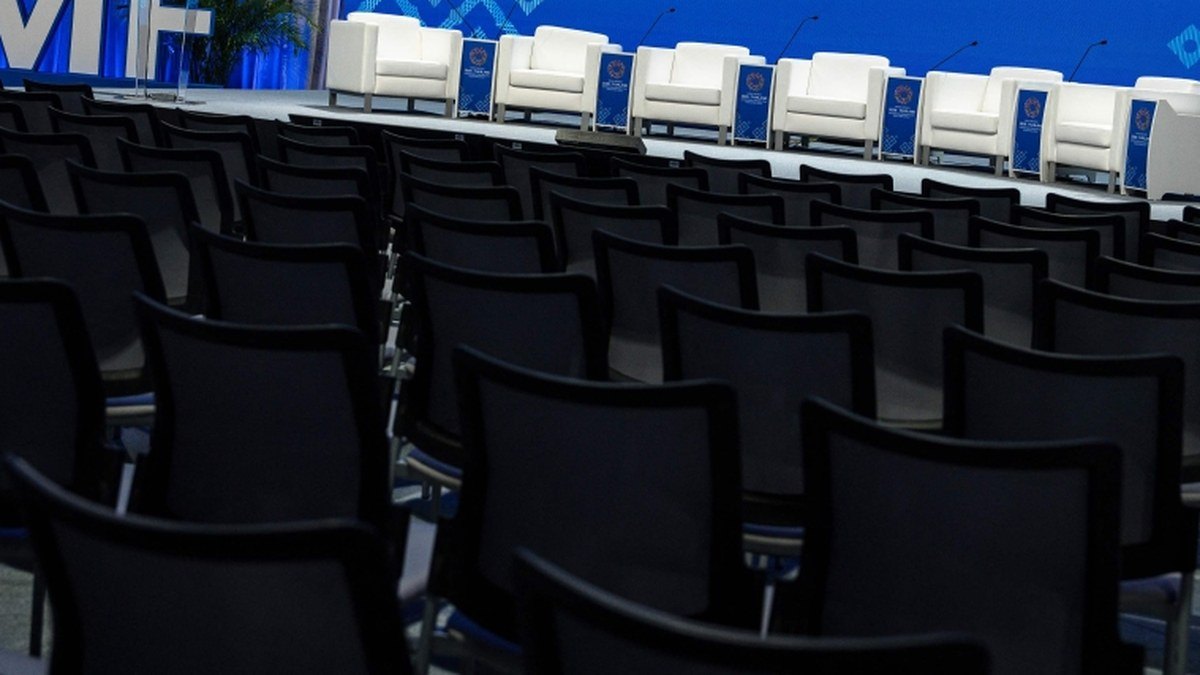
The annual meetings of the International Monetary Fund and the World Bank opened this week in Bangkok, the first time in three years the two institutions have convened outside Washington. Managing Director Kristalina Georgieva told Reuters that 18,000 people registered for the gathering at the Queen Sirikit National Convention Center. Almost none of them came from the Caribbean. Yet few regions have more riding on what is decided, or merely signaled, in the days ahead.
The headline the Fund brought to Thailand was not encouraging for the hemisphere. In the World Economic Outlook released on October 13, the IMF cut its 2026 growth forecast for Latin America and the Caribbean to 2.3%, from the 2.4% it projected in July, and trimmed its 2027 number to 2.5% from 2.7%, according to Reuters, which attributed the figures to the Fund's Rodrigo Campos reporting from the meetings. Growth in the region was 2.5% in 2025. The Fund nudged its global forecast in the opposite direction, to 3.1% for 2026 from 3.0%, which means the Caribbean and its larger neighbors are now expected to grow more slowly than the world as a whole.
The reason is written on every fuel receipt in the region. The IMF tied the downgrade to the energy shock from the war in the Middle East, now in its eighth month, and to what Reuters described as little offset from the technology upturn lifting richer economies. Brent crude sits roughly 45% above its prewar level, the Fund noted. For a region that imports almost all of its transport fuel and much of its electricity generation, that is not an abstraction. It is the single largest input cost in tourism, in shipping, and in the diesel that still keeps the lights on across much of the archipelago.
A debt load measured against the storm
Behind the growth numbers sits the harder problem, and it is one the Caribbean has been describing to these institutions for years. Public debt worldwide is at its highest level since the Second World War and will exceed 100% of global output before 2030, the IMF warned ahead of the meetings. Developing countries face about 400 billion dollars in external debt payments in 2026, with interest alone already consuming more than 10% of government revenue on average, figures the Fund set out and Al Jazeera reported on October 11. Borrowing costs sit at multidecade highs, which means every rollover is more expensive than the loan it replaces.
In the Caribbean the arithmetic is sharper still. Public debt across the region's small island developing states climbed from 55% of output in 1993 to 72% by 2023, and six Caribbean countries now carry debt above 80% of output, according to a March 2026 policy brief cited by Rio Times. Debt servicing consumes close to 40% of budget revenue in the most exposed economies. That is money that does not build a seawall, staff a clinic, or sit in reserve for the next hurricane.
And the hurricane is the point. A 2025 study in the journal Climate and Development, cited in the same reporting, found that the ten most severe Caribbean storms raised public debt by about 10% on average against the pre-storm trend, and that three years on, debt was 18% higher than it would have been had the storm never made landfall. The region does not borrow because it is reckless. It borrows because the sea keeps presenting invoices.
Jamaica, one year after Melissa
No country illustrates the trap more plainly than Jamaica. Hurricane Melissa struck the island on October 28, 2025, and the bill is still being tallied. The Caribbean Policy Research Institute estimates the total fiscal cost at about 198 billion Jamaican dollars, roughly 1.27 billion US dollars, split between 98 billion in direct recovery spending and 100 billion in lost tax revenue. Fitch Ratings now expects Jamaica's debt to approach 70% of output by the end of 2026.
What is striking is not that the number is large. It is how Jamaica paid it. Kingston drew on parametric insurance, on catastrophe bonds, on contingency reserves, and on about 120 billion Jamaican dollars, near 770 million US dollars, in multilateral borrowing from the IMF, the Inter-American Development Bank and the World Bank. This is a country that spent a decade cutting its debt from crisis levels toward sustainability and did the responsible thing, only to have a single October night hand back a share of the progress. The instruments worked. The question Jamaica brings to Bangkok, implicitly, is why a well-governed economy should have to assemble that patchwork at all.
The Barbados template
If Jamaica is the cautionary tale, Barbados is the exhibit the region keeps pointing to. Prime Minister Mia Mottley called an early election on January 17 and swept all 30 seats of the House of Assembly on February 11, 2026, her third consecutive clean sweep. The mandate she returned with rests on a decade of fiscal repair. Public debt has fallen from 178.9% of output in 2018 to 93.7% by the middle of this year, according to the Central Bank of Barbados, against a medium-term target of 60% by 2035.
In June, Barbados did something telling. Having completed its seven-year adjustment program, the island signed a new 36-month precautionary arrangement with the IMF, approved on June 22 and worth about 257 million US dollars, which it does not intend to draw unless a shock forces its hand. Mottley has described the posture as keeping the Fund on speed dial. It is insurance, bought by a government that has learned the price of being caught without it.
Mottley's larger argument, the one that travels under the name of the Bridgetown Initiative, is that the architecture itself is wrong for countries her size. She wants the development banks reformed, concessional finance expanded, and automatic liquidity made available to climate-hit economies so that recovery does not begin with a trip to the bond market at the worst possible moment. She has pressed the case for climate-resilient debt clauses, telling an IDB event in May that such clauses can free up about 17% to 18% of output over the two years after a disaster by pausing repayments when a storm hits. A University of the West Indies brief this spring urged lenders to use a Multidimensional Vulnerability Index, rather than income per head alone, to decide which countries qualify for cheap money. The through-line is simple. Judge us by our exposure, not by a statistical average that treats a tourism-dependent island of three hundred thousand people as if it were a diversified middle-income state.
What a slower year costs
The growth downgrade and the debt math meet on the ground in places with far less room to maneuver than Barbados. In its own October update, the World Bank projected Saint Lucia's economy to grow just 1.1% in 2026 after contracting 0.6% in 2025, with regional growth of 2.2%, according to the St. Lucia Times. Suriname, a year away from its first offshore oil, is carrying debt of 100.4% of output as of August, well above its 60% legal ceiling, President Jennifer Geerlings-Simons told parliament this month. For these economies, a tenth of a percentage point shaved off growth is not a rounding error. It is the difference between a budget that balances and one that does not.
Even the region's energy producers feel the shock from both ends. Trinidad and Tobago built its 2027 budget, presented on October 12, on an assumption of 77 US dollars a barrel for oil, up from 73.25, and Finance Minister Davendranath Tancoo projected a deficit of 2.1% of output. Higher prices flatter the exporter's revenue line even as they punish every importer next door. That is the Caribbean's structural asymmetry in a single commodity.
There is also a quieter cost that the growth tables do not capture, which is the premium a small, climate-exposed borrower pays simply for being small and climate-exposed. When global borrowing costs sit at multidecade highs, as the IMF warned this week, the countries with the least room absorb the increase least well. A percentage point added to the cost of rolling over debt is trivial for a large, diversified economy and punishing for an island whose debt service already consumes close to 40% of revenue. That is the mechanism the Caribbean wants reformed, and it is why the region keeps pressing the case that income per head is the wrong yardstick for countries whose defining feature is exposure rather than poverty.
The ask, and the audience
There is reason for guarded realism about what Bangkok will deliver. US Treasury Secretary Scott Bessent is skipping the meetings and the Group of 20 gathering alongside them, a US official told reporters, citing domestic commitments. Federal Reserve Chair Kevin Warsh will attend and appear with Georgieva on October 16, and President Trump has pressed the Group of 7 to release 100 million barrels from emergency reserves to ease the energy squeeze. The agenda is dominated by war, by the biggest energy supply shock on record, and by the debt loads of far larger borrowers. Small island states are not at the center of the room.
But the Caribbean has a stage of its own arriving fast. Commonwealth leaders meet in Antigua and Barbuda from November 1 to 4, and the vulnerability case will be made there in the region's own voice. The argument has not changed, and it does not need to. It is that a system which lends a well-run island money at the moment a storm strikes, then counts the resulting debt against it, is not a neutral mechanism. It is a design choice. The Caribbean has spent years asking for a different one. In Bangkok this week, the people who could make it were, for the most part, discussing other things.
Read more at The Caribbean Ledger ›