The Fed holds at 3.75%, with dissents pointing up. The Caribbean reads it both ways.
A new Federal Reserve under Chairman Kevin Warsh kept rates steady on October 28, with two members pushing for a hike. For the region's pegged and dollarized economies, higher-for-longer money raises borrowing costs even as it reflects a US economy still spending.
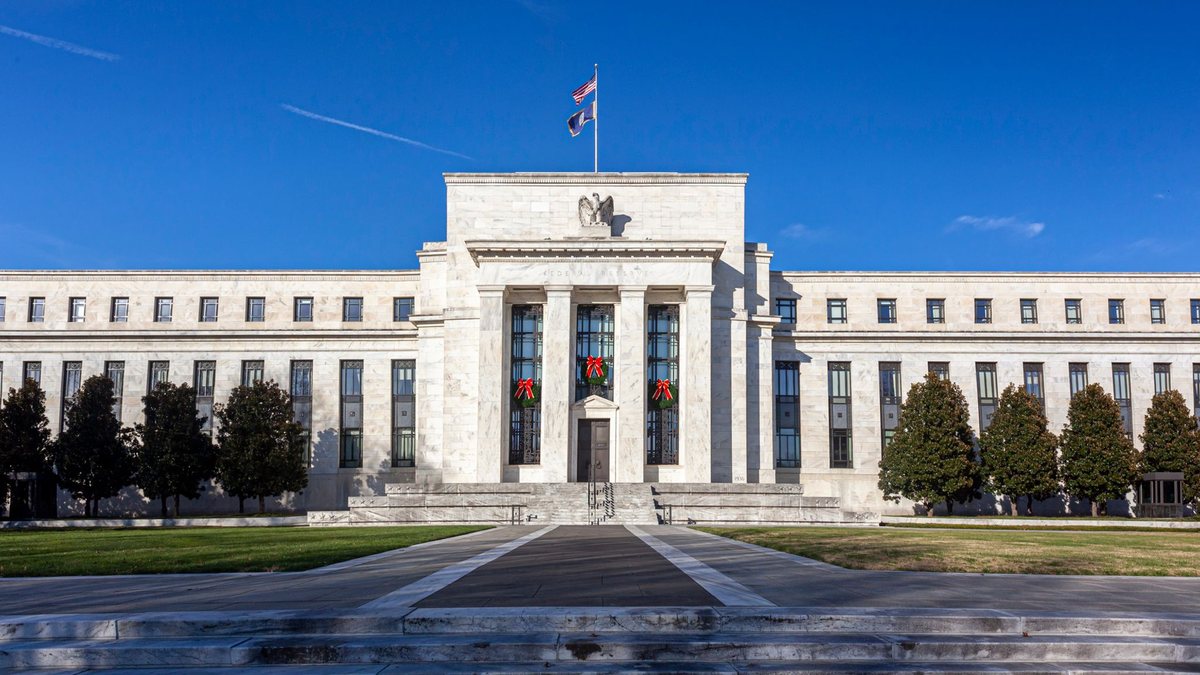
KINGSTON. For a region whose currencies and savings are tethered to the US dollar, the most consequential interest-rate decision of the week was not made in any Caribbean capital. It was made in Washington, where on October 28, 2026, the Federal Reserve's Open Market Committee held its benchmark federal funds rate steady at a target range of 3.75% to 4.00%. The decision was not unanimous.
According to coverage from Kiplinger and a sports news service Finance, two members dissented, Fed Governor Lisa Cook and Cleveland Fed President Beth Hammack, and both wanted the opposite of what markets had been positioned for.
They favored a quarter-point rate increase, not a cut.
That detail is the story. A dissent in favor of higher rates, at a moment when much of the market had expected the easing cycle to continue, signals a central bank that is more worried about inflation than about growth. It also lands in the early months of a new era at the Fed. Kevin Warsh, who took the oath as chairman after the committee unanimously selected him, is running his first meetings in charge, and he has already floated ideas such as holding fewer scheduled meetings to reduce the market's dependence on the central bank's every word.
A Fed under new and more hawkish management, holding rates higher for longer, is a different backdrop for the Caribbean than the steady easing the region had begun to price in.
Why Washington sets Caribbean rates
The transmission runs through the exchange rate. The Eastern Caribbean dollar has been pegged at 2.70 to the US dollar for decades, a peg shared by the eight members of the Eastern Caribbean Currency Union. The Bahamian and Barbadian dollars hold their own fixed links to the greenback. For these economies, defending the peg means keeping domestic conditions broadly in line with US monetary policy.
When the Fed holds rates high, the room for pegged central banks to run easier policy of their own narrows, because capital chases the higher dollar yield and reserves come under pressure. The Fed does not vote on Eastern Caribbean interest rates, but its decisions set the ceiling those economies operate beneath.
Even where currencies float, the gravity is the same. Jamaica, which manages its own exchange rate, raised its policy rate to 6% on September 29, 2026, as the local reporting reported, partly to keep its own currency and inflation in check in a world of firm US rates. A Fed that is done cutting, or that might even lean toward hiking, gives the Bank of Jamaica less cover to ease, because cutting too far ahead of Washington risks weakening the Jamaican dollar and importing inflation through the exchange rate. Trinidad and Tobago, Guyana, and Suriname, whose oil and gas revenues are priced in dollars, feel the hold through financing costs rather than pegs, but they feel it all the same.
The cost of borrowing, and of staying still
The clearest channel is the cost of money. Caribbean sovereigns and companies that borrow in US dollars, whether through international bonds or regional bank loans benchmarked to dollar rates, pay more when the Fed sits at 3.75% to 4.00% than they would have in a lower-rate world, and they pay more still if hikes come back onto the table. Governments carrying reconstruction debt, Jamaica among them, face that reality directly, as every basis point of US rates feeds into the price of refinancing. For tourism-dependent economies, there is a second edge: higher US rates that cool American consumer spending can soften the appetite for Caribbean travel, the region's largest single export.
The timing of borrowing is where the hold bites hardest. Caribbean governments that had hoped to refinance maturing debt or issue new bonds into a falling-rate environment now face the prospect of locking in financing at levels that may not come down soon, and a Fed willing to discuss a hike removes the option of simply waiting for cheaper money. For the currency union, the arithmetic runs through reserves: a wide gap between US dollar yields and local returns pulls capital toward the dollar and tests the import cover that backs the peg, which is why the Eastern Caribbean Central Bank watches Washington as closely as any ministry of finance in the region. Staying still, in other words, is not costless when the anchor economy's central bank has stopped moving in your favor.
There is a more favorable reading, and the Caribbean should weigh it honestly. A Fed that holds firm because the American economy is resilient is, on balance, better for the region than a Fed forced to cut into a US downturn. Resilient American demand supports remittances, tourist arrivals, and export orders, the three lifelines that run north to south across the Caribbean basin. The hawkish hold is a double-edged instrument.
It raises the cost of Caribbean borrowing and limits the room for local easing, and at the same time it reflects a US economy still spending, still hiring, and still sending visitors and money south. Which edge dominates depends on each economy's balance of debt and demand. What is not in doubt is that the decision that shapes the answer was taken in Washington, and that the region will live with it.
Read more at The Caribbean Ledger ›