The Fed Raised Rates, and the Caribbean Will Feel a Vote It Never Cast
The Federal Reserve lifted its benchmark rate a quarter point to a range of 3.75 to 4% on September 16, 2026, its first increase in three years. For a region that pegs its currencies, borrows in dollars and lives on American visitors and remittances, this is not foreign news. It is a domestic shock arriving on a foreign schedule.
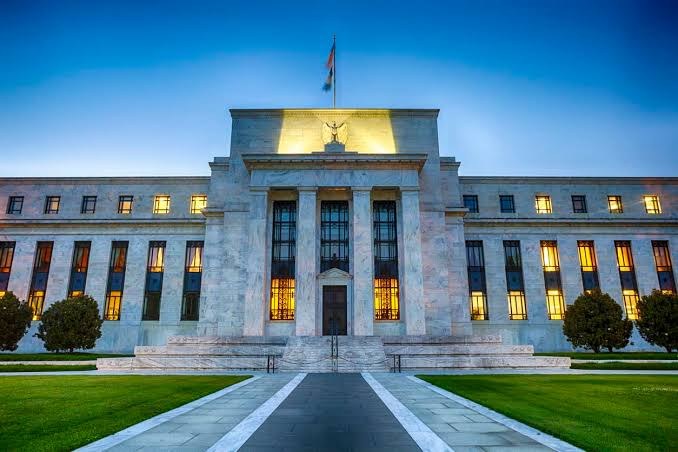
On September 16, 2026, the Federal Reserve raised its benchmark interest rate by a quarter of a percentage point to a range of 3.75 to 4%, its first increase in three years. The decision was unanimous, and the language around it was blunt. The Fed chair, Kevin Warsh, said inflation remains, in his words, too high and has been for too long, and framed the move as support for a timelier return to the central bank's 2% target, as reported by Yahoo Finance. American markets took it in stride, the S&P 500 closing slightly higher and the ten year Treasury yield easing a few basis points. For the United States, this is a story about inflation. For the Caribbean, it is something else. It is a decision made in Washington that the region will help pay for, on a schedule it did not set and in a vote it never cast.
A decision the region imports but never votes on
Begin with the currencies, because that is where the transmission is most direct. Much of the Caribbean does not run an independent monetary policy at all. The Eastern Caribbean dollar has been fixed at 2.70 to the United States dollar since 1976, a peg shared by the eight members of the Eastern Caribbean Central Bank. The Barbados dollar is fixed at two to one, the Bahamian dollar trades at par, and the Belize dollar at two to one. A hard peg is a decision to import the anchor country's monetary policy. When the Fed raises the price of dollars, a pegged central bank must, sooner or later, keep its own rates in line and hold enough reserves to defend the parity, whatever its domestic economy actually needs. The islands that float, Jamaica, Haiti, the Dominican Republic, Guyana and a managed Trinidad and Tobago, keep more room to maneuver, but they buy that room by carrying the exchange-rate risk directly instead.
The debt line, where a hike is most expensive
The second channel is debt, and it is the one that should command a finance minister's attention. The Caribbean is among the most heavily indebted regions on earth, and a large share of what it owes is written in dollars. Every basis point the Fed adds lifts the risk-free rate off which that debt is priced, which means a higher cost to refinance old borrowing and to issue new. The two anchors of the regional story sit at opposite ends of the same lesson. Jamaica has cut public debt from about 144% of GDP in 2012 to roughly 69% in the 2024 to 2025 fiscal year, on International Monetary Fund figures, and has legislated a path toward 60% by the 2027 to 2028 fiscal year. Barbados, which restructured in 2018 and 2019, carried public debt near 100% of GDP at the end of 2024, on International Monetary Fund figures, with its own target of 60% by the middle of the next decade. Both did the hard work in a cheaper-money era. A higher-for-longer Fed is precisely the environment that tests whether those gains hold.
The region also carries fresh memory of what happens when the arithmetic turns against it. Suriname restructured its dollar bonds in 2023, with bondholders accepting a 25% cut to principal and an instrument tied to future oil royalties, according to the government of Suriname and International Monetary Fund reviews. Barbados pioneered a natural-disaster clause that lets it pause payments after a major storm, documented in International Monetary Fund working papers. Belize completed a debt-for-nature conversion in 2021 that the Nature Conservancy valued at 364 million dollars. These are the instruments of borrowers who have learned, the hard way, that the cost of money is set elsewhere and can move against them fast.
Tourism and remittances, the two dollar pipes
If debt is where a hike costs the government, tourism and remittances are where it reaches the household. The United States is the region's largest source market, supplying close to half of stopover arrivals, and the Caribbean drew a record of roughly 34 million stopover visitors in 2024, on Caribbean Tourism Organization figures. Travel and tourism accounted for about 11.5% of Caribbean GDP, some 91 billion dollars, in 2024, on World Travel and Tourism Council figures. The Fed raises rates to slow American demand, and a Caribbean hotel room is a discretionary line in exactly the American budgets a higher rate is designed to tighten. The same logic runs through remittances. On World Bank figures, remittances were worth about 16% of Jamaica's GDP in 2024, and Haiti ranks among the most remittance-dependent economies anywhere. The Dominican Republic received close to 11 billion dollars in 2024, on figures from its central bank. Those dollars are sent out of American paychecks, so when the Fed cools the American labor market, it thins the region's steadiest external inflow at the source.
The exception wearing an oil jacket
Not everyone in the basin loses from a stronger dollar, and the exception is instructive. A Fed hike tends to lift the dollar, and because oil is priced in dollars, that is a burden for the many islands that import their energy and a benefit for the few that export it. Guyana is the standout. Its economy grew by 43.6% in 2024, on International Monetary Fund figures, the fastest rate in the world, on the back of the ExxonMobil-led Stabroek block, which was producing around 645,000 barrels a day in early 2024 and is on course for well over a million by the end of 2027, on United States Energy Information Administration data. Trinidad and Tobago, the region's established energy producer, sits on the same favorable side of the trade. For an oil exporter, a strong-dollar, high-rate world improves the terms of trade and builds reserves. For a tourism-dependent importer, the identical world raises the fuel bill and pressures the currency. The Fed sets one policy, and the region receives at least two different shocks from it.
There is a quieter risk that a higher-rate, risk-averse environment tends to worsen, and it is one the Caribbean has been fighting for a decade. Global banks have steadily withdrawn correspondent banking relationships from the region, the dollar-clearing links that let local banks move money across borders. A Caribbean Association of Banks survey found that 21 of 23 member countries had lost at least one such relationship, and an Atlantic Council analysis of SWIFT data recorded steep declines across the region between 2011 and 2020. When capital grows cautious and the return on safe, simple business rises, the appetite of a New York or London bank for a small, compliance-heavy Caribbean account falls further. A rate decision aimed at American inflation can, at the margin, make it harder for a Kingston or a Bridgetown bank to clear a dollar at all.
Price-taker, or price-maker
None of this is a forecast of disaster. The point is narrower and more useful. A single decision in Washington moved the price of money, and it will reach the Caribbean through its currencies, its debt, its visitors, its remittances and its banks, most of it without a single regional official having had a say. The region cannot change that it is a price-taker on the cost of dollars. It can change whether it is caught unaware. That means treating the Federal Reserve calendar as a domestic economic event, hedging dollar-exposed budgets before a hike rather than after, building the reserve and fiscal buffers that let a pegged economy ride out a tightening cycle, and pricing the risk into borrowing while the sky is still clear. The states that read Washington's decision as a line in their own forecast will manage it. The rest will simply experience it. That, once again, is the difference between taking the price and making it.
Read more at The Caribbean Ledger ›