Island in Focus: Puerto Rico fights to end the LUMA experiment
Governor Jenniffer Gonzalez-Colon wants to tear up the private contract that runs Puerto Rico's power grid. LUMA Energy says walking away would cost 1.3 billion dollars. The fight is now in the island's highest court, and ordinary ratepayers are caught in the middle.
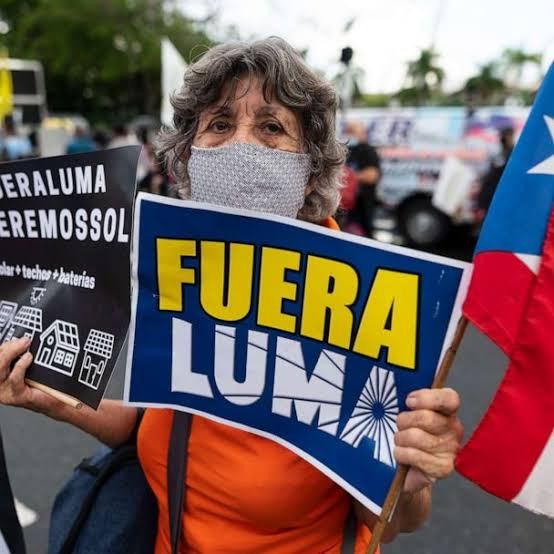
Nine years after Hurricane Maria tore the island's electricity system apart, Puerto Rico is still fighting over who should run it, and the fight has reached the Supreme Court of Puerto Rico. At issue is the contract under which LUMA Energy operates the transmission and distribution network, an arrangement the government of Governor Jenniffer Gonzalez-Colon now says it wants to end.
LUMA has told the court that canceling its contract would be expensive and disruptive. According to reporting on October 6 by NotiCel and El Nuevo Dia, the company put the cost of cancellation at up to 1.3 billion US dollars and said nearly 4,000 jobs would be at risk, with the bill ultimately falling on the customers of the public power utility. The governor rejected the figure flatly, calling it completely false and accusing LUMA of inflating the numbers by folding in costs passed between LUMA and its parent company. She said the government's own court filings would prove it.
A record of outages, and a record rate

Gonzalez-Colon's case against LUMA is built on performance. She has pressed the company over a fire at the Sabana Llana substation, over a string of outages, and over what she describes as unmet obligations on repairs and vegetation management, the unglamorous maintenance that keeps lines from failing. She has also noted that federal Department of Energy money allocated since Maria in 2017 remains unspent, a standing rebuke to everyone who has had a hand in the grid. The government deems LUMA's contract extension invalid and is in court to end the relationship and find another operator, one the governor has said must be American.
The backdrop to the legal fight is a cost-of-living pressure that ratepayers feel every month. The Washington Times reported on October 1 that Puerto Rico faces a record electricity rate as demand and costs rise, a headline that captures the political stakes better than any filing. An island whose residents already pay some of the highest power prices anywhere in the United States, for some of the least reliable service, has limited patience for a dispute measured in billions of dollars and years of litigation.
The fiscal shadow over everything

None of this happens in a vacuum. Puerto Rico's finances remain under the Financial Oversight and Management Board created by the PROMESA law, and the board's own recent account, published September 29, shows how fragile the surrounding picture is. The governor declared a statewide drought emergency on July 31, and the board authorized tapping an emergency reserve for water supply and purification, with its executive director, Robert F. Mujica Jr., saying the reserve existed for exactly such moments.
The power utility's troubles run deeper than the LUMA dispute. The board approved a temporary-generation contract in June, then revoked that approval in August, the first such revocation in its history, after one named company said its signature had been used without authorization, and the utility canceled the contract days later. The utility's long-running bankruptcy remains stalled, with bondholders having rejected a settlement proposal and reasserted a claim of roughly 12 billion dollars. A grid operator fight, a drought, a collapsed generation contract and an unresolved bankruptcy are not four separate stories. They are one story about an island trying to rebuild the most basic public service while fighting on every front at once.
For the rest of the Caribbean, Puerto Rico is both a cousin and a cautionary tale, a territory with access to federal money and a US court system and still unable to deliver reliable power nine years on. The LUMA ruling, whenever it comes, will decide who runs the wires. It will not, by itself, decide whether the lights stay on.
Read more at The Caribbean Ledger ›