America votes Tuesday. The Caribbean does not, but it gets the consequences.
The US midterms will decide control of Congress on November 3. For a region tied to the United States by tourism, migration, remittances, and the dollar, the result is an economic event, not a foreign one.
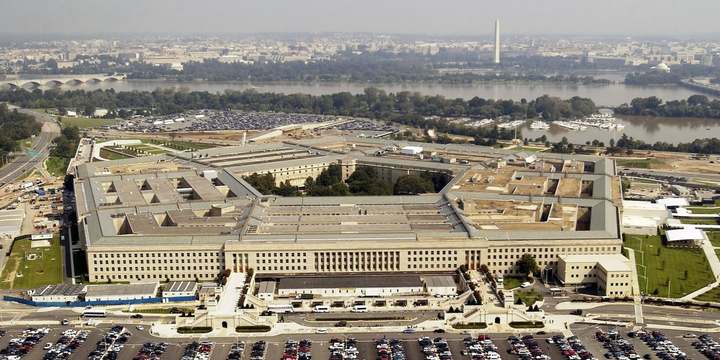
KINGSTON. On Tuesday, November 3, Americans vote in midterm elections that will decide whether President Donald Trump's Republicans keep control of Congress or spend the final two years of his term facing Democratic majorities. All 435 seats in the House of Representatives are up, along with a third of the Senate and 36 governorships. The result will not be announced in any Caribbean capital, and no Caribbean citizen will cast a ballot.
Yet few elections anywhere have as direct a bearing on the daily economics of this region as the one happening to its north.
For the Caribbean, the United States is the largest source of tourists, the largest destination for its emigrants, the origin of most of the remittances that keep families afloat, and the anchor currency for nearly every economy in the basin. Who controls Washington shapes all four.
The arithmetic is tight. According to reporting by AFP, Republicans hold the House by 218 to 214, with one Republican-aligned independent and two vacancies, and the Senate by 53 to 47. Democrats would need to flip a handful of seats in each chamber to take control, and a 50-50 Senate would still leave Republicans in charge through Vice President JD Vance's tie-breaking vote. The battlegrounds include Senate races in North Carolina, Ohio, Texas, Maine, and Michigan, and dozens of House districts from New York to Iowa.
The outcome is genuinely uncertain, which is exactly why the Caribbean should be paying attention rather than assuming continuity.
Migration and the diaspora
The channel that touches the most Caribbean households is immigration. Enforcement policy, the pace of deportations, and the treatment of temporary protected status are set in Washington and felt acutely across the region, from the Haitian and Jamaican communities in Florida and New York to the remittances those communities send home. A Congress aligned with the administration is likely to sustain a harder enforcement posture, while a divided Congress would have more leverage to slow or shape it. The Dominican Republic's own mass expulsions of Haitians, which this paper has covered, play out against a US backdrop that either reinforces or restrains the regional trend.
For families whose budgets depend on a relative working in the United States, the stakes are concrete.
Remittances follow directly from that. Money sent home by Caribbean workers in the United States is among the largest and most stable sources of foreign exchange for several economies in the region, rivaling or exceeding tourism and aid in some. Anything that affects the size, security, or legal status of the diaspora workforce, from enforcement to the health of the US labor market, flows through to the remittance totals that governments count on and households spend. A US economy that keeps hiring, which the Federal Reserve's recent decision to hold rates suggests it is, supports those flows regardless of who wins.
A sharp change in enforcement, which the election could bring, could disrupt them. The point is not that one outcome is good for the Caribbean and the other bad. It is that the two outcomes carry different risks, and a region this exposed cannot afford to assume either.
Tourism, trade, and aid
Tourism is the region's largest export, and it is overwhelmingly American. Policy choices that shape US consumer confidence, disposable income, and the cost of travel feed straight into Caribbean arrivals, hotel occupancy, and the foreign exchange that tourism earns. Trade and tariff policy is a second lever: the administration's approach to tariffs affects the price of goods the Caribbean imports and the competitiveness of the little it exports to the US market. And development assistance, including the posture toward regional security cooperation and disaster response, depends on appropriations that Congress controls.
A region still rebuilding from Hurricane Melissa has a direct interest in how generous, or how constrained, US support will be.
There is a strategic dimension as well. The United States has grown more assertive in the Caribbean basin over the past year, and the balance of power in Congress will influence how that assertiveness is funded and checked. For small states that must navigate between Washington, Caracas, Beijing, and Brussels, the composition of the US Congress is a variable in their own foreign policy, not a distant curiosity.
Watching, not voting
None of this is a reason for the Caribbean to take sides, and this newspaper does not. It is a reason to watch closely and to plan for more than one outcome. The responsible posture for finance ministries and tourism boards across the region is to model both a Washington that continues on its current course and a Washington checked by a divided Congress, and to be ready for either. The Caribbean does not get a vote on Tuesday.
It does get the consequences. The difference between those two facts is the whole argument for paying attention.
Read more at The Caribbean Ledger ›