UN Warns Haiti's Gang Suppression Force Is a Fraction of Its Promised Strength
With at least 5,700 killed or wounded this year and only about 1,500 of a planned 5,500 troops deployed, UN officials and Haiti's prime minister press for a force at full strength.
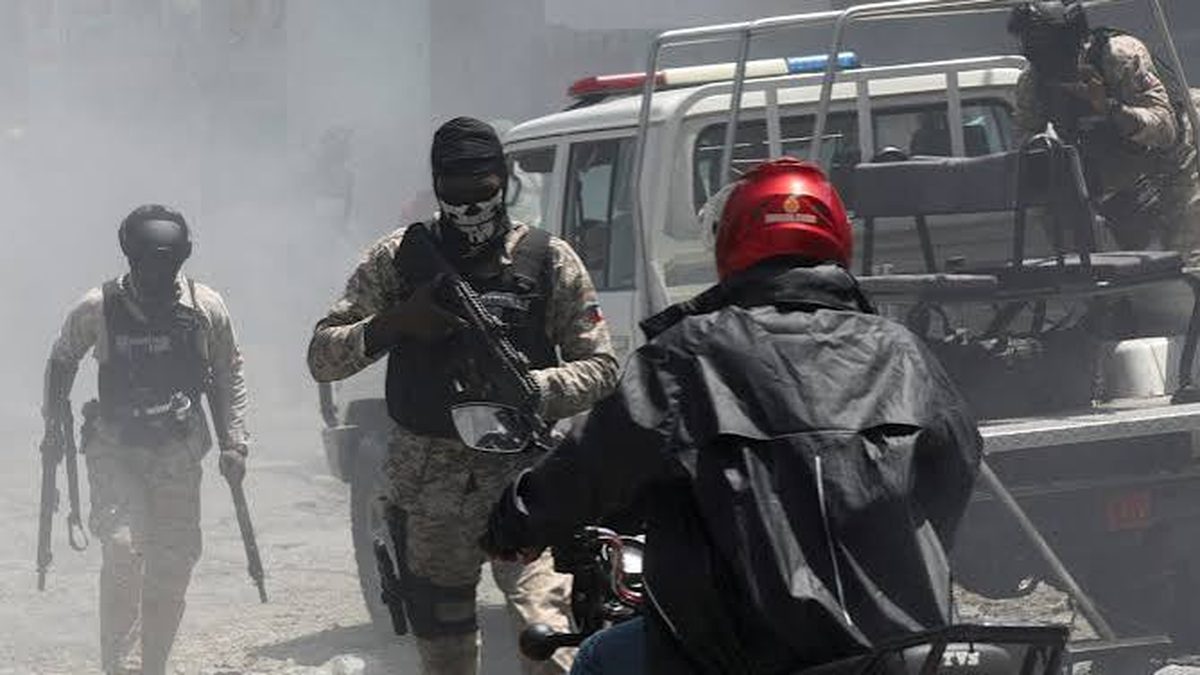
Haiti's long crisis showed no sign of easing in early October 2026, as United Nations officials warned that the international force meant to break the grip of armed gangs on Port-au-Prince remained a fraction of its promised size even as the human toll continued to climb. The gap between the mission's mandate and the resources behind it has become the defining feature of an emergency that has displaced well over a million people and left large parts of the capital beyond the reach of the state.
Volker Turk, the UN High Commissioner for Human Rights, told the Human Rights Council in a statement reported by Agence France-Presse on October 2, 2026 that at least 5,700 people had been killed or wounded in Haiti over the course of 2026, according to data gathered through September 11. More than 1,000 women and girls had been raped and 230 people kidnapped over the same period, Turk said, adding that "the real figures are likely much higher." He described a population trapped between gang violence and the slow arrival of the help that had been pledged to confront it.
Turk reserved pointed criticism for the Gang Suppression Force, the UN-backed mission that is intended to reach 5,500 personnel. Only about 1,500 had deployed, he said, leaving the force "significantly understrength" and, in his words, "far below the strength needed." The force replaced the Kenya-led Multinational Security Support mission, and its first foreign troops arrived in Haiti in early April 2026, according to Al Jazeera. The transition was meant to put a larger, better-equipped operation in the field with new authority to detain gang members, but the deployment has lagged well behind the plan.
William O'Neill, Turk's designated expert on human rights in Haiti and a lawyer who helped establish the Haitian National Police in 1995, described the situation as "dire but not hopeless." A fully staffed force equipped with intelligence capability, night vision and helicopters could be highly effective, he argued, and he urged the arrest of gang leaders alongside a concerted effort to cut off their financing and their weapons. O'Neill said an overwhelming share of the firearms recovered in Haiti traced back to gun shops in Florida, and that the United States "needs to do much more" to stem that flow.
A plea at the United Nations
Days earlier, at the 81st session of the UN General Assembly on September 26, 2026, Haiti's Prime Minister, Alix Didier Fils-Aime, pressed the same case from the rostrum. "Haiti will resist. Haiti is standing tall," he told delegates, in remarks reported by the Caribbean Media Corporation, appealing to the international community "not to save it, but to stand side by side with it." A mandate on its own would not be enough, he warned. "A mandate is not enough," Fils-Aime said. "There's a need for forces. Equipment is needed, and one needs to resolve to see the effort through."
The prime minister also set out what Haiti was attempting on its own account. More than 2,000 of a planned 4,000 police officers had been trained, he said, and over 1,500 new soldiers had completed training, with a further 15,000 to be trained over three years. He called for the Gang Suppression Force's mandate to be renewed and the mission brought to full strength with personnel, equipment and funding. The humanitarian backdrop he described was stark. The United Nations estimates that about 6.4 million Haitians need humanitarian assistance and that almost 1.5 million people have been displaced by the violence.
Fils-Aime said elections were scheduled for December, promising "free, credible, inclusive and honest elections" as the route back to democratic government after years of unelected transitional rule. Whether a credible vote can be organized while gangs control swaths of the capital remains the central question hanging over the transition, and neither the prime minister nor the UN officials offered a guarantee that the security picture would improve in time. For now, as Turk framed it, the distance between the mission's mandate and its means is the measure of Haiti's predicament, and closing it will determine whether the coming months bring recovery or further collapse.
Read more at The Caribbean Ledger ›