A Dutch minister heads to Bonaire, where a landmark climate ruling still hangs in the air
State Secretary Eric van der Burg's working visit next week will test the relationship between Bonaire and The Hague, nine months after a court found the Netherlands was failing to protect the island from climate change.
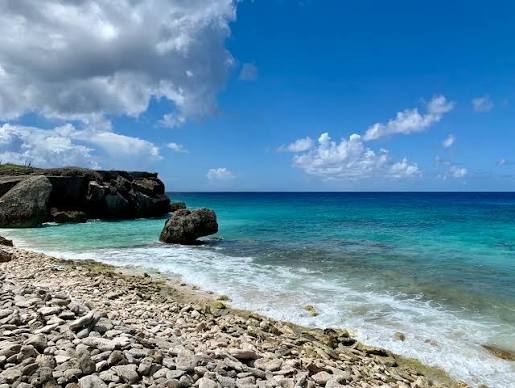
The Dutch State Secretary for Kingdom Relations, Eric van der Burg, will make a working visit to the Dutch Caribbean next week, with the Bonaire leg scheduled for October 13 and 14, according to the BES Reporter, the news service for Bonaire, St. Eustatius and Saba. On paper it is a routine administrative trip. In context, it arrives at a delicate moment in the relationship between the small island and the government in The Hague that governs it.
The published agenda is practical and wide. Van der Burg is set to hold administrative talks with the island governor, John Soliano, and the Executive Council on the political and administrative situation and the island's coalition accord. He is due to meet the waste company Selibon, the hotel and tourism association BONHATA and Tourism Corporation Bonaire on the state of the visitor economy, and on October 14 to visit the National Office for the Caribbean Netherlands on the provision and digitalization of public services, with further stops planned on customs, the port and the business climate through the Chamber of Commerce.

What gives the visit its charge is what is not formally on the agenda. In January 2026, the District Court in The Hague ruled that the Netherlands had breached the European Convention on Human Rights and was discriminating against the residents of Bonaire by failing to protect them from the effects of climate change, ordering the state to set new and fairer climate targets. Greenpeace, which supported the case, called it the first ruling anywhere to find that a state discriminates against its own people by failing to adopt a climate adaptation plan. Bonaire, a low-lying island with coastline and reef economies exposed to rising seas, sits at the center of that finding.
No new development on the ruling itself falls in this window, so the climate question enters the visit as backdrop rather than agenda item. But it is impossible to separate talks about Bonaire's future, its services, its port, its tourism economy, from the legal reality that a Dutch court has told the Dutch government it is not doing enough to keep the island safe. Every conversation about infrastructure on Bonaire is now also, implicitly, a conversation about adaptation.
The economic numbers add their own pressure. The BES Reporter reported in August that Bonaire drew 15,984 stay-over tourists in July 2026, 669 fewer than a year earlier, with US visitors down 11.4%, on an island where tourism accounts for roughly half of economic output and a majority of employment. The island's hotel association has warned that Bonaire has a tourism vision but no concrete economic plan to realize it. A softening in the island's main industry is exactly the kind of problem that administrative visits are meant to address, and exactly the kind that visits alone rarely fix.
Van der Burg's trip, then, is more than a courtesy call. It is an early test of whether the relationship between Bonaire and The Hague can carry the weight that the climate ruling has placed on it, and whether a visit built around waste collection, digital services and the business climate can also, quietly, begin to answer the larger question the court left open. The island will be watching what the state secretary says, and reading closely what he does not.
Read more at The Caribbean Ledger ›