Dominican Deportations Run Past 1,000 a Day as Amnesty Demands a Death Be Investigated
The removals continue at the pace President Abinader has set, now shadowed by a rights group's call for an inquiry into the shooting of a young Haitian man near Punta Cana.
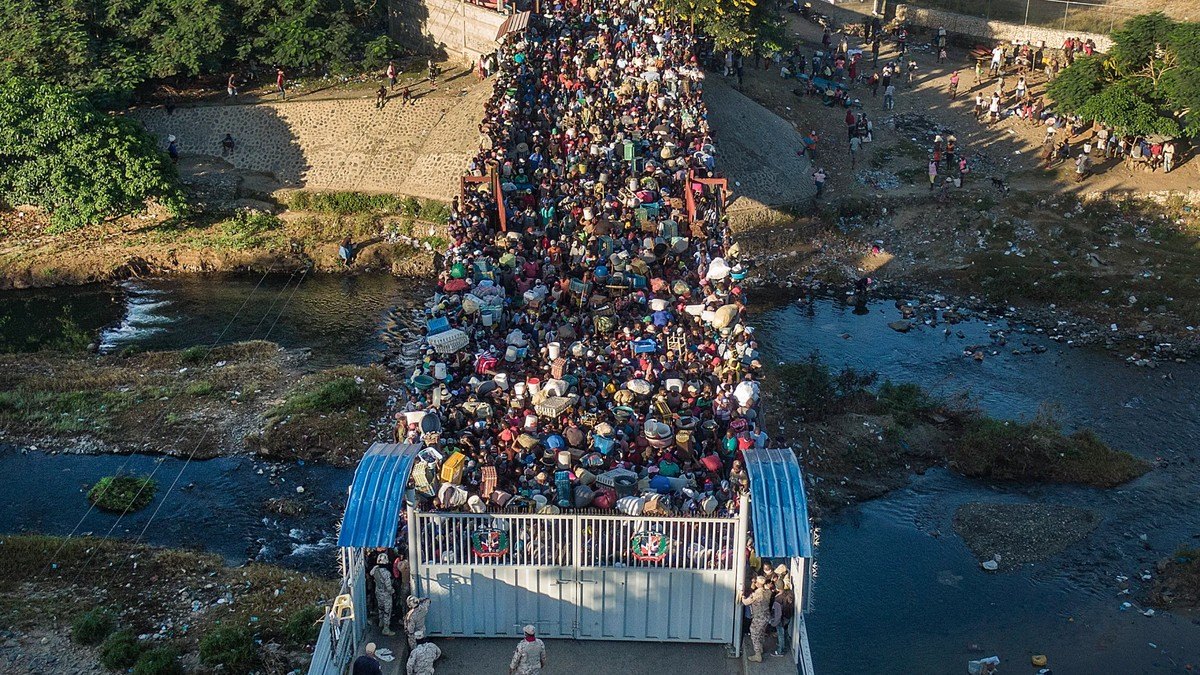
The Dominican Republic's deportation drive has not slowed, and this month it acquired a casualty that human-rights monitors are refusing to let pass without an accounting. The removals continue at more than a thousand a day, the pace President Luis Abinader's government has made a point of maintaining, even as Amnesty International demands an investigation into the death of a young Haitian man during a migration operation near Punta Cana.
The numbers come from the Directorate General of Migration, as reported by Rio Times on October 5. On Friday, October 2, Dominican authorities detained 1,382 people nationwide and handed 1,007 for removal. On Saturday, October 3, they detained 1,171 and deported 1,139. On Sunday, October 4, another 302 Haitians were pushed across the border at Dajabon. For the first seven months of 2026, removals reached 250,429, up 16.2% from 215,463 in the same period a year earlier. Annual totals were 276,215 in 2024 and 379,553 in 2025. The directorate is headed by Vice Admiral Luis Rafael Lee Ballester, and Abinader's security council has set a target of removing up to 10,000 undocumented Haitians a week.
What has turned a running policy story into something sharper is a death. On October 7, Amnesty International's Americas director, Ana Piquer, demanded an independent and exhaustive investigation into the killing of a 23-year-old Haitian man on October 3 in Veron, in the Punta Cana area, during a migration operation. Press reports cited by Rio Times said a migration agent fired the shot as the man fled onto the roof of a clinic. No death in the context of migration operations should go uninvestigated, Piquer said. As of October 8, the migration directorate had issued no statement on the Veron death, and its October 6 release logging detentions and deportations for the first days of the month made no mention of the killing.
The silence is its own story. A government that publishes daily deportation tallies, treating the numbers as evidence of resolve, has so far declined to address a death that occurred in the course of the very operations it is advertising. The contrast is hard to miss. The quota is public. The casualty is not.
The policy sits inside a larger regional dynamic this newspaper has tracked for weeks. The Dominican Republic justifies the removals by pointing to the pressure that irregular migration places on its public services, and the collapse next door in Haiti, where armed groups control much of the capital and a long-delayed election is scheduled for December, supplies a steady northward push. The two countries share an island and very little else in their reading of the crisis between them.
For Haiti, every busload returned at Dajabon is a person sent back toward the conditions a UN report described this week in granular detail, a gang economy sustained by political and business patrons. For the Dominican Republic, the removals are a demonstration of control. The death in Veron is where the policy's human cost became impossible to fold into a daily tally, and Amnesty's demand is that it not be allowed to disappear into one.
Read more at The Caribbean Ledger ›